
Colorado Governor Signals He’ll Commute Sentence of Election Denier
Clemency Consideration Ignites Statewide Debate Over Election Integrity, Justice Reform, and Executive Power
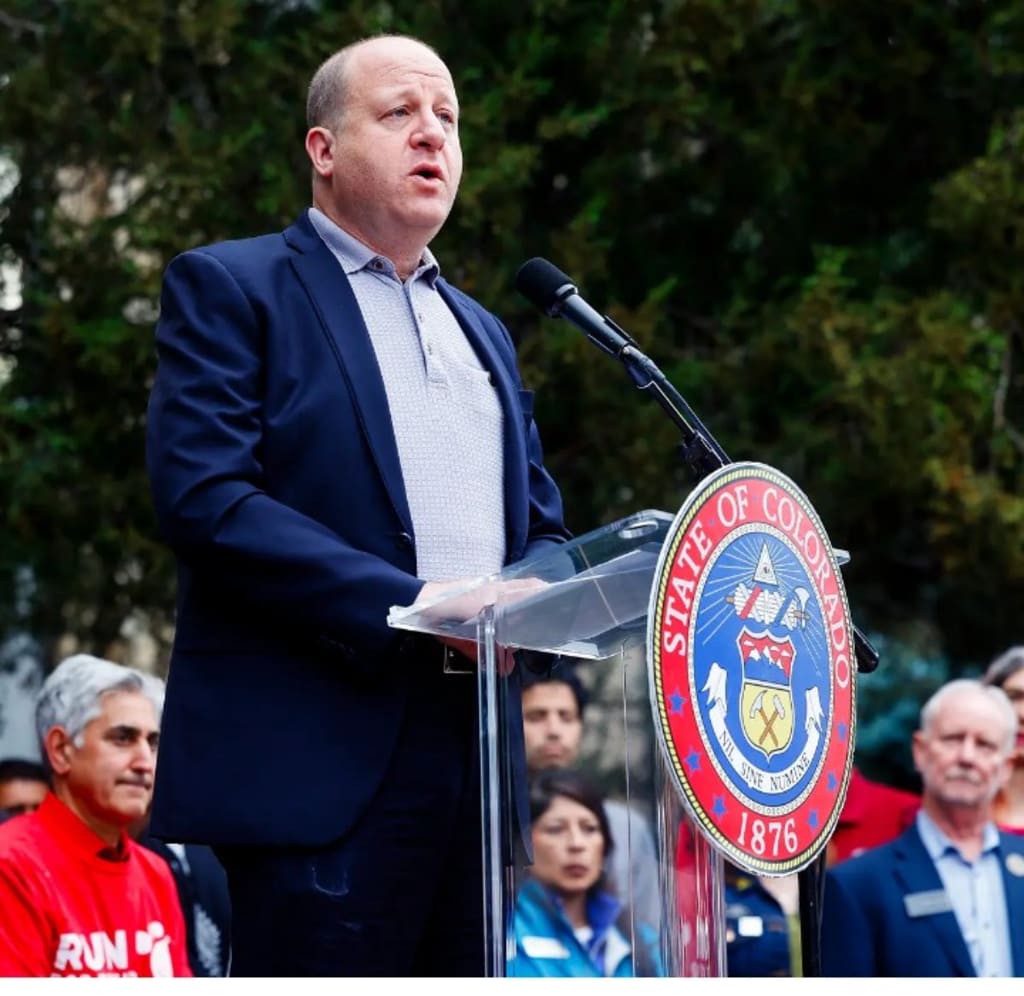
In a move that has reignited debate over justice, democracy, and political accountability, Colorado’s governor has signaled his intention to commute the prison sentence of a prominent election denier convicted of election-related crimes. The announcement has stirred passionate reactions across party lines, raising complex questions about executive clemency, the limits of political protest, and the long shadow cast by the 2020 presidential election.
The case centers on a former local election official who became a vocal proponent of false claims that the 2020 election was stolen. After being charged and later convicted for actions related to election security breaches, the official was sentenced to prison. Prosecutors argued that the misconduct undermined public trust in democratic institutions, while supporters insisted the punishment was politically motivated.
Now, Governor Jared Polis has indicated he is considering commuting the sentence. While stopping short of a full pardon, a commutation would reduce the length of the prison term, effectively shortening the individual’s incarceration while leaving the conviction intact.
Polis, a Democrat known for his libertarian streak on certain criminal justice issues, framed the potential decision as part of a broader philosophy on sentencing reform. In public remarks, he emphasized concerns about proportionality and fairness, suggesting that the punishment may exceed what is appropriate compared to similar offenses. However, he also made clear that he does not endorse election denialism or attempts to interfere with election processes.
The case has drawn national attention because it touches on the continuing fallout from the 2020 presidential contest between Donald Trump and Joe Biden. Despite repeated court rulings and audits affirming the integrity of the election, a segment of the electorate continues to question its legitimacy. Election denial has since become a powerful political force, influencing campaigns and policy debates across the country.
Critics of the proposed commutation argue that reducing the sentence could send the wrong message at a time when election officials nationwide face threats and harassment. They contend that accountability is essential to preserving democratic norms. In their view, weakening consequences for election-related misconduct risks emboldening others who might attempt to manipulate or undermine voting systems.
Supporters, on the other hand, see the governor’s consideration as a measured and principled use of executive authority. They argue that the justice system must remain impartial and that penalties should be consistent with those imposed in comparable cases. Some civil liberties advocates have also noted that the line between political speech—however controversial—and criminal conduct must be carefully maintained.
Executive clemency has long been a feature of American governance, designed as a check within the justice system. Governors in every state possess the authority to grant pardons or commute sentences, though the political ramifications often make such decisions contentious. In Colorado, the governor’s clemency powers are broad but subject to public scrutiny and political consequences.
The underlying conviction in this case stemmed from actions that prosecutors said breached election security protocols. The court found that the defendant facilitated unauthorized access to sensitive voting equipment, allegedly in pursuit of evidence supporting claims of widespread fraud. Investigators concluded that the actions compromised the integrity of election infrastructure, even if no votes were altered.
This distinction—between actual vote tampering and compromising secure systems—has become central to the debate. For some observers, any unauthorized interference with election equipment represents a serious threat, regardless of motive. For others, the absence of proven vote manipulation mitigates the severity of the offense.
The governor’s signal does not guarantee immediate action. Clemency decisions often involve consultation with legal advisers, review boards, and victim impact statements where applicable. Polis has suggested that he is weighing these factors carefully, acknowledging the symbolic weight of any decision in a politically charged environment.
Colorado itself has been at the forefront of efforts to strengthen election transparency and security. State officials have repeatedly defended the reliability of their voting systems, emphasizing rigorous audits and bipartisan oversight. The controversy surrounding this case has only intensified scrutiny of those safeguards.
Nationally, the debate reflects a broader tension between justice reform and democratic resilience. In recent years, bipartisan movements have pushed to reduce prison populations and reassess lengthy sentences for nonviolent offenses. At the same time, the January 6, 2021 attack on the U.S. Capitol underscored the potential dangers of election misinformation escalating into direct action.
Polis’s potential commutation sits at the intersection of these competing concerns. It tests whether calls for sentencing reform can coexist with firm consequences for conduct that touches on the electoral process. The governor’s critics fear that any reduction in sentence may blur the moral clarity needed to defend democratic institutions. His supporters argue that clemency, when applied judiciously, strengthens rather than weakens the justice system.
Public reaction in Colorado has been sharply divided. Some residents have organized petitions urging the governor to reconsider, while others have praised him for examining the fairness of the sentence independently of political pressure. Lawmakers from both parties have weighed in, reflecting the complexity of an issue that defies simple partisan framing.
Ultimately, the decision will likely shape Polis’s political legacy. As a governor with national visibility, his actions are watched closely beyond state borders. A commutation could reinforce his reputation as a criminal justice reform advocate, but it could also expose him to criticism from those who see election integrity as a line that must not be softened.
The broader lesson may be that the aftershocks of the 2020 election continue to reverberate through American politics. Questions about trust, truth, and accountability remain unsettled. Whether or not the sentence is ultimately commuted, the debate itself highlights the enduring fragility of democratic norms in a polarized era.
In signaling his intention, Governor Polis has ignited a conversation that reaches beyond one individual case. It forces Americans to grapple with how a democracy balances mercy with accountability—and how it defends its institutions without abandoning principles of proportional justice.
About the Creator
Keep reading
More stories from Jameel Jamali and writers in The Swamp and other communities.
Britain Arrests a Lawmaker’s Husband on Suspicion of Spying for China
The arrest of a British lawmaker’s husband on suspicion of spying for China has sent shockwaves through the United Kingdom’s political establishment. The case, which intersects national security, diplomatic tensions, and domestic politics, underscores the increasingly complex relationship between Britain and Beijing. As authorities investigate the allegations, the development raises serious questions about foreign influence, intelligence operations, and the safeguards surrounding democratic institutions.
By Jameel Jamalia day ago in The Swamp
The Saddest Thing - The Billionaires Who Rule America Aren't Even Enjoying Themselves
This single post says more about our ruling class than a thousand policy papers. The saddest thing about today's system is that the men robbing the rest of us - sabotaging our economic prospects, our pensions, our access to affordable healthcare - are not even happy.
By Scott Christenson🌴27 days ago in The Swamp




Comments
There are no comments for this story
Be the first to respond and start the conversation.