
The Swamp
The Swamp examines the crazy but true world of Politics. Discover its history, corruption, politicians, activists, and more.
Stats
Stories
- 15,681
Creators
- 4,327
Top Creators


Top Stories
Stories in The Swamp that you’ll love, handpicked by our team.
A Gathering of Evil Bosses
“I’m the queen of chin jutting while I smooth my hair, attacking, insulting, and deflecting to protect my appointer.” “Oh, please, Blondi, my hair is curled, highlighted, and longer than yours. I feature television commercials telling immigrants that we will give them a free plane ride home, and if they voluntarily turn themselves in, they will be allowed to legally apply for re-entry. It runs everywhere, and I look good in it! You can’t compete because of your blond hair. Mine is nicer, and my lips are prettier than yours.”
By Andrea Corwin 15 days ago in The Swamp
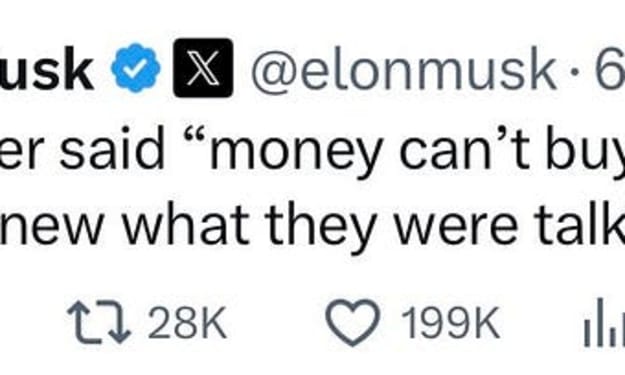
The Saddest Thing - The Billionaires Who Rule America Aren't Even Enjoying Themselves
This single post says more about our ruling class than a thousand policy papers. The saddest thing about today's system is that the men robbing the rest of us - sabotaging our economic prospects, our pensions, our access to affordable healthcare - are not even happy.
By Scott Christenson🌴27 days ago in The Swamp
Why Black History Matters in America?
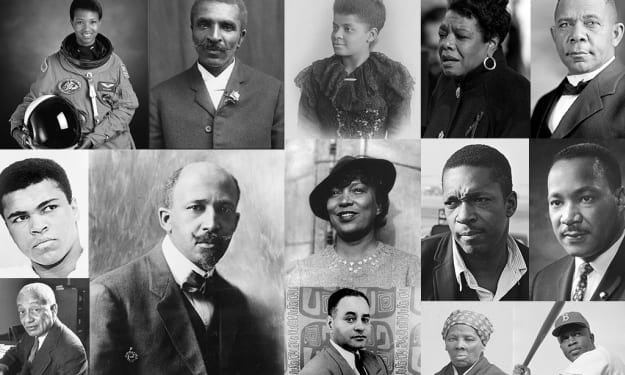
The United States of America is celebrating their 250th anniversary in 2026. I'm proud to be an American and as someone who was born here, I wouldn't imagine myself living anywhere else. This is a country where opportunities are possible. Where anyone can be successful in anything they desire to do. Equality, community, and togetherness are the backbones of what America is and should be about. However, we have an administration who wants to erase and disregard those who have made positive, meaningful impacts in our country, specifically Black figures, such as Martin Luther King, Jr., Rosa Parks, and Maya Angelou. President Trump and his administration have been constantly complaining and fighting against what they call the "Woke agenda". They use this excuse as a distraction from other issues they refuse to address, such as the high cost of living, climate change, and inflation. That equality is dividing America, when in reality, it's bringing us together. Being woke is not tied to a specific political party. No matter where you stand on the political spectrum, you can still care about other people and their plights. Compassion and empathy for others isn't tied to a political party, either. We were taught as children to treat others the way we want to be treated and not judge others because they're different from us. Caring about others isn't a personal attack on your beliefs. It doesn't make you any less of a person. People who are easily offended over African American figures, past or present, or anything related to it, are grasping at straws. Current and future generations need to know who people like Harriet Tubman and Shirley Chisholm were, especially in the classroom. Black History is part of American History. It should be recognized, not hidden or forgotten. Besides, you can't shield children from everything, just because your feelings are easily hurt.
By Mark Wesley Pritchard about a month ago in The Swamp
Wack Friday
Black Friday. We all obviously know what it is. As a kid, I'd see horror stories of people getting trampled to death in the doors of shopping centers. I didn't even understand what Black Friday was at the time or why everyone went so crazy about it. I didn't grow up with cable TV, so I really didn't have an insane amount of access to news or anything. The little I did see on the matter was enough to terrify me. My tiny child eyes sincerely thought these people were criminals robbing stores... and it was allowed. If the Purge was real and had already come out in the early 90's of my childhood, I would have thought Black Friday was the day it took place.
By Sara Wilson3 months ago in The Swamp
Dear Author
Today I read a Dear Abby column that really bugged me. It was about a woman whose best friend of thirty years abruptly stopped speaking to her because of differing political beliefs. They supported opposing parties, and her friend ended their relationship over it. The writer was hurt, but she hoped that there would be a way to work things out. When the friend had a grandchild, she wrote her a text congratulating her. Her friend responded with a "Who's this?" Our writer was ravaged and wrote the Dear Abby letter, and Abby's response was rather lacking.
By Stephanie Van Orman4 months ago in The Swamp
Criticizing the Cultural Mosaic
In many western countries the promotion of cultural acceptance has become intertwined with the strong encouragement of groups and communities to maintain and cultivate their differences. Terminology such as the “Cultural Mosaic” in Canada, celebrates this mentality. The concept of the Cultural Mosaic, in which each culture remains distinct, and the pushing of individuals to maintain their “uniqueness” have become synonymous with the concept of multiculturalism, when in fact they are not.
By Marlena Guzowski4 months ago in The Swamp
Review of 'A House of Dynamite'
I grew up in a world in which Dr. Strangelove was a plausible movie, a world in which we lived with the Soviet Union, armed to the teeth with nuclear weapons, as were we, and our best chance that we wouldn't blow up the Earth, if not to smithereens, to an uninhabitable planet, was MAD -- the mutually assured destruction that a nuclear war would engender, which would stop we human beings from ever starting such a no-win war.
By Paul Levinson4 months ago in The Swamp













Collections
Themed story collections curated by the Vocal moderators.

Dear Donald
Open letters to the President of the United States from the people of the world. Submit your own grievances, praises, and suggestions through Vocal today.

Political Humor
Where political gaffes become comedy fodder.

Dear Theresa
Open letters to the Prime Minister of the United Kingdom; do it like they do on Downing Street.





Latest Stories
Most recently published stories in The Swamp.
This Is The Truth About The War In Iran Will Make You Think
As the world sits burning in the early fires of war in Iran and the Middle East is rocked by missle barrages and battle, what happened that took America from an America first approach to things to being involved in another middle eastern war?
By Jason Ray Morton about 3 hours ago in The Swamp
Tim Sheehy: War, Business, and the Weight of Leadership
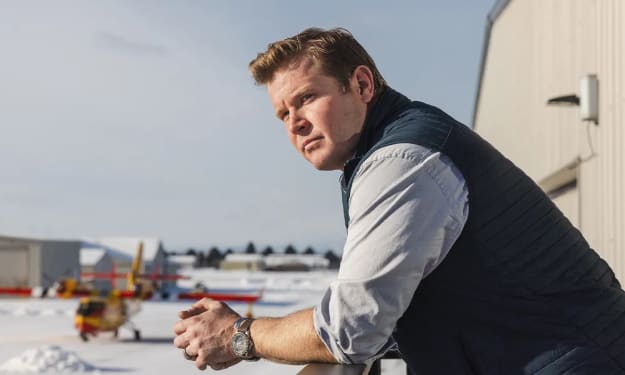
Public figures often appear as headlines before they feel like human stories. Behind every political campaign or business success is a long path filled with decisions, risks, and moments that shape a person’s view of the world. The story of Tim Sheehy is one of those paths. It moves from military service to entrepreneurship and then into the complicated world of American politics. Many people first heard the name Tim Sheehy during election coverage, but his life story stretches far beyond campaign speeches or political debates. Understanding who he is requires looking at the experiences that shaped him: the battlefield, the building of a company, and the responsibility of stepping into public leadership.
By Muqadas khanabout 6 hours ago in The Swamp
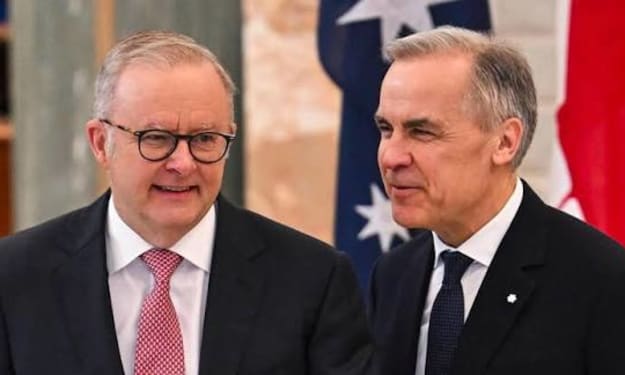
Canada, Australia Strengthen Ties as PM Mark Carney Urges ‘Strategic Cousins’ to Push Back Against Dominant Superpowers. AI-Generated.
In a striking address to Australian Parliament, Mark Carney used his first official visit as prime minister to call for closer alignment between Canada and Australia — describing the two nations as “strategic cousins” capable of shaping global affairs alongside, or in resistance to, dominant superpowers. His speech underscored a broader vision for middle‑power cooperation on defence, trade, technology, and economic sovereignty in an era marked by geopolitical strain and uncertainty. Carney’s message — delivered against the backdrop of increasing tensions in the Middle East, economic competition between major powers, and questions over the resilience of the post‑World War II rules‑based order — called on like‑minded countries to stop “negotiating from a position of weakness” and instead build cohesive partnerships that reflect shared interests and values. A New Strategic Partnership Carney’s visit followed a series of diplomatic and economic engagements across the Indo‑Pacific, including visits to India, Japan, and now Australia, as part of a tour to strengthen alliances amid global volatility. In Canberra, he and Anthony Albanese reaffirmed the longstanding bilateral relationship between their countries, signing agreements and outlining plans to deepen cooperation on investment, supply chains, and strategic sectors such as defence and technology. Central to Carney’s pitch was the idea that Canada and Australia — two of the world’s most prosperous and stable democracies — possess the credibility, legitimacy, and shared values needed to influence global outcomes. “Great powers can compel” by virtue of economic or military might, Carney told lawmakers. “But compulsion comes with costs — reputational, financial, and political.” By contrast, he argued, middle powers acting collaboratively can create durable partnerships that align interests without coercion. Shared Strengths and Strategic Priorities Carney described Canada and Australia not just as allies but as partners with complementary strengths. Both countries are major producers of critical minerals — including lithium, uranium, iron ore, and other resources vital for batteries, clean energy systems, and defence technologies — and together they account for a substantial share of global critical material production. Australia’s recent accession to the G7 Critical Minerals Production Alliance, a Canada‑led initiative, underscores this strategic alignment and aims to reduce dependency on dominating suppliers for essential resources. Beyond minerals, Carney emphasised cooperation in defence, cybersecurity, and artificial intelligence (AI), suggesting that pooling resources and technical expertise could strengthen each nation’s sovereign capabilities while offering alternatives to reliance on major powers like the United States or China. Proposed initiatives include joint investments in advanced surveillance systems, satellite communications, and defence equipment standardisation. Rethinking Global Engagement Carney’s remarks did not simply advocate closer Canada–Australia ties; they formed part of a broader critique of the current global order. Speaking to parliament, he echoed earlier warnings that the traditional architecture that guided international relations for decades is “breaking down” in the face of consecutive crises — from geopolitical conflicts to economic disruptions — and that middle powers must step forward to shape the next era of international cooperation. Carney’s theme of “strategic cousins” went beyond a rhetorical flourish. It captured a philosophy that nations with shared democratic traditions and institutional strengths can, and should, leverage their collective influence to advance stability, prosperity, and resilience. This approach reflects a growing consensus among policymakers in Ottawa and Canberra that a multipolar world — rather than one dominated by a handful of superpowers — requires agile, collaborative leadership from smaller but capable states. Reception and Regional Context Carney’s speech received broad support from Australian leaders, with Albanese and other officials welcoming the call for enhanced cooperation. The move comes amid wider international discussions about supply chain diversification, economic security, and reducing dependencies on singular geopolitical actors. Analysts see the Canada‑Australia partnership as emblematic of a broader effort by middle powers — including Japan, South Korea, and members of the Comprehensive and Progressive Agreement for Trans‑Pacific Partnership (CPTPP) — to assert their interests and promote balanced, rules‑based engagement in global affairs. Looking Ahead As Carney’s visit continues and negotiations unfold, the strategic cousins initiative is expected to yield concrete outcomes in trade, defence, technology, and critical materials investment. By forging deeper ties, Canada and Australia hope not only to fortify their respective economic and security positions but also to set an example for other mid‑level nations seeking greater agency in a changing global landscape. Whether this coalition of middle powers can truly reshape global dynamics remains to be seen, but Carney’s vision marks a defining moment in how countries traditionally seen as secondary actors are positioning themselves amidst the competing interests of dominant superpowers.
By Fiaz Ahmed about 9 hours ago in The Swamp









Creators We’re Loving
The creative faces behind your favorite stories.
Sara Wilson
157 published stories
L.K. Rolan
38 published stories
Atomic Historian
531 published stories
Stephanie Van Orman
114 published stories
Jeff Olen
42 published stories
Timothy A Rowland
441 published stories
Scott Christenson🌴
199 published stories
Mark Wesley Pritchard
410 published stories
Cadma
203 published stories
Sam Spinelli
346 published stories
K.B. Silver
506 published stories
Marlena Guzowski
42 published stories