
Did the US–Israel Strikes on Iran Break International Law?
Legal experts, diplomats, and global leaders are divided over whether the attacks were lawful self-defense or a violation of the UN Charter’s ban on the use of force.
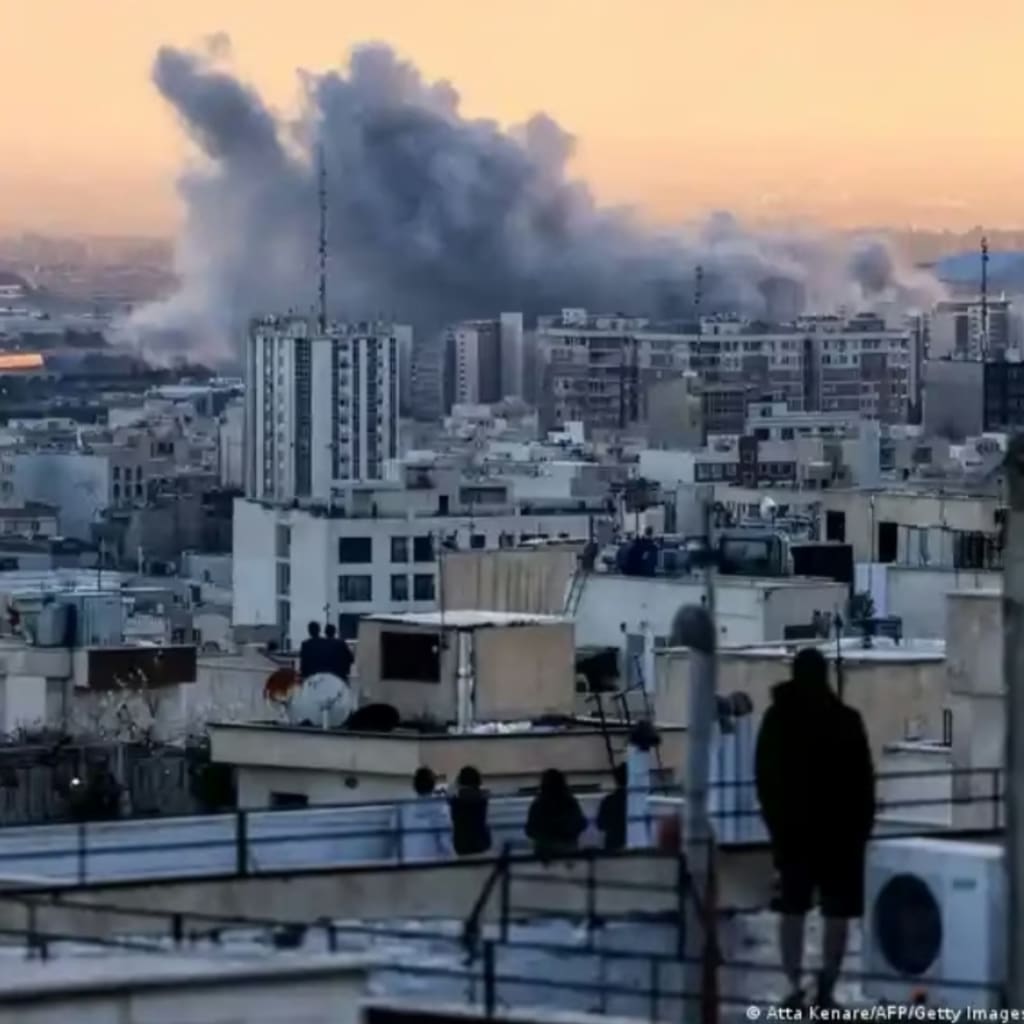
The recent coordinated strikes by the United States and Israel on Iranian military and strategic targets have triggered a fierce international debate: were these actions legitimate acts of self-defense — or did they violate international law?
At the center of the controversy lies a foundational rule of the modern global order — the prohibition on the use of force enshrined in the United Nations Charter. The answer is not merely academic. It could shape the future of global norms governing war, sovereignty, and state responsibility.
The Legal Framework: What Does International Law Say?
The cornerstone of the debate is the United Nations Charter, particularly Article 2(4), which prohibits member states from using force against the territorial integrity or political independence of another state.
There are only two widely recognized exceptions:
Authorization by the UN Security Council
Self-defense under Article 51, in response to an armed attack
In this case, no Security Council resolution authorized the strikes. That leaves self-defense as the central legal argument.
Under Article 51, a state may use force if it has suffered an armed attack — or, under a controversial interpretation, if such an attack is imminent.
The legal question, therefore, becomes: was there an imminent Iranian attack that justified pre-emptive force?
The Argument for Illegality
Many international law scholars argue the strikes fail to meet the threshold for lawful self-defense.
To qualify as self-defense, a response must be:
Necessary (no reasonable alternative exists)
Proportionate (limited to addressing the threat)
Imminent (responding to an immediate armed attack)
Critics contend that while Iran has long been accused of developing missile and nuclear capabilities, generalized future threats do not meet the strict definition of “imminence” required under international law.
Preventive war — striking to stop a potential long-term threat — is widely viewed as unlawful under the Charter framework.
Without clear evidence of an impending armed attack, legal analysts argue the strikes amount to a breach of Article 2(4).
The Self-Defense Argument
Supporters of the US–Israel position present a different interpretation.
They argue that modern threats — including advanced missile systems and proxy militias — require a broader understanding of imminence. Waiting for missiles to be launched, they contend, would be strategically irresponsible and potentially catastrophic.
In this view, self-defense must evolve to address:
Rapid deployment capabilities
Covert weapons programs
Regional proxy warfare
Asymmetric threats
Proponents argue that Iran’s activities created a credible and escalating danger that justified anticipatory action.
However, this interpretation remains controversial and is not universally accepted in international law.
Humanitarian Law: A Separate Legal Layer
Even if the use of force were justified under self-defense, international humanitarian law — also known as the laws of armed conflict — imposes additional constraints.
These rules require:
Distinction between military and civilian targets
Proportionality in attacks
Precautions to minimize civilian harm
Reports of civilian casualties and damage to non-military infrastructure have raised further questions. If verified, such incidents could potentially constitute violations of international humanitarian law — even if the broader use of force were considered lawful.
Thus, legality operates on two levels:
Jus ad bellum – Was the decision to go to war lawful?
Jus in bello – Were the methods of warfare lawful?
Both are under scrutiny.
Global Reaction
International reaction has been divided.
Some governments have expressed concern that the strikes bypassed the Security Council and undermined the rules-based international order.
Others have emphasized Iran’s destabilizing role in the region and defended the right of states to protect themselves against perceived existential threats.
The split reflects broader geopolitical alignments and longstanding tensions within the international system.
The UN System Under Pressure
The crisis highlights deeper challenges facing the United Nations Security Council.
The Security Council was designed to authorize collective action in matters of peace and security. But when permanent members are divided, resolutions are often blocked.
When the Council cannot act, states sometimes move unilaterally — raising difficult questions about whether the Charter system is being weakened.
If powerful nations increasingly justify military action without UN approval, critics warn that the prohibition on force may erode over time.
Precedent and the Future of International Law
Legal precedent matters.
If the strikes are widely accepted as lawful self-defense, they could expand the doctrine of anticipatory self-defense.
If they are condemned as unlawful, they may reinforce the traditional narrow interpretation of imminence.
The long-term consequences could influence:
How states interpret future security threats
The credibility of international legal institutions
The stability of global norms governing armed conflict
In a world of rapid technological change — including drones, cyber warfare, and long-range missiles — existing legal frameworks are being tested in unprecedented ways.
A Divided Verdict
So, did the US–Israel strikes on Iran break international law?
The answer depends largely on how one interprets self-defense.
Under a strict reading of the UN Charter, absent clear evidence of an imminent armed attack, the strikes likely violate Article 2(4).
Under a broader interpretation of anticipatory self-defense, supporters argue they may be justified as necessary protection against an escalating threat.
There is no global court ruling — at least not yet — and political realities often shape legal narratives.
Final Thoughts
The debate over the legality of the US–Israel strikes is about more than one military campaign. It touches the core principles that have governed international relations since 1945.
If the prohibition on the use of force weakens, the risk of unilateral military actions increases. If the rules remain rigid in the face of evolving threats, states may feel constrained in defending themselves.
The tension between security and legality is not new — but it is becoming sharper.
As diplomatic efforts continue and investigations unfold, the question remains unresolved in global politics, even if many legal scholars have already formed strong opinions.
In the end, the controversy underscores a fundamental reality: international law depends not only on written rules, but on whether powerful states choose to uphold them.
About the Creator
A Gathering of Evil Bosses
“I’m the queen of chin jutting while I smooth my hair, attacking, insulting, and deflecting to protect my appointer.” “Oh, please, Blondi, my hair is curled, highlighted, and longer than yours. I feature television commercials telling immigrants that we will give them a free plane ride home, and if they voluntarily turn themselves in, they will be allowed to legally apply for re-entry. It runs everywhere, and I look good in it! You can’t compete because of your blond hair. Mine is nicer, and my lips are prettier than yours.”
By Andrea Corwin 16 days ago in The Swamp
📢 Raise Your Voice Thread: 03/05/2026
Our “Raise Your Voice Threads” are hosted most alternating Thursdays at 12PM ET to offer creators more avenues to uncover exceptional stories on Vocal. As we are continuously searching for fresh creators and inspiring stories, this thread provides an opportunity to exchange and discuss the stories that have moved and motivated us on Vocal.
By Raise Your Voice by Vocalabout 17 hours ago in Resources




Comments
There are no comments for this story
Be the first to respond and start the conversation.