
Iran’s High-Risk War Strategy Seems to Centre on Endurance and Deterrence
Tehran’s Calculated Approach: Survival, Sustained Pressure, and Strategic Messaging
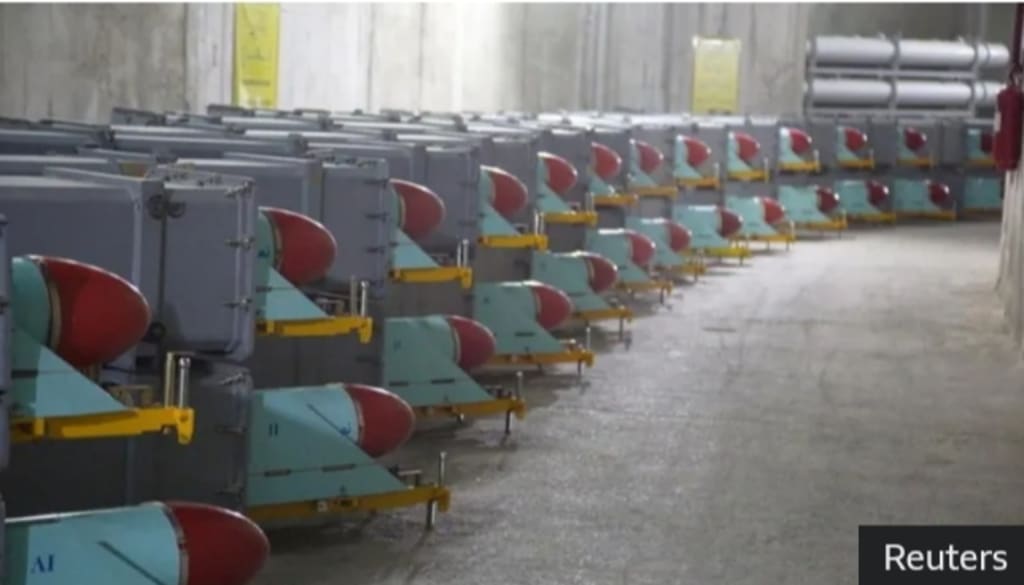
As the U.S.–Israel military campaign against Iran continues, Tehran’s strategy appears less about achieving a conventional military victory and more about enduring sustained pressure while deterring further escalation. Analysts suggest that Iran is pursuing a high-risk approach designed to outlast its adversaries and raise the political, economic, and strategic costs of continued conflict for Washington and Jerusalem.
This strategy is shaping Tehran’s military operations, its regional signaling, and its use of proxies, drones, and missile forces, all aimed at ensuring resilience in a conflict it cannot win through sheer force.
Fighting for Survival, Not Victory
Iran’s military doctrine emphasizes endurance over battlefield dominance. Officials in Tehran have repeatedly signaled that their forces are prepared to withstand prolonged attacks and continue operations even in the face of decapitation strikes on leadership or targeted attacks on critical infrastructure.
Instead of concentrating forces for a decisive offensive, Iran is dispersing its military capabilities across multiple locations and using decentralized command structures. This approach allows Tehran to sustain operations even under heavy bombardment and ensures that local commanders can act independently if communication or leadership is disrupted.
This survival-first mindset reflects Iran’s assessment that a conventional victory over the U.S. and Israel is unrealistic. By focusing on attrition and deterrence, Iran aims to force adversaries to expend resources, time, and political capital without securing a decisive win.
Decentralized “Mosaic Defense” and Asymmetric Warfare
Iran’s approach relies heavily on a decentralized “mosaic defense” doctrine. Command authority, weapons systems, and operational units are dispersed across the country and allied networks, making it difficult for opponents to deliver crippling strikes that could paralyze the Iranian military.
The mosaic structure allows local units to continue operations autonomously, maintaining offensive and defensive pressure even if central command is disrupted. Combined with asymmetric tools such as drones, ballistic missiles, and proxy militias, this system complicates enemy targeting and enhances Iran’s operational resilience.
By decentralizing authority and relying on a network of allies and proxies, Tehran ensures that the conflict can continue even in the event of significant losses, a key element of its high-risk, endurance-centered strategy.
The Logic of Attrition
Iran’s strategy can also be described as a prolonged war of attrition. It aims to exhaust adversaries financially, politically, and militarily rather than seeking an outright victory. Tehran’s network of long-range drones and ballistic missiles, though vulnerable to interception, forces opponents to deploy expensive defense systems against low-cost threats, creating an unfavorable cost-exchange dynamic.
This logic is central to Iran’s approach: every missile or drone intercepted by U.S. or Israeli forces represents a psychological and economic burden, amplifying the strain on its adversaries while preserving Iran’s strategic standing.
Regionalization: Broadening the Conflict
Iran has deliberately expanded the battlefield beyond its borders, conducting strikes in neighboring countries such as Iraq, Oman, Kuwait, and across the Strait of Hormuz. By regionalizing the conflict, Tehran increases pressure on the U.S. and its allies while demonstrating that it can influence regional stability and critical economic infrastructure.
This regional approach also serves as a form of deterrence. By signaling that attacks on Iran will have consequences far beyond its territory, Tehran seeks to discourage further escalation and limit adversary options.
However, this strategy carries risks: expanding attacks could push neutral states closer to the U.S.–Israel camp and further isolate Tehran diplomatically, potentially escalating the conflict beyond Iran’s control.
Energy Leverage as a Strategic Tool
Iran’s control over critical energy chokepoints, particularly the Strait of Hormuz, gives it a unique tool for endurance and deterrence. Threats or disruptions to this vital shipping route have global economic consequences, including spikes in oil prices and pressure on international markets.
By leveraging energy infrastructure and shipping lanes, Tehran can amplify the conflict’s impact without relying solely on military force. This economic dimension strengthens Iran’s ability to influence adversaries’ decisions and demonstrates its capacity to endure under sustained pressure.
Psychological and Political Deterrence
Iran’s strategy also includes a strong psychological and political component. By emphasizing the resilience of its military and political institutions, Tehran aims to deter adversaries by demonstrating that no quick victory is possible.
Public messaging portrays Iran as capable of surviving attacks and sustaining a protracted conflict, which is designed to influence both domestic and international perceptions. This psychological deterrence complements the country’s operational resilience and asymmetric tactics.
Limits and Risks of Endurance
While endurance and deterrence are central to Iran’s strategy, they come with inherent risks. Missile stockpiles and drone capabilities are finite, and ongoing U.S.–Israeli strikes continue to degrade Tehran’s operational infrastructure.
Decentralized command can result in loss of cohesion or unintended escalatory actions by local commanders. Moreover, prolonged conflict strains Iran’s economy and social structures, creating internal pressures that could undermine long-term sustainability.
Conclusion: Standing the Test of Time
Iran’s high-risk strategy reflects a calculated focus on standing, not winning. Through decentralization, asymmetric warfare, regional operations, energy leverage, and psychological deterrence, Tehran aims to survive sustained pressure while making further escalation costly for its adversaries.
The ongoing conflict demonstrates that Iran’s leadership views endurance and deterrence as central to strategic success, recognizing that in modern warfare, survival and resilience can be as valuable as decisive victory.
This strategy has profound implications for U.S. and Israeli planning, regional security, and global energy markets, as the conflict continues to reshape the Middle East on multiple levels.
Key Takeaways:
Iran’s war strategy prioritizes endurance and deterrence over conventional battlefield victory.
The country employs a decentralized “mosaic defense”, asymmetric tools, and proxy networks to sustain operations.
Regionalization of the conflict and energy leverage amplify Iran’s ability to impose costs on adversaries.
Psychological and political messaging reinforces deterrence by projecting resilience.
While endurance provides strategic advantages, it also carries risks of resource depletion, internal pressure, and unintended escalation.
Iran’s approach illustrates a high-stakes game of survival and attrition, where the ability to endure may define the trajectory of the conflict more than conventional victories ever could.
About the Creator
The Saddest Thing - The Billionaires Who Rule America Aren't Even Enjoying Themselves
This single post says more about our ruling class than a thousand policy papers. The saddest thing about today's system is that the men robbing the rest of us - sabotaging our economic prospects, our pensions, our access to affordable healthcare - are not even happy.
By Scott Christenson🌴27 days ago in The Swamp
Watershed moment as Russia's sporting exile ends
In a dramatic turn of events, Russia has formally ended its years-long isolation from major international sporting competitions, a development that marks a significant shift in global athletics and geopolitics. After being barred from many world championships and high-profile events following its invasion of Ukraine in 2022, Russian athletes and teams will now be permitted to compete again under the national flag, flagging a “watershed moment” for sports and diplomacy alike. The decision comes after months of negotiation between Russian sporting authorities, international federations, and major events organisers. At the heart of this shift is a coordinated move by bodies such as the International Olympic Committee (IOC) and individual sport federations to reassess blanket bans in favour of more nuanced eligibility criteria. Supporters argue that athletes should not be punished indefinitely for the actions of governments and that sport has a unique capacity to build bridges even amid geopolitical tensions. From Ban to Reinstatement Russia’s sporting exile began soon after its full-scale invasion of Ukraine in February 2022. In response to global outrage and widespread condemnation, numerous international sports federations imposed sanctions on Russian competitors and teams. These included bans from high-profile events such as the FIFA World Cup qualifiers, World Athletics Championships, and numerous cycling, tennis, and gymnastics competitions. In many instances, Russian athletes were required to compete as neutrals — without national anthems, flags, or official representation — provided they could demonstrate they opposed their country’s military actions and met strict eligibility criteria. These measures were intended to balance fairness to individual athletes with broader international pressure on Russia’s government. However, the extended absence of Russian teams and athletes had profound implications. Russia has long been a powerhouse in many sports, from gymnastics and track and field to figure skating, hockey, and beyond. Their absence reshaped competition fields, affected sponsorships and broadcasting revenues, and prompted intense debate within sporting communities worldwide. The Decision and Reactions The recent shift emerged after intense dialogue between sporting bodies and national federations. Federations cited several reasons for the change, including legal challenges to protracted bans, concerns about the effectiveness of long-term exclusion, and a belief that sport should ultimately transcend politics. At a press briefing announcing the change, an IOC official stated that allowing Russian athletes to compete again under their national flag was “a decision grounded in fairness, under clear and enforceable criteria designed to protect the integrity of sport.” The official also emphasised that individual federations would retain latitude to set specific rules for their competitions. Reactions to the reinstatement have been mixed. In Russia, government officials and athletes hailed the decision as overdue and vindicated what they called the “spirit of athletic excellence.” Media coverage in Moscow has portrayed the return as a triumph of sport over politics and a validation of years of development and training. International Response and Controversy Elsewhere, the response has been more cautious. Some Ukrainian sporting officials condemned the decision, arguing that reinstating Russian competitors before a peaceful resolution in Ukraine sends the wrong signal and undermines solidarity efforts. “Sports can be a force for good,” one Ukrainian federation official said, “but not at the cost of ignoring ongoing aggression.” Several Western athletes also voiced concern. A prominent European cyclist, who asked not to be named, said, “We all want inclusive competition, but this feels premature given the geopolitical context.” Others stressed the need for transparent criteria to ensure reinstated competitors uphold values of fairness and respect. Legal analysts note that long-term bans faced potential challenges under international law, particularly in contexts where individual athletes had no direct role in political decision-making. At the same time, they add, federations must strike a delicate balance between inclusivity and maintaining global solidarity in response to conflict. Implications for Future Competitions With the return of Russian athletes and teams, the competitive landscape in many sports is poised to change dramatically. Events such as the upcoming Olympic Games, world championships in athletics, swimming, and team sports now face renewed interest and global viewership, as audiences anticipate the performance of Russian competitors who have been sidelined for years. Sponsors, broadcasters, and event organisers have also reacted, with many welcoming the prospect of a more complete competitive field. Ticket demand for major events has reportedly risen in several markets since the reinstatement announcement. Yet the path ahead remains complex. Federations will need to implement guidelines that address issues of eligibility, ensure the safety and fairness of competition environments, and respond to ongoing geopolitical tensions with sensitivity. Looking Ahead The end of Russia’s sporting exile stands as a landmark moment for international sport — one that underscores the challenges of balancing politics, ethics, and competition in a globalised world. As Russian athletes prepare to reenter arenas and stadiums around the world, the global sporting community faces a pivotal test: can sport serve as a unifying force even amid unresolved conflict, or will political fault lines continue to shape its outcomes? The coming months and competitions will provide critical insight into how this “watershed moment” unfolds — for athletes, fans, and nations alike.
By Fiaz Ahmed a day ago in The Swamp




Comments
There are no comments for this story
Be the first to respond and start the conversation.