
New Status Quo: Germany Reaches for European Conventional Military Dominance
Berlin accelerates defence expansion as Europe reshapes its security architecture amid rising geopolitical tensions.

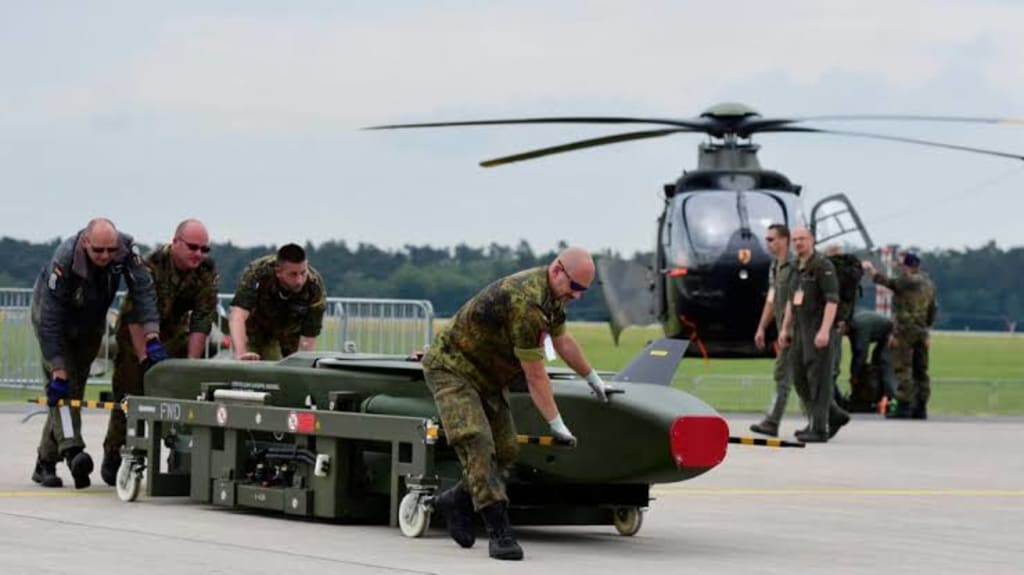
Germany is moving rapidly to transform its armed forces and assume a leading role in Europe’s conventional military balance, signaling what analysts describe as a “new status quo” for the continent’s security architecture. After decades of restraint following the Second World War, Berlin is now investing heavily in defence capabilities, seeking to position itself as the central military power within Europe.
The shift gained momentum after the Russian invasion of Ukraine, which fundamentally altered Europe’s perception of security threats. The conflict prompted Olaf Scholz to announce a historic “Zeitenwende,” or turning point, in German defence policy. Under this initiative, Germany pledged to dramatically increase military spending and modernize the Bundeswehr.
Massive Defence Investment
Germany created a special €100-billion fund dedicated to upgrading its armed forces. The plan includes new fighter jets, armored vehicles, air defence systems, and digital battlefield technologies. Berlin has also committed to consistently meeting the defence spending target set by NATO, which requires member states to spend at least 2% of their GDP on defence.
Among the major acquisitions are the advanced F‑35 Lightning II jets, which Germany intends to use to maintain NATO’s nuclear-sharing arrangements. The country is also investing in missile defence, including participation in the European Sky Shield Initiative, designed to create a continent-wide shield against missile threats.
German military planners believe these investments will allow the Bundeswehr to become Europe’s most capable conventional military force. The goal is not only national defence but also the ability to lead multinational operations across the continent.
Leadership Within Europe
Germany’s renewed military ambitions reflect broader changes in Europe’s security environment. For decades, European defence relied heavily on the United States. However, uncertainty about future American commitments has pushed European countries to strengthen their own capabilities.
Berlin is increasingly positioning itself as the leader of these efforts. Germany has expanded its role within NATO’s eastern flank, deploying troops and equipment to countries such as Lithuania to deter potential aggression. German officials have also proposed forming a permanent brigade in the region, marking one of the most significant overseas deployments in the Bundeswehr’s history.
At the same time, Germany is deepening defence cooperation with partners such as France and Poland, aiming to create a stronger, more integrated European military framework. Joint projects include next-generation tanks, fighter aircraft, and advanced defence technologies.
Challenges and Debate
Germany’s rapid military expansion has sparked debate both domestically and internationally. Some political groups worry about the financial burden of increased defence spending, especially at a time when Europe faces economic pressures. Others argue that Germany must overcome bureaucratic hurdles and procurement delays that have historically slowed military modernization.
Within Europe, reactions have been mixed. While many allies welcome Germany’s willingness to shoulder greater responsibility for regional security, some countries remain cautious about the prospect of Berlin becoming the continent’s dominant military power. Historical sensitivities still shape perceptions of German military leadership.
A Changing Security Landscape
Despite these concerns, the broader trend toward stronger European defence appears irreversible. Russia’s war in Ukraine and rising global tensions have convinced many policymakers that Europe must be able to defend itself more independently.
For Germany, this moment represents a profound transformation. The country is shifting from a cautious security posture to a leadership role in Europe’s military structure. If Berlin’s modernization plans succeed, the Bundeswehr could emerge as the central pillar of Europe’s conventional defence capabilities.
The result may be a new strategic balance across the continent—one in which Germany plays a far more prominent role than at any time since the Cold War.
Germany is also expanding cooperation with European partners to strengthen collective defence capabilities. Joint military exercises with countries such as France, Poland, and Italy are increasing in frequency, aiming to improve coordination and readiness across European forces. Berlin is investing in modern logistics networks, cyber defence units, and advanced surveillance technologies to support rapid response operations. Officials say the goal is to ensure that the Bundeswehr can deploy quickly and operate effectively alongside allies under the framework of NATO, reinforcing stability and deterrence across Europe.
About the Creator
Fiaz Ahmed
I am Fiaz Ahmed. I am a passionate writer. I love covering trending topics and breaking news. With a sharp eye for what’s happening around the world, and crafts timely and engaging stories that keep readers informed and updated.
Keep reading
More stories from Fiaz Ahmed and writers in The Swamp and other communities.
Trump sets his sights on crisis-hit Cuba after Iran action
Following escalating tensions and military action involving Iran, Donald Trump has indicated that crisis-stricken Cuba could become the next major focus of U.S. foreign policy. His remarks have intensified speculation about Washington’s strategy in the Caribbean and raised concerns in Havana about potential economic and political pressure from the United States. Speaking during a recent interview and at a White House event, Trump suggested that the United States is currently prioritizing the situation in Iran, but hinted that attention could soon shift toward Cuba once developments in the Middle East stabilize. He predicted that the communist-run island nation, which has been grappling with a severe economic crisis, may soon face dramatic political change. “Cuba is going to fall pretty soon,” Trump reportedly said, adding that the Cuban leadership is eager to negotiate with Washington after decades of strained relations. Economic Crisis in Cuba Cuba is currently facing one of the most difficult economic periods in its modern history. The island has been dealing with chronic fuel shortages, electricity blackouts, rising food prices, and declining imports. Much of the pressure has been intensified by tighter U.S. sanctions and the disruption of energy supplies from Venezuela, a longtime ally that once provided significant oil shipments to Havana. The Business Standard Recent U.S. measures targeting fuel flows to Cuba have significantly reduced the island’s energy supplies. Without reliable oil imports, Cuba has struggled to maintain electricity production, transportation networks, and industrial activity. These economic hardships have increased social pressure inside the country and fueled speculation about political instability. Analysts say the worsening conditions have made Cuba more vulnerable to external diplomatic pressure. Washington believes the crisis could force the Cuban government to negotiate reforms or open discussions with the United States. Rubio’s Potential Role Trump has also suggested that Marco Rubio, whose family fled Cuba after the revolution, could play a central role in any negotiations with Havana. Rubio has long been one of the strongest critics of the Cuban government in U.S. politics and has advocated for policies aimed at encouraging political change on the island. The president praised Rubio’s work on Cuba-related issues and indicated he may be tasked with leading diplomatic efforts should the United States move forward with engagement or pressure strategies targeting the island’s leadership. Strategic Shift in U.S. Policy Trump’s remarks reflect a broader shift in U.S. foreign policy strategy. In recent years, Washington has taken a more assertive stance toward governments it considers adversarial, particularly in Latin America and the Middle East. Observers note that the administration appears willing to combine economic sanctions, diplomatic pressure, and strategic military actions to influence political outcomes abroad. Some analysts view Trump’s comments as part of a broader geopolitical strategy aimed at reshaping regional power dynamics. Cuba has long been a symbol of resistance to U.S. influence in the Western Hemisphere, and any major shift in its political system would have significant consequences for Latin America. Concerns and International Reaction The possibility of increased U.S. involvement in Cuba has sparked debate among international observers. Supporters argue that pressure from Washington could accelerate democratic reforms and economic liberalization on the island. Critics, however, warn that aggressive policies could worsen humanitarian conditions for ordinary Cubans or escalate tensions between the two countries. Officials in Havana have previously condemned U.S. sanctions and pressure campaigns, describing them as attempts to undermine Cuba’s sovereignty. The Cuban government has repeatedly stated it is open to dialogue but rejects any efforts to force political change from abroad. Uncertain Future For now, the United States remains focused on developments in Iran, but Trump’s remarks suggest that Cuba could soon become a major issue on Washington’s foreign policy agenda. Whether this leads to negotiations, increased sanctions, or broader geopolitical confrontation remains uncertain. What is clear is that the deepening crisis inside Cuba and shifting U.S. priorities could bring a new chapter in the long and complicated relationship between the two nations.
By Fiaz Ahmed 3 days ago in The Swamp
Parallel Protests
I haven't written for quite some time, but I have A LOT of thoughts about yesterday's protest rally against our government's involvement and complicity in America's war on Iran, on the harbourside of my home city Bristol, and I need to put them somewhere. My gorgeous girlfriend is always a loving and listening ear and sharing it all with her will always be a healthy and happy way of processing the mental and emotional weight, but getting it straight in my brain to share means writing it all down in straight lines, so, here we are and thanks for being here.
By Steph Cole6 days ago in The Swamp




Comments
There are no comments for this story
Be the first to respond and start the conversation.