
US and Mideast Countries Seek Kyiv’s Drone Expertise as Russia-Ukraine Talks Put on Ice
Battle-hardened Ukrainian drone defense tactics attract growing interest from the United States and Gulf nations as geopolitical tensions reshape global security priorities.

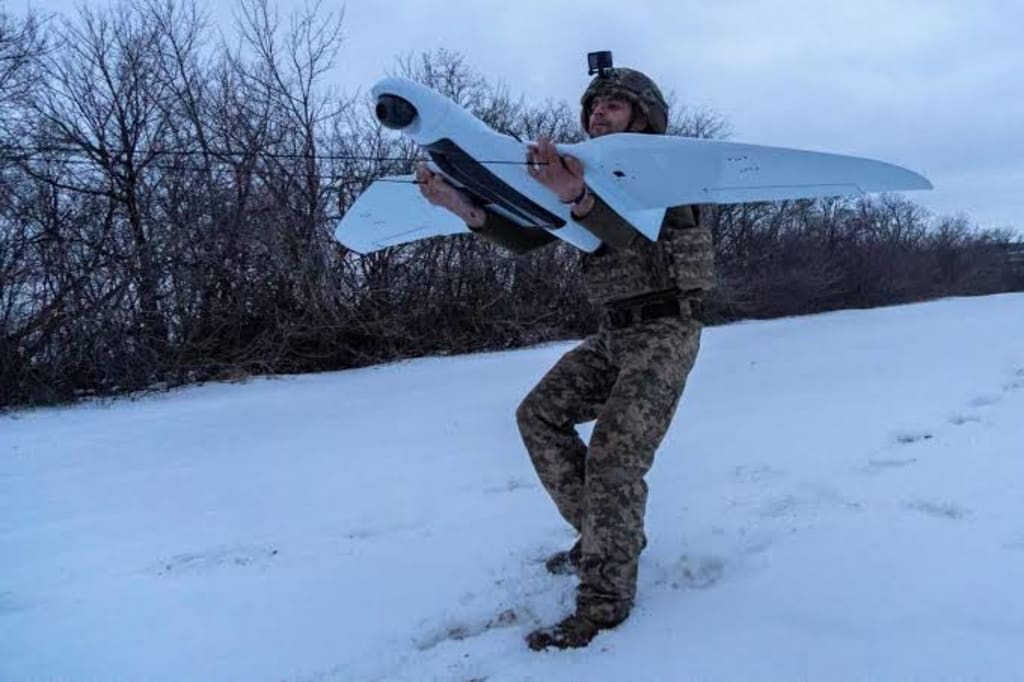
The ongoing war in Ukraine has unexpectedly transformed Kyiv into one of the world’s most influential centers of drone warfare expertise. Now, as tensions escalate in the Middle East and diplomatic talks between Russia and Ukraine stall, the United States and several Middle Eastern countries are turning to Ukraine for help in defending against drone attacks.
According to Ukrainian President Volodymyr Zelenskyy, governments in both Washington and the Gulf region have approached Kyiv seeking guidance on how to counter Iranian-made attack drones. Over the past four years of war with Russia, Ukraine has gained extensive battlefield experience defending its cities, infrastructure, and military positions from waves of unmanned aerial vehicles used by Russian forces.
These drones — many of them based on the Iranian-designed Shahed drone — have become a defining feature of the conflict. Russia has launched tens of thousands of them against Ukrainian targets since the invasion began in 2022, forcing Ukraine to rapidly innovate new defensive techniques and technologies.
In recent weeks, Zelenskyy said he held discussions with leaders from several Middle Eastern countries, including the United Arab Emirates, Qatar, Bahrain, Jordan, and Kuwait. These governments are increasingly concerned about the threat posed by Iranian drone technology in the region and are eager to learn from Ukraine’s combat-tested experience.
The interest comes as tensions in the Middle East have intensified following a new round of hostilities involving Iran. Iranian drones have been deployed in attacks across the region, raising alarms about the vulnerability of critical infrastructure such as oil facilities, airports, and power plants.
Ukraine’s response to similar threats has relied on a combination of innovation and necessity. Because traditional air-defense systems are expensive and limited in supply, Ukrainian engineers and military planners developed alternative strategies. These include electronic warfare systems that jam drone signals, mobile anti-aircraft units, and even specialized interceptor drones designed to hunt down and destroy incoming UAVs.
One particularly notable innovation has been the development of extremely low-cost counter-drone systems. Some Ukrainian interceptor drones cost as little as $1,000, making them far cheaper than conventional missile-based defenses that can cost hundreds of thousands of dollars per shot.
This affordability has drawn the attention of military planners around the world. In modern conflicts where drones are used in large numbers, traditional missile systems can quickly become economically unsustainable. Ukraine’s approach — combining inexpensive technologies with layered defense strategies — has shown how countries can defend themselves against mass drone attacks without exhausting their defense budgets.
The new cooperation discussions also reflect a broader geopolitical shift. Ukraine’s experience in drone warfare has effectively turned the country into a laboratory for modern combat technologies. Lessons learned on Ukrainian battlefields are now influencing defense strategies far beyond Europe.
At the same time, Kyiv is carefully weighing how much assistance it can provide. Zelenskyy emphasized that any sharing of expertise or equipment must not weaken Ukraine’s own defensive capabilities. The country remains locked in a prolonged war with Russia, and protecting its airspace remains the top priority.
“We help defend those who help Ukraine bring a just end to the war,” Zelenskyy said in remarks outlining Kyiv’s approach to international cooperation.
Meanwhile, diplomatic efforts to end the war between Russia and Ukraine have been put on hold. A new round of U.S.-brokered talks had been expected to take place this week, but the escalating crisis in the Middle East has diverted international attention and delayed negotiations.
The pause in diplomacy underscores how interconnected global conflicts have become. Developments in one region can quickly reshape the strategic landscape elsewhere, drawing new actors into existing conflicts.
For Ukraine, the sudden demand for its expertise represents both an opportunity and a challenge. On one hand, sharing its knowledge could strengthen alliances and expand its global influence. On the other, Kyiv must balance those partnerships with the urgent demands of its own war effort.
As drone warfare becomes an increasingly dominant feature of modern battlefields, Ukraine’s experience may prove to be one of the most valuable strategic assets to emerge from the conflict.
About the Creator
Fiaz Ahmed
I am Fiaz Ahmed. I am a passionate writer. I love covering trending topics and breaking news. With a sharp eye for what’s happening around the world, and crafts timely and engaging stories that keep readers informed and updated.
Keep reading
More stories from Fiaz Ahmed and writers in The Swamp and other communities.
What is the game plan?': The Iran war is unsettling China and its ambitions
The escalating war involving Iran has sent shockwaves through global geopolitics, and few countries are watching events more carefully than the People’s Republic of China. While Beijing is not directly involved in the conflict, the crisis threatens several pillars of China’s long-term strategic ambitions, from energy security and trade routes to its goal of reshaping the global order. For Chinese leaders, the war presents a troubling question: how can China protect its interests without being drawn into a dangerous confrontation? In the immediate term, the conflict has highlighted China’s vulnerability to disruptions in Middle Eastern energy supplies. China is the world’s largest importer of oil, and a significant portion of those imports comes from the Gulf region. Iranian crude alone accounts for a notable share of Beijing’s energy supply, with China purchasing more than one million barrels per day in recent years despite international sanctions. A prolonged war, especially if it disrupts traffic through the Strait of Hormuz, would threaten the shipping lanes that carry energy not only from Iran but also from other Gulf producers such as Saudi Arabia and the United Arab Emirates. Analysts warn that any sustained closure or disruption of this maritime chokepoint would be a severe blow to China’s economy and industrial production. Chinese officials have responded cautiously. Beijing has called for an immediate ceasefire and urged diplomatic negotiations to prevent the conflict from spreading across the region. The government has repeatedly emphasized stability and restraint, reflecting China’s long-standing preference for avoiding military entanglements abroad. Hindustan Times Behind this diplomatic language, however, Chinese strategists are confronting deeper concerns. The war threatens to disrupt not only oil supplies but also the broader network of economic and political relationships China has built across the Middle East over the past decade. Through its Belt and Road Initiative, Beijing has invested heavily in infrastructure, ports, and industrial projects across the region. Any instability could undermine those investments and slow China’s plans to expand its global economic influence. The conflict also exposes the limits of China’s influence in a region where the United States remains the dominant military power. Although China has cultivated close ties with Iran, their relationship has largely been transactional rather than ideological. Beijing buys Iranian oil at discounted prices, while Tehran welcomes Chinese investment and political backing. But China has never committed to defending Iran militarily or entering into a formal alliance. This cautious approach explains why Beijing has avoided taking sides in the current conflict. While Chinese officials have criticized military escalation and expressed concern over attacks on Iranian sovereignty, they have stopped short of offering direct support to Tehran. Instead, China appears to be positioning itself as a potential mediator while focusing on protecting its own economic interests. At the same time, the war may push China closer to other energy suppliers, particularly Russia. If Iranian exports decline or become unreliable, Beijing could increase purchases of Russian oil and gas to fill the gap. Such a shift would deepen the already growing energy partnership between the two countries and potentially reshape global energy markets. For Chinese leader Xi Jinping, the crisis also comes at a sensitive moment domestically. China’s economy is already facing slowing growth, weak consumer demand, and a prolonged property sector downturn. Any spike in energy prices or disruption of supply chains could worsen these economic challenges and complicate Beijing’s efforts to maintain stability at home. Ultimately, the Iran war is forcing China to confront a strategic dilemma. Beijing wants to project the image of a rising global power capable of shaping international affairs. Yet it also prefers to avoid the risks that come with direct military involvement in distant conflicts. The result is a delicate balancing act: China must safeguard its economic and geopolitical interests while remaining on the sidelines of a volatile war. For now, Chinese policymakers appear determined to stay cautious. But as the conflict continues and its economic consequences spread, Beijing may find that simply watching events unfold is no longer enough.
By Fiaz Ahmed about 7 hours ago in The Swamp
The Saddest Thing - The Billionaires Who Rule America Aren't Even Enjoying Themselves
This single post says more about our ruling class than a thousand policy papers. The saddest thing about today's system is that the men robbing the rest of us - sabotaging our economic prospects, our pensions, our access to affordable healthcare - are not even happy.
By Scott Christenson🌴27 days ago in The Swamp
Staying sane in the insane world.
”It is no measure of health to be well adjusted to a profoundly sick society.” Jiddu Krishnamurti This quote has been one of my favourites since the moment I first laid my eyes on it. To me, it cuts right through the fog of the illusion of normality that permeates our lives. And since I am someone who has never felt (well) adjusted to this society, Krishnamurti’s words gifted me with the realisation that there isn’t anything inherently wrong with me.
By Eva Smitte7 days ago in Humans



Comments
There are no comments for this story
Be the first to respond and start the conversation.