
US Foreign Policy About Iran
Questions about US Policy

Regime change, change control—these are all the issues involved. What do you actually want? Politically, what is your real endgame? The United States has never really cared about what will happen to the people of Afghanistan. You saw it just four or five years ago—how much concern did the U.S. show about the people it was leaving behind and what the Taliban might do to them?
And today, if they are going after Iran, how much do they really care about the countries that have provided them with airbases? What is their fault, and what will happen to them?
So these are their routines—they are only blood-thirsty in pursuit of their strategies. They only know how to cover it up. They do not care about what they have been preaching to us all their lives—human rights and human security.
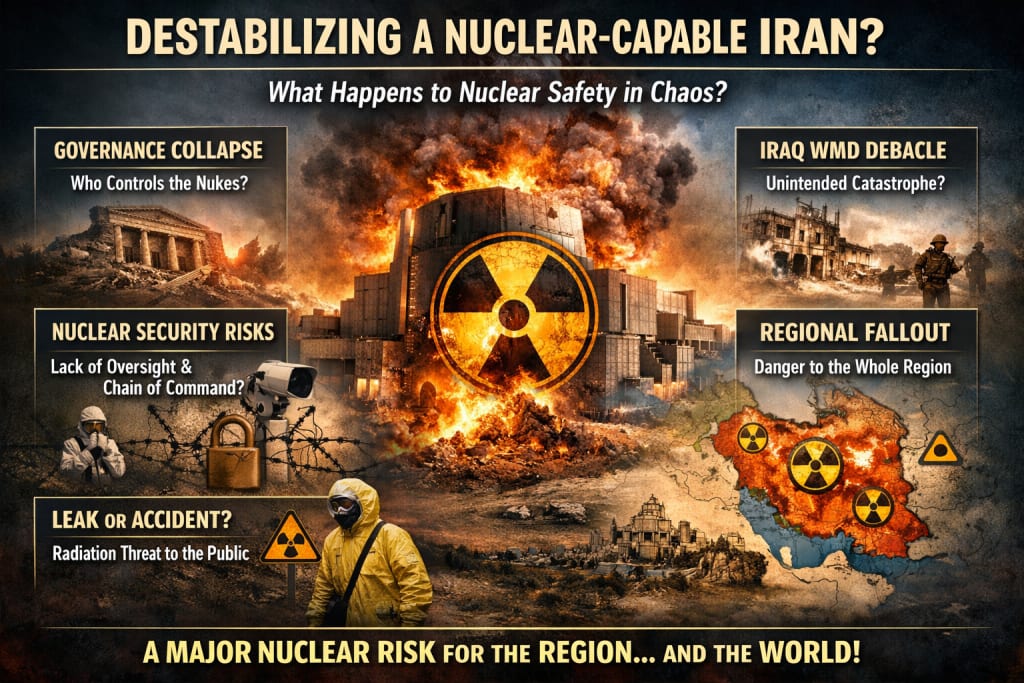
I am not making any claim that Iran has openly deployed nuclear weapons. This is simply a risk analysis. If a state is operating sensitive nuclear infrastructure, continuity in governance is essential for nuclear safety. If that continuity is disrupted or removed, then the question arises: what will happen to nuclear safety?
Nuclear security is not only about the hardware. It is also about ensuring that the institutions overseeing the system remain intact and functional. There must be a clear chain of command and verified oversight—just as we often emphasize in the case of Pakistan.
You may remember that there has long been concern and discussion about whether Pakistan’s nuclear assets could fall into the hands of the Taliban, and whether they were safe. Similarly, when weapons of mass destruction were used as the justification to bomb Iraq, no one seemed to consider that if such weapons had actually been present, even a small leakage or accident could have had catastrophic consequences for the public and for the local population.
In nuclear environments, extreme caution is necessary. However, the way Israel and the United States are behaving raises serious concerns. They are carrying out open bombardments. Previously, a nuclear facility was targeted and afterward it was said that there had been no leakage and that there would be no problem.
But if we accept the argument that Iran is a nuclear-capable country, then such actions are creating a very serious nuclear risk—not only for the region but potentially for the entire world.
When you bomb girls’ schools in Iran, and those girls remain in the headlines for only two days before disappearing from the news, this war-mongering becomes obvious. A Chinese diplomat even said that the United States is war-hungry. This has created a very dangerous situation in the region.
The missing element is a strategy for the Iranian people. Even American authors are writing about this themselves, saying that the U.S. does not seem to care about the people.
For example, an analyst named Applebaum wrote in The Washington Post that if the U.S. is serious about weakening the regime, it must answer several questions: What will the next system be? What will happen to the current system? During the transition period before the next government takes over, what will happen? How will Iranians build legitimacy for the new system?
These things cannot happen in two days or even in two months—it takes time. Again, what will happen during the transition? And if chaos breaks out, what role will the United States play? Do you have any guarantees that you will be able to control it?
Without any political roadmap, you are bombing and pushing people toward destruction. You are empowering hardliners, undermining whatever genuine domestic opposition may exist, and creating instability that has no clear direction.
About the Creator
Ibrahim Shah
I am an Assistant Professor with a strong commitment to teaching,and academic service. My work focuses on fostering critical thinking, encouraging interdisciplinary learning, and supporting student development.
Keep reading
More stories from Ibrahim Shah and writers in The Swamp and other communities.
Analysis Of US-ISR- IRAN WAR
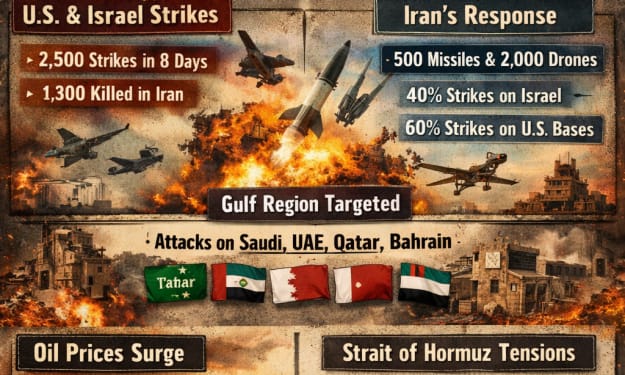
The situation is ongoing, and if I were to summarize the details—because data is coming very late—it's totally difficult to confirm the casualties and how much damage has been done so far. Many reporters, particularly those on Al Jazeera, are stating that footage from both Hezbollah and Israel is not being released. Similarly, in the UAE, there is an effort to prevent influencers and various reporters from sharing information. People are afraid because their business capital is at risk. Additionally, two important things that I discussed in my last blog about the "magazine depth problem" are now being acknowledged by Western media. They also agree that this war won't last for many days and will have to rely on limited strikes. Trump, however, has also stated that there is no end game for this operation, Epic Fury.
By Ibrahim Shah about 7 hours ago in The Swamp
Parallel Protests
I haven't written for quite some time, but I have A LOT of thoughts about yesterday's protest rally against our government's involvement and complicity in America's war on Iran, on the harbourside of my home city Bristol, and I need to put them somewhere. My gorgeous girlfriend is always a loving and listening ear and sharing it all with her will always be a healthy and happy way of processing the mental and emotional weight, but getting it straight in my brain to share means writing it all down in straight lines, so, here we are and thanks for being here.
By Steph Cole8 days ago in The Swamp
How the Royal Navy went from being the envy of the world to a shadow of its former self
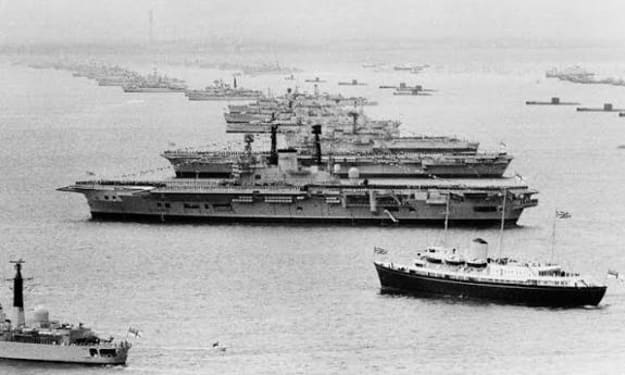
For centuries, the Royal Navy stood as one of the most powerful and respected military forces on the planet. At its height, Britain’s naval fleet dominated global seas, protected vast trade routes, and played a central role in maintaining the British Empire. Today, however, many defense analysts argue that the Royal Navy is only a shadow of its former self, facing shrinking fleets, budget constraints, and growing strategic challenges. The Royal Navy’s dominance began in the 18th and 19th centuries, when Britain relied heavily on maritime power to protect trade and colonial territories. Victories in historic battles such as Trafalgar cemented Britain’s reputation as the world’s leading naval power. At the height of the British Empire, the Royal Navy maintained hundreds of warships stationed across the globe, ensuring that Britain could project power wherever its interests were threatened. Following the Second World War, however, the geopolitical landscape began to change dramatically. The decline of the British Empire, combined with the rise of new superpowers such as the United States and the Soviet Union, gradually reduced Britain’s role as the world’s dominant naval force. Maintaining a massive global fleet became increasingly difficult as economic priorities shifted toward rebuilding the post-war economy. Over the following decades, successive British governments reduced defense spending and focused on modernizing rather than expanding the fleet. While new technologies improved the capabilities of individual ships, the total number of vessels steadily declined. This shift marked the beginning of a long-term contraction in Britain’s naval strength. Today, the Royal Navy operates far fewer ships than it did during its peak years. While the fleet includes advanced aircraft carriers, nuclear submarines, and modern destroyers, critics argue that its size is no longer sufficient to meet the wide range of commitments expected from a global maritime power. One major challenge facing the Royal Navy is maintaining a balance between technological sophistication and fleet size. Modern warships are far more complex and expensive than their historical counterparts. As a result, governments often choose to invest in fewer but more capable vessels. While this strategy enhances technological superiority, it also reduces the number of ships available for simultaneous missions. Personnel shortages have also become a concern. Recruiting and retaining skilled sailors and engineers has grown more difficult in recent years, partly because modern naval systems require highly specialized training. Some reports suggest that staffing shortages have occasionally limited the ability to deploy certain ships or maintain continuous operations. Another issue is the growing range of responsibilities assigned to the Royal Navy. In addition to traditional combat roles, the navy is now involved in humanitarian missions, anti-piracy operations, maritime security patrols, and disaster relief efforts. These diverse tasks stretch resources and place additional pressure on a relatively small fleet. At the same time, global maritime competition is intensifying. Countries such as China are rapidly expanding their naval forces, building dozens of new warships each year. Russia, while smaller in scale, continues to modernize its submarine fleet and invest in advanced missile technologies. These developments are forcing Western navies to reconsider how they allocate resources and plan future strategies. Despite these challenges, supporters of the Royal Navy emphasize that it remains one of the most technologically advanced naval forces in the world. Britain’s aircraft carriers, nuclear-powered submarines, and advanced radar systems provide capabilities that many other nations cannot match. Moreover, the Royal Navy continues to play a vital role within NATO and in international maritime security. Through alliances and joint operations with partners such as the United States and European nations, Britain maintains a significant presence in global waters even with a smaller fleet. Ultimately, the transformation of the Royal Navy reflects broader changes in global power dynamics. The era of a single nation dominating the seas has largely passed, replaced by a more complex and competitive international environment. While the Royal Navy may no longer command the overwhelming dominance it once enjoyed, its legacy and strategic importance remain deeply embedded in Britain’s national identity and global role.
By Fiaz Ahmed 5 days ago in The Swamp


Comments
There are no comments for this story
Be the first to respond and start the conversation.