
US Senate Vote Fails to Rein in Trump War Powers on Iran
Senators block effort to require congressional approval for continued military operations, highlighting deep divisions over presidential authority amid escalating conflict.
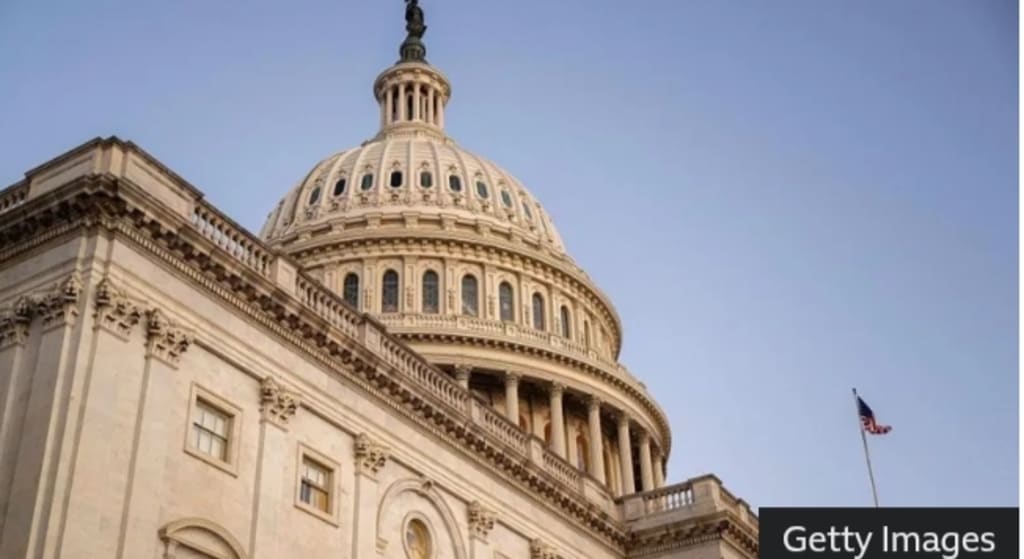
In a high-stakes vote this week, the United States Senate rejected a resolution aimed at limiting President Donald Trump’s authority to conduct military operations against Iran without explicit congressional approval. The measure failed 47–53, largely along party lines, effectively granting the president broader discretion to continue the escalating U.S.-Israeli campaign in the Middle East.
The resolution, introduced by Democratic Sen. Tim Kaine of Virginia and co-sponsored by Republican Sen. Rand Paul, sought to require the removal of U.S. forces from hostilities within or against Iran unless Congress formally authorized continued military engagement. Proponents argued that the conflict, which has already resulted in casualties on both sides, exceeds the scope of presidential authority and warrants direct legislative oversight. (Al Jazeera�)
Senate Blocks War Powers Oversight
The procedural vote prevented the resolution from advancing to debate, underscoring the Senate’s deep partisan split over executive power. Supporters argued that sustained military operations without congressional approval violate the constitutional balance of war powers. Critics countered that the president acted within his authority as commander-in-chief, citing the need for swift action in a dynamic military conflict. (Time�)
Under the 1973 War Powers Resolution, presidents must notify Congress within 48 hours of introducing armed forces into hostilities and withdraw them after 60 days unless Congress authorizes continued engagement. Supporters of the measure argued that the ongoing Iran conflict far exceeds these thresholds and requires explicit legislative approval. (ABC7�)
Supporters’ Arguments
Senators backing the resolution emphasized constitutional checks and balances.
Sen. Kaine said the administration had not demonstrated any imminent threat from Iran that would justify unilateral action. “Even in a classified setting,” he stated, “officials could not show a direct, immediate threat to justify this war without Congress.” (Al Jazeera�)
Democrats warned that allowing unchecked executive authority sets a dangerous precedent, enabling presidents to engage in extended military conflicts without debate or oversight. They cited decades of U.S. military engagements initiated by presidents that lacked formal congressional approval as examples of the risks involved.
Republican Opposition
Most Republican senators opposed the measure, arguing that Trump acted lawfully to protect U.S. national security. They emphasized that restricting presidential flexibility during active conflict could weaken America’s strategic position.
Senate Majority Leader John Thune and other GOP leaders stressed that the president must have the authority to respond to Iranian threats in real time. They characterized the strikes as pre-emptive and defensive measures necessary to protect U.S. forces and allies in the region. (PBS�)
Sen. Rand Paul was the only Republican to support the resolution, highlighting his consistent stance on limiting executive war powers.
A Divided Senate
The vote demonstrated not only partisan division but also exceptions on both sides. Democratic Sen. John Fetterman broke with his party to vote against advancing the resolution, while Rand Paul was the sole Republican supporting it. Many moderate senators sided with party leadership, prioritizing perceived national security needs over oversight concerns. (MS Now�)
Implications for U.S. Policy
The failed resolution gives President Trump greater latitude to continue military operations in Iran, Israel, and regional theaters without immediate congressional intervention. Analysts warn that the outcome could shape future executive-legislative relations and influence how presidents interpret their war powers in conflicts that evolve rapidly.
Democrats have indicated plans to continue pursuing similar resolutions in the House of Representatives, although passage faces significant hurdles in a Republican-controlled chamber. Even if the House passes a measure, a presidential veto would require a two-thirds majority in both chambers to override. (Time�)
Reactions and Broader Debate
The vote has sparked heated debate over constitutional authority and the separation of powers:
Democrats and civil liberties advocates argue that Congress failed to assert its constitutional duty to check the president, potentially allowing prolonged military engagement without legislative oversight. (Al Jazeera�)
Republicans supporting Trump frame the decision as necessary for national defense and strategic flexibility during an active conflict. (PBS�)
Constitutional scholars caution that the War Powers Resolution is largely unenforceable without political will, leaving Congress reliant on partisan alignment to assert authority. (ABC7�)
Next Steps
While the Senate vote represents a setback for congressional oversight advocates, the debate is far from over. The House may revisit war powers measures, and future legislative efforts could test the limits of executive authority.
Meanwhile, the U.S. military campaign in Iran continues to escalate, raising questions about duration, strategy, and international consequences. The balance between national security priorities and constitutional oversight remains at the forefront of the debate.
Key Takeaways:
Senate vote fails 47–53, blocking a measure to require congressional approval for continued military action in Iran. (Al Jazeera�)
Democrats argue the president exceeded constitutional authority. (Al Jazeera�)
Republicans defend Trump’s authority as commander-in-chief. (PBS�)
The vote underscores ongoing tension over executive versus legislative control of military engagements. (MS Now�)
The failed vote marks a pivotal moment in U.S. governance, highlighting the ongoing struggle between presidential authority and congressional oversight amid an active conflict in the Middle East.
About the Creator
A Gathering of Evil Bosses
“I’m the queen of chin jutting while I smooth my hair, attacking, insulting, and deflecting to protect my appointer.” “Oh, please, Blondi, my hair is curled, highlighted, and longer than yours. I feature television commercials telling immigrants that we will give them a free plane ride home, and if they voluntarily turn themselves in, they will be allowed to legally apply for re-entry. It runs everywhere, and I look good in it! You can’t compete because of your blond hair. Mine is nicer, and my lips are prettier than yours.”
By Andrea Corwin 15 days ago in The Swamp
Ayatollah Khamenei’s Iron Grip on Power in Iran Comes to an End
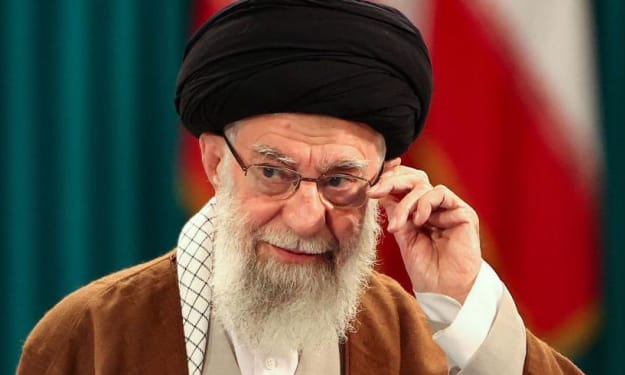
Ayatollah Ali Khamenei, who ruled Iran with an iron grip for more than three decades, is dead at age 86 — a historic turning point that brings an abrupt end to his authoritarian control over the Islamic Republic’s political, military, and religious machinery. Iranian state media confirmed his death early Sunday following coordinated airstrikes by the United States and Israel that targeted key leadership sites in **Tehran. The announcement, broadcast on state television, declared a period of 40 days of national mourning and marked the beginning of a volatile succession process. For decades, Khamenei embodied the Islamic Republic’s theocratic establishment, maintaining ultimate authority over Tehran’s political, military, and security institutions. He succeeded Ruhollah Khomeini after the latter’s death in 1989 and fundamentally shaped Iran’s trajectory as a deeply authoritarian state. Under his rule, the clerical elite and the Islamic Revolutionary Guard Corps (IRGC) became dominant forces within Iran’s power structure, controlling everything from national defence to major economic assets. A Regime Built on Control and Repression Khamenei’s leadership was defined by rigid ideological control and the suppression of dissent. Though Iran maintained formal republican institutions — including a president and parliament — it was the supreme leader who wielded final authority over internal policy, the judiciary, and foreign affairs. Dissent was routinely met with harsh crackdowns, and major protest movements were often brutally suppressed. The nationwide protests following the 2022 death of Mahsa Amini, a young woman who died in morality police custody, were among the largest challenges to his rule. Security forces responded with lethal force, resulting in tragic loss of life and drawing international condemnation. Internationally, Khamenei pursued a confrontational foreign policy centered on anti-Western rhetoric and strategic competition with the United States and Israel. He championed support for allied militia and political movements across the region — from Syria to Lebanon — creating what Tehran described as an “Axis of Resistance” against perceived external threats. This network helped expand Iran’s regional influence, even as U.S. and allied forces pushed counter-measures. Death and Power Vacuum Khamenei’s death follows a dramatic escalation triggered by U.S.–Israeli strikes in Iran. Iranian state media reported that he died “while performing his assigned duties,” blaming Israel and the U.S. for the attack and describing him as a martyr of the Islamic Republic. Flags were ordered lowered to half-mast, and state media suspended regular programming. The immediate consequence of his death is a power vacuum at the heart of Iran’s political system. Iran’s constitution requires the Assembly of Experts, a body of senior clerics, to select the next supreme leader. However, no clear successor has been identified, and hardliners associated with the IRGC are widely seen as likely contenders. In the interim, a three-member leadership council — composed of the president, the head of the judiciary, and a jurist from the Guardian Council — is expected to assume temporary authority. Uncertain Succession and Factional Tensions The transition period could expose fractures within Iran’s political elite. Khamenei’s authority was sustained by a tightly controlled security apparatus and loyalty networks, but without his unifying figure, rival factions could struggle for dominance. The IRGC’s role will be especially significant: as the backbone of Iran’s domestic control and foreign projection, it may seek to shape the succession in its favour, raising fears of further militarisation of politics. At the same time, public reactions inside Iran are complex. While conservative factions mourn his death and frame it as martyrdom, segments of the population — especially those critical of years of economic hardship and restricted freedoms — view his passing as the end of an era marked by repression and isolation. Analysts caution that if the transitional process lacks legitimacy or transparency, it could exacerbate unrest and deepen internal instability. Khamenei’s death has prompted concern across the Middle East and beyond. Governments in the region are bracing for possible escalation or fallout from Tehran’s reaction. Western capitals have urged restraint, warning that unchecked conflict could destabilise key energy corridors and international markets. Meanwhile, global powers are watching developments in Tehran’s political process closely, aware that leadership shifts in Iran could upend decades-long strategic calculations. As Iran embarks on this uncertain transition, the question of what replaces Khamenei’s iron grip — whether a continuation of hardline rule or a contest for influence among competing elites — will be central to determining the future of the Islamic Republic and its role on the world stage.
By Fiaz Ahmed 4 days ago in The Swamp
me, me, me
when i read back my poetry it screams “me, me, me” on my screen in bold letters and i can’t shut it up — most days, i cannot make any other words out; i want to throttle a thousand versions of the me gone by, i want to throw myself from a figurative balcony, i want to sink a sword into every pen i’ve held
By angela hepworth8 days ago in Poets


Comments
There are no comments for this story
Be the first to respond and start the conversation.