Latest Stories
Most recently published stories in Wander.
Turkey: Take THEM With You.
The first time I went to Istanbul, I went with my sister. The second time, I brought family. Picture from the trip. Same city. Same accommodation - right in the center of everything, the spot we'd found the first time and couldn't justify leaving.
By Destiny S. Harrisabout 13 hours ago in Wander
They Read My Future in a Coffee Cup in Istanbul
See Pictures from the trip here. That's the honest starting point. I sat down, drank the coffee - which is strong in a way that makes you question every cup you've had before it, the kind of strong you'd rather smell than commit to - flipped the cup upside down on the saucer, and waited.
By Destiny S. Harrisabout 13 hours ago in Wander
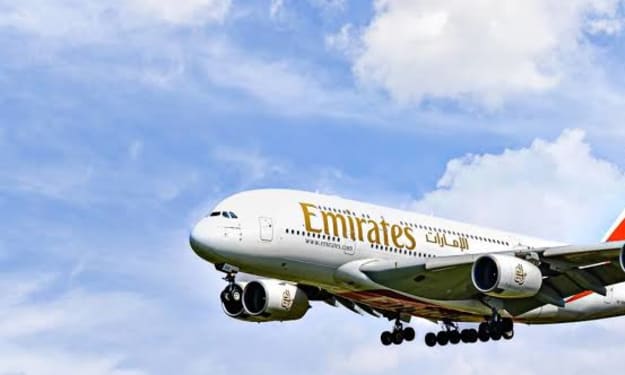
A Fear for Travelers Escaping the Gulf: Are Flights Safe?. AI-Generated.
As tensions rise across the Persian Gulf region, thousands of travelers are increasingly asking a troubling question: are flights leaving the Gulf still safe? Airlines, aviation authorities, and governments have all moved to reassure passengers, but recent geopolitical developments have heightened anxieties among those attempting to leave the region or pass through its busy airspace. The Gulf has long been one of the most important aviation crossroads in the world. Major hubs such as Dubai International Airport, Hamad International Airport, and King Khalid International Airport connect Europe, Asia, and Africa through a dense network of international flights. Every day, hundreds of aircraft pass through regional airspace carrying business travelers, tourists, migrant workers, and cargo. However, the recent escalation of military tensions involving Iran and its regional rivals has raised concerns about aviation safety. Missile launches, drone activity, and military operations in nearby areas have made some passengers uneasy about flying through the region. Several governments have issued travel advisories urging airlines to review flight paths and exercise caution when operating near potential conflict zones. Despite these concerns, aviation experts stress that commercial aviation remains one of the most heavily monitored and regulated industries in the world. Airspace safety is continuously assessed by international bodies such as the International Civil Aviation Organization, as well as national aviation authorities that issue warnings and restrictions when necessary. In recent weeks, some airlines have slightly adjusted flight routes to avoid certain areas where military activity has increased. These adjustments can involve flying at different altitudes or diverting aircraft around particular air corridors. While such changes may add extra travel time, they are designed to maintain maximum safety for passengers and crew. Airlines based in the Gulf—including Emirates, Qatar Airways, and Etihad Airways—have emphasized that they are closely monitoring developments in coordination with aviation authorities. Company representatives say flight routes are reviewed constantly using real-time intelligence and airspace risk assessments. Aviation safety experts note that modern aircraft are equipped with sophisticated navigation systems that allow them to avoid restricted zones quickly. Additionally, pilots receive constant updates from air traffic controllers and global aviation monitoring networks. If conditions change during a flight, routes can be altered immediately. Still, the psychological impact of regional instability should not be underestimated. Travelers waiting at airports across the Gulf have described a sense of uncertainty, particularly those leaving areas closer to potential conflict zones. Social media images showing crowded departure halls and long lines at ticket counters reflect a growing urgency among some residents and visitors hoping to leave the region temporarily. For many passengers, the fear is rooted in memories of past aviation incidents linked to geopolitical conflict. Experts point to tragedies in previous decades where civilian aircraft were caught in dangerous airspace. These events led to stricter international regulations and more sophisticated monitoring systems designed to prevent similar situations. Governments across the region have also sought to reassure travelers. Officials stress that airports remain secure and that aviation authorities are working closely with international partners to maintain safe air routes. Security checks and surveillance at major airports have been increased, and contingency plans are in place should the situation worsen. Meanwhile, airlines continue to operate the majority of scheduled flights without interruption. Aviation analysts note that completely shutting down Gulf airspace would have enormous global economic consequences, given the region’s role as a central hub for long-distance travel and cargo transport. Ultimately, experts say the key factor is constant monitoring and rapid response to emerging risks. Aviation authorities around the world maintain detailed systems for assessing conflict zones, allowing airlines to adjust operations long before flights approach dangerous areas. For now, flights across the Gulf continue to operate under heightened awareness but with robust safety protocols in place. While regional tensions have understandably created anxiety among travelers, industry professionals insist that the global aviation system is designed precisely to manage such risks. For passengers boarding planes in the Gulf today, the journey may carry a heightened sense of uncertainty. Yet according to aviation experts and regulators, the safety measures protecting commercial flights remain among the most comprehensive of any form of transportation in the world. ✈️
By Fiaz Ahmed about 17 hours ago in Wander
Worth the Wait: Puerto Viejo, Costa Rica
Beach bumming in a small Caribbean beach town sounded like a perfect way to end our 6-month trip through Mexico and Central America. Or so we thought. The foul, fishy stench of rotten seaweed hit our nostrils as we stepped from the cramped bus and looked out at a rather depressing, empty, and underwhelming black sand beach. It was pouring with rain, and we had to quickly fish out our ponchos. We thought, this couldn’t be it, could it?
By Sh*t Happens - Lost Girl Travela day ago in Wander
The Little Things Americans Take For Granted
America isn’t perfect. The entire country needs a serious makeover and attitude adjustment. We have it better in the country than people in some places, despite the flaws. People in some countries cannot enjoy freedom of speech. Women do not enjoy equal rights. Basic humanneeds like water and electricity are not always available. Simple acts can land someone in jail. We take so much for granted here in America. We’ve come to expect extras like electricity and Internet service. Far too often, we forget that people in some countries could only dream of the same luxuries.
By Criminal Matters3 days ago in Wander
How To Find the Most Scenic Places to Photograph Around Dambulla
Sri Lanka is a great country to visit, filled with history, scenery as well as a plethora of fun activities. Among the cities of interest is Dambulla, a place where scenery, historic landmarks and travel come together for photographers. The area is known for its cave temples, rock formations as well as nature-filled surroundings, giving travellers many places to capture. This guide breaksdown practical and straightforward ways to plan your photography journey in Dambulla.
By Daphne Olga4 days ago in Wander