Latest Stories
Most recently published stories in Earth.
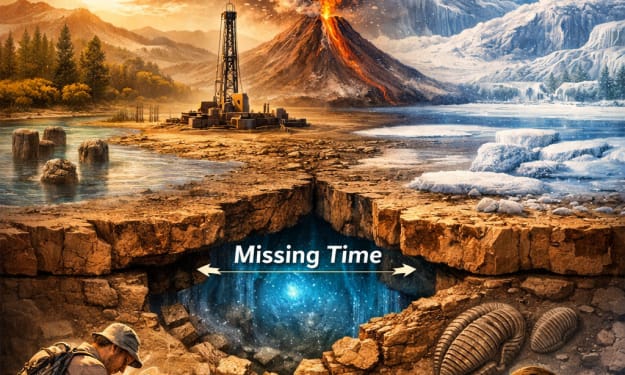
The Search for Earth’s Missing Billion Years
Earth’s history stretches back about 4.5 billion years, recorded in the rocks, minerals, and fossils that form the planet’s geological archive. Yet within this immense timeline lies a puzzling mystery often referred to by scientists as the “missing billion years.” During this period, an enormous span of time appears strangely quiet in the geological record, raising important questions about what exactly happened on Earth during that era.
By Irshad Abbasi about 3 hours ago in Earth
The Giant Beneath the Ceiling
At the heart of the Natural History Museum in London, visitors entering the magnificent Hintze Hall are greeted by a breathtaking sight: the enormous skeleton of a blue whale suspended from the ceiling. This remarkable display, known as “Hope,” represents not only the largest animal ever known to have lived on Earth but also a powerful message about conservation and humanity’s relationship with nature.
By Irshad Abbasi about 4 hours ago in Earth
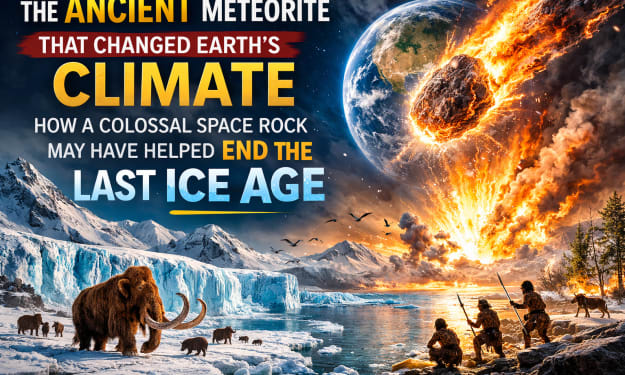
The Ancient Meteorite That Changed Earth’s Climate
Throughout Earth’s long and dramatic history, many natural events have shaped the planet’s climate and life. Among the most powerful of these events are meteorite impacts. Scientists believe that one of the earliest and most significant meteorite collisions with Earth may have played a crucial role in ending the last great ice age and transforming the planet’s environment.
By Irshad Abbasi about 4 hours ago in Earth
Harmful Effects of the Environment
The environment is the natural world around us. It includes air, water, land, plants, animals, and all living and non-living things that support life on Earth. A healthy environment is very important for the survival and well-being of humans, animals, and plants. However, in recent years, the environment has been facing serious harm due to human activities. Pollution, deforestation, and climate change are some of the major environmental problems that are affecting the world today. These harmful effects are not only damaging nature but also creating serious challenges for human life.
By aadam khanabout 6 hours ago in Earth
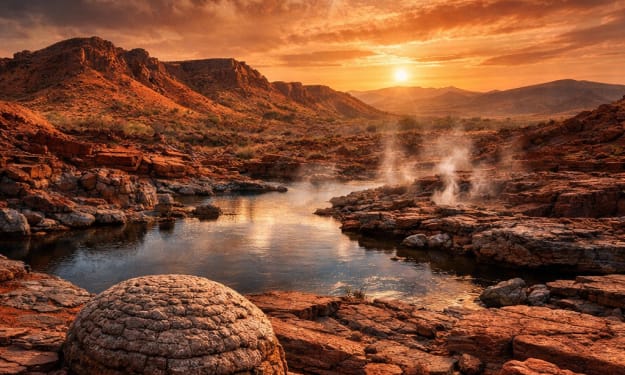
Is Australia’s Pilbara the Oldest Place on Earth?
Deep in the remote landscapes of Western Australia lies a region that scientists believe may be one of the oldest places on Earth. Known as Pilbara, this vast and rugged area has attracted global attention from geologists and researchers who study the early history of our planet. With rocks estimated to be more than 3.5 billion years old, the Pilbara region provides a rare window into Earth’s distant past.
By Irshad Abbasi about 12 hours ago in Earth
The Moment Between Rest and Breakthrough
Why Being “Busy” Isn’t Always Moving Forward Lately, I’ve been looking at the sky more than usual. My daughter has started a little routine every evening. She runs outside and asks in her tiny voice, “Mommy, where’s the moon?” Then she squints into the fading light, searching for the first tiny spark of what she calls the sparkling stars.
By Noman Khan about 22 hours ago in Earth
How Bad Is AI for the Environment, Really?
Artificial intelligence is rapidly becoming part of everyday life. From chatbots and image generators to recommendation algorithms and automated customer service, AI systems are now embedded in countless digital tools.
By Navigating the Worlda day ago in Earth
2016 Could Break Global Record as the Hottest Year Ever
Scientists around the world warned that 2016 could become the hottest year ever recorded, highlighting the accelerating impact of climate change on the planet. Data from major climate organizations indicated that global temperatures were rising at an alarming rate, raising concerns about environmental stability, extreme weather events, and the long-term future of the Earth’s climate system.
By Irshad Abbasi a day ago in Earth
Air Pollution Linked to Declining Arctic Ice
Air pollution has long been considered a major threat to human health and ecosystems around the world. However, new scientific findings suggest that its effects extend far beyond the regions where pollution is produced. Recent research indicates that air pollution from industrialized areas, particularly in China, may be contributing to the loss of sea ice in the Arctic. This connection highlights how environmental problems in one part of the world can have serious consequences thousands of kilometers away.
By Irshad Abbasi a day ago in Earth
The Last Forest: Witnessing the Destruction of the Amazon and What It Means for Human Survival
The first thing you notice when you stand at the edge of an area where rainforest has been recently cleared is the silence, an absence of sound so complete and unnatural that it seems to press against your eardrums like physical weight, because a healthy rainforest is never quiet, never still, but rather pulses with constant life, the calls of hundreds of bird species layering over insect buzzing and monkey vocalizations and the rustling of creatures moving through the canopy, a symphony of biodiversity that represents millions of years of evolution creating intricate webs of interdependence, and when that forest is cut down, when the chainsaws finish their work and the fires burn out, what remains is a silence that feels like death, because that is exactly what it is, the death of an ecosystem and all the countless beings who called it home. I have stood at that terrible edge dozens of times over the past decade working as an environmental journalist documenting the accelerating destruction of the Amazon rainforest, and each time the silence hits me with fresh force, a reminder of what we are losing, not in some distant future but right now, in this moment, at a pace that should terrify anyone who understands what the Amazon means for global climate stability, biodiversity preservation, and ultimately human survival on this planet.
By The Curious Writera day ago in Earth
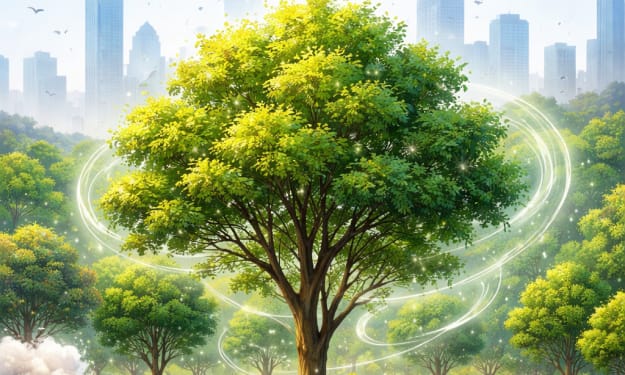
A Green Solution to Urban Pollution
Air pollution has become one of the most serious environmental challenges facing modern cities. Rapid industrialization, increasing vehicle emissions, and expanding urban populations have significantly degraded air quality around the world. Polluted air not only harms ecosystems but also poses severe health risks to humans, contributing to respiratory diseases, heart conditions, and reduced life expectancy. Among the many strategies proposed to combat this problem, planting and preserving trees stands out as one of the most natural, cost-effective, and sustainable solutions.
By Irshad Abbasi a day ago in Earth