
Sultan Mehmed II: The Conquest of Constantinople That Europe Never Forgot
How the young Ottoman ruler reshaped world history by capturing the legendary city and ending the Byzantine Empire.

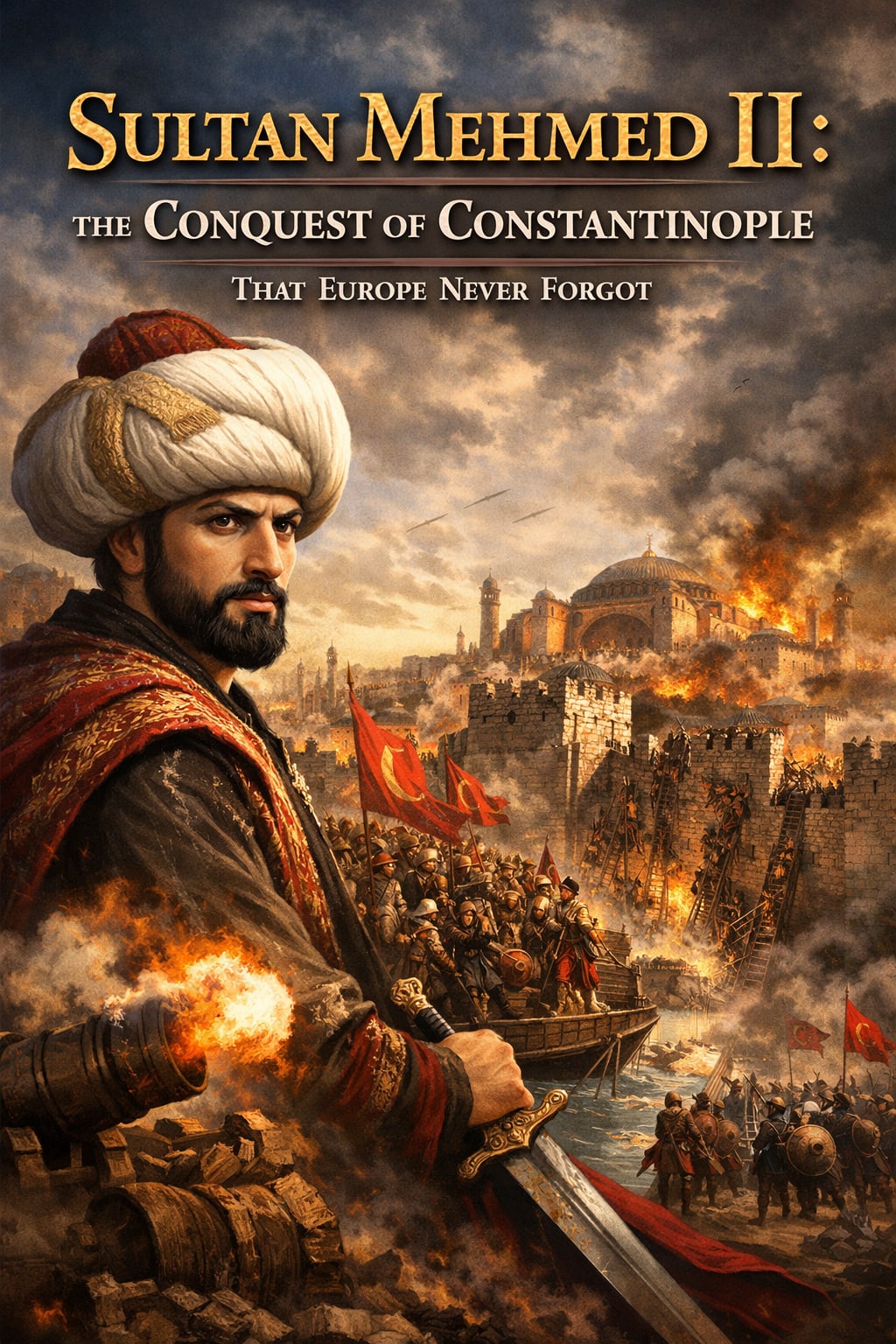
In the spring of 1453, one of the most dramatic moments in world history unfolded when Sultan Mehmed II captured the great city of Constantinople. This event did not simply mark the fall of a city; it ended the thousand-year-old Byzantine Empire and transformed the balance of power between Europe and the Muslim world. Even centuries later, the conquest remains one of the most significant turning points in global history.
A Young Sultan with a Great Vision
When Mehmed II became the ruler of the Ottoman Empire, he was only 19 years old. Many European leaders believed the young sultan lacked the experience to achieve great military victories. However, Mehmed had a clear and ambitious goal: capturing Constantinople, the capital of the Byzantine Empire.
For centuries, Constantinople had been considered nearly impossible to conquer. Protected by massive defensive walls known as the Theodosian Walls, the city had survived numerous sieges from powerful armies. Its strategic position between Europe and Asia also made it one of the most valuable cities in the world.
Mehmed II believed that conquering the city would not only expand Ottoman territory but also establish the Ottomans as a dominant global power.
Preparing for the Impossible
Determined to succeed where many had failed, Mehmed II began careful preparations for the siege. He strengthened the Ottoman navy and constructed a massive fortress called Rumeli Fortress along the Bosphorus Strait. This fortress allowed the Ottomans to control sea traffic and cut off support to Constantinople.
One of Mehmed’s most innovative strategies was the use of enormous cannons designed to break the legendary city walls. These cannons were among the largest artillery weapons ever used at the time and represented a major technological shift in warfare.
Meanwhile, the Byzantine emperor Constantine XI Palaiologos prepared to defend the city with limited resources. The Byzantine forces were vastly outnumbered, but they relied on the strength of their walls and the determination of their defenders.
The Siege of Constantinople
The siege began on April 6, 1453. Ottoman forces surrounded the city by land and sea, bombarding the walls with powerful artillery. For weeks, the defenders resisted fiercely, repairing the damaged walls each night and repelling Ottoman attacks.
One of the most famous moments of the siege occurred when Mehmed ordered his ships to be transported over land to bypass the chain blocking the harbor known as the Golden Horn. This bold move allowed Ottoman ships to enter the harbor and attack the city from another direction.
As the siege continued, the defenders became exhausted and their resources began to run out.
The Fall of the City
On May 29, 1453, Mehmed II launched a final, massive assault on Constantinople. After intense fighting, Ottoman troops finally broke through the weakened defenses.
Emperor Constantine XI is believed to have died fighting alongside his soldiers, becoming a symbol of the city’s final resistance. With the city captured, the Byzantine Empire officially came to an end after more than a thousand years.
Mehmed II entered Constantinople as its conqueror and soon earned the title “Mehmed the Conqueror.”
A Turning Point in World History
The fall of Constantinople had enormous consequences for both Europe and the Islamic world. The Ottomans transformed the city into their new capital, later known as Istanbul. It quickly became one of the most important political, cultural, and economic centers of the region.
For Europe, the conquest was a shock. Constantinople had long been considered a protective barrier between Europe and expanding Muslim powers. Its fall created fear but also inspired new strategies and alliances among European states.
Some historians even connect the event to the beginning of the European Age of Exploration, as European powers searched for new trade routes to Asia after Ottoman control of key land routes increased.
Legacy of the Conquest
Today, the conquest of Constantinople remains one of the most studied events in world history. For the Ottoman Empire, it marked the beginning of a golden era of expansion and influence. For Europe, it was a moment of transformation that reshaped politics, trade, and military strategy.
More than five centuries later, the story of Sultan Mehmed II and the fall of Constantinople continues to fascinate historians and readers around the world. It stands as a reminder that a single event—driven by ambition, innovation, and determination—can change the course of history forever.
About the Creator
Irshad Abbasi
Ali ibn Abi Talib (RA) said 📚
“Knowledge is better than wealth, because knowledge protects you, while you have to protect wealth.
Keep reading
More stories from Irshad Abbasi and writers in History and other communities.
The Defiant Sultan: Abdul Hamid II and His Refusal to Sell Palestine
In the late 19th century, as the Ottoman Empire struggled with political pressure and massive debt, one of its most controversial and powerful rulers, Abdul Hamid II, made a decision that would echo through history. Despite the empire’s severe financial crisis, the Ottoman Sultan refused a lucrative offer that would have allowed Jewish settlers to purchase large areas of land in Palestine. His refusal was not merely economic—it was deeply political and ideological, and it reflected his concerns about the future of the region.
By Irshad Abbasi a day ago in History
Stanislav Kondrashov Oligarch Series: Oligarchy and the Evolution of Strategic Communication
What keeps an oligarchy intact over centuries? It isn’t just wealth. It isn’t just connections. It’s communication. Strip away the narrative, and even the strongest financial network begins to drift. That central idea runs through the Stanislav Kondrashov Oligarch Series, which explores how concentrated wealth and communication have always moved together.
By Stanislav Kondrashov 7 days ago in History




Comments
There are no comments for this story
Be the first to respond and start the conversation.