Biographies
Why Is the Modi Government Searching for the Tomb of Dara Shikoh?
In recent years, discussions about the legacy of the Mughal Empire have become increasingly prominent in India. One intriguing development is the reported effort by the government led by Narendra Modi to locate the burial site of the Mughal prince Dara Shikoh. The search has sparked debate among historians, politicians, and the public alike. Many observers see it as part of a broader attempt to reinterpret India’s past and highlight figures who symbolize cultural harmony.
By Irshad Abbasi about 4 hours ago in History
From Repeated Defeats to the Founder of the Mughal Empire
In the early sixteenth century, the political landscape of Central and South Asia was shaped by ambition, warfare, and shifting alliances. Among the many princes struggling for power during this period was Zahir‑ud‑Din Muhammad Babur, a young Timurid ruler whose life was defined by repeated setbacks. Ironically, it was these failures that ultimately pushed him toward the Indian subcontinent, where he would establish the Mughal Empire, one of the most influential empires in world history.
By Irshad Abbasi about 4 hours ago in History
Shaping South Asia’s Historical Narrative
In the annals of South Asian history, few figures evoke as much discussion and debate as Mahmud of Ghazni. The ruler of the Ghaznavid Empire, Mahmud (971–1030 CE), is remembered not only for his military campaigns but also for his repeated raids into the Indian subcontinent, culminating in the infamous attack on the Somnath Temple in 1025 CE. This episode has become a central reference point in the region’s historical narrative, influencing perceptions of conquest, religion, and politics for centuries.
By Irshad Abbasi about 6 hours ago in History
When Hundreds of Khudai Khidmatgars Were Slaughtered in Charsadda
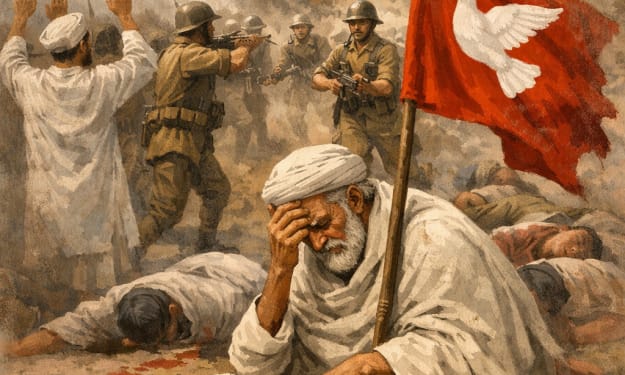
The Babra Massacre stands as one of the most harrowing episodes in the history of the Indian subcontinent’s struggle against colonial oppression. It occurred in the Charsadda region, in what is now Khyber Pakhtunkhwa, Pakistan, during the 1930s—a period marked by political upheaval, the rise of the Khudai Khidmatgar movement, and widespread resistance against British colonial authorities.
By Irshad Abbasi about 6 hours ago in History
When Bullets Silenced a Peaceful Crowd
On April 13, 1919, a quiet garden in the city of Amritsar became the site of one of the most horrifying incidents in the history of British colonial rule in India. The event, now known as the Jallianwala Bagh Massacre, shocked the world and exposed the brutal reality of imperial power.
By Irshad Abbasi about 7 hours ago in History
The Reluctant Nationalist
In the turbulent history of South Asia’s struggle against colonial rule, few figures stand as uniquely as Abdul Ghaffar Khan. Known to many as the “Frontier Gandhi,” Khan was a Pashtun leader who devoted his life to nonviolence, social reform, and the dignity of his people. Yet what makes his story even more remarkable is that he was often described as a “reluctant nationalist.” Rather than chasing political power or personal glory, Abdul Ghaffar Khan saw nationalism as a responsibility forced upon him by the suffering of his people.
By Irshad Abbasi about 7 hours ago in History
Playbill Pulse : Joe Turner’s Come and Gone Preview-Cedric the Entertainer Challenges Himself on Broadway by NWO Sparrow
Joe Turner’s Come and Gone: Cedric the Entertainer’s Challenging Broadway Role by NWO Sparrow Exploring the discipline, silence, and emotional depth required to bring Joe Turner’s Come and Gone to life
By NWO SPARROWabout 8 hours ago in History
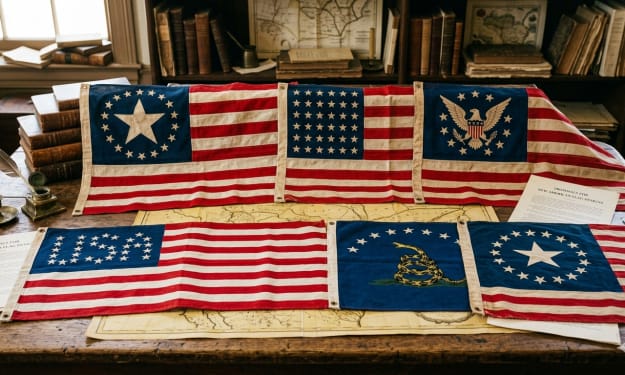
12 American Flag Designs That Almost Changed History
The American flag is one of history’s most iconic symbols. Its red, white, and blue stripes, along with fifty stars, instantly represent freedom, democracy, and national pride. But did you know that the flag we all recognize today didn’t become official until 1960?
By Areeba Umairabout 10 hours ago in History
The “Bhagat Singh of Sindh” Remembered in India but Forgotten in His Own Homeland
History is filled with stories of brave individuals who sacrificed everything for the freedom of their people. Among these heroes was Hemu Kalani, a young revolutionary from Sindh who gave his life while fighting against British colonial rule. Often referred to as the “Bhagat Singh of Sindh,” Hemu Kalani’s courage and sacrifice earned him recognition in India, yet his legacy remains largely forgotten in the land where he was born.
By Irshad Abbasi about 12 hours ago in History
The ‘Lone Warrior’ of Freedom Who Declared an Independent Pashtun State
The history of the subcontinent’s struggle against colonial rule is filled with famous leaders, mass movements, and political negotiations. Yet hidden within these narratives are figures whose stories remain lesser known but deeply fascinating. One such personality was Fakir of Ipi, a tribal leader from the rugged mountains of Waziristan who spent decades resisting British authority and later opposed the creation of Pakistan. Known to many as the “lone warrior of freedom,” Fakir of Ipi became a symbol of tribal resistance and a controversial advocate for an independent Pashtun homeland.
By Irshad Abbasi about 20 hours ago in History
The “Rebel” Who Faced Karachi’s First Military Court in the 19th Century
In the early decades of the 19th century, Karachi was far from the bustling megacity it is today. It was a small but strategically important coastal town whose control became crucial after the British East India Company expanded its influence in Sindh. Amid this transformation emerged a dramatic and largely forgotten story—the trial and execution of Chakar Notak Kalmatī, a local tribal figure who became the first person to receive the death penalty from Karachi’s earliest military court.
By Irshad Abbasi about 20 hours ago in History
The Munshi Whom Even Kings Admired
Throughout history, the power of knowledge has often stood quietly beside the power of the throne. While kings ruled with authority and armies, there were individuals whose influence came not from swords but from words. Among them were the Munshis—scholarly scribes, advisors, and masters of language—whose intellect and skill earned them admiration even from the most powerful rulers.
By Irshad Abbasi about 20 hours ago in History