
The Next Phase of Global Conflict: Technology, Power, and the Future of War
How AI, Cyber Warfare, and Strategic Rivalries Could Shape the Next Global Crisis

The Next Phase of Global Conflict: Technology, Power, and the Future of War
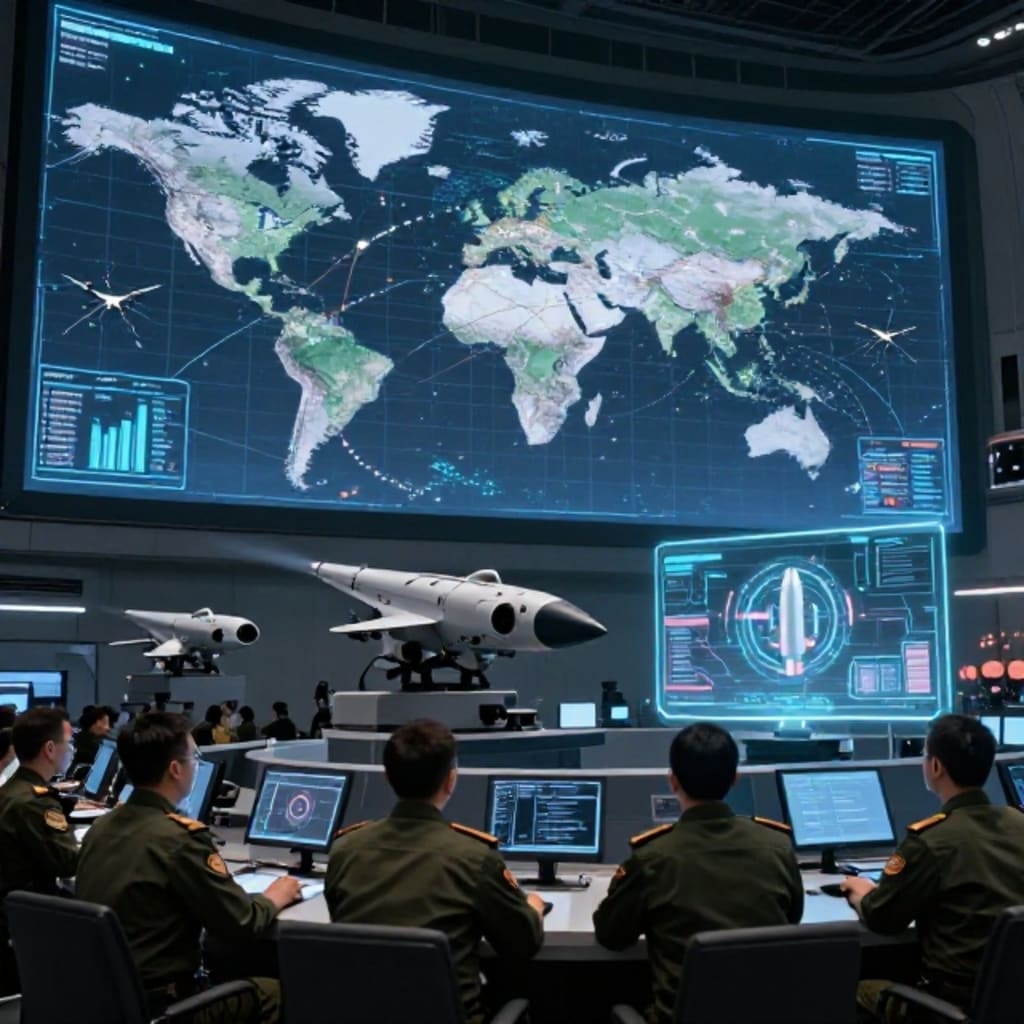
The nature of war is changing faster than ever before. In the past, conflicts were fought mainly with soldiers, tanks, and aircraft. Today, however, the battlefield has expanded into cyberspace, artificial intelligence systems, and digital infrastructure. Governments around the world are rapidly investing in new technologies that could determine the balance of power in the coming decades.
One of the most significant developments in modern warfare is the rise of artificial intelligence. Military planners believe AI systems can analyze massive amounts of data, detect threats faster than humans, and make decisions in seconds during combat situations. This technology has already begun to transform intelligence gathering, drone operations, and missile defense systems.
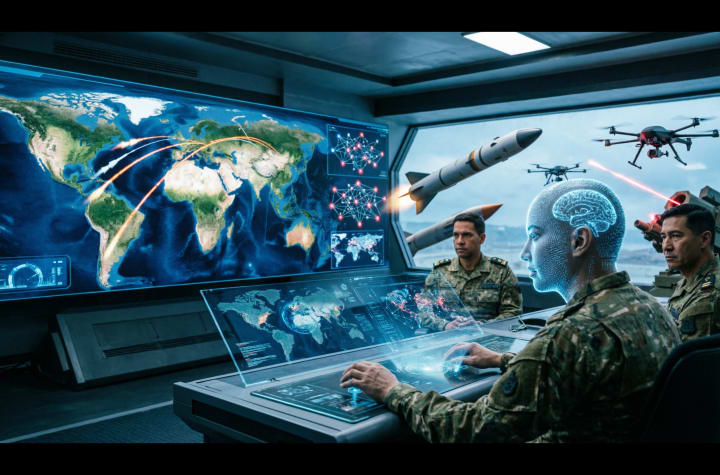
Countries such as the United States, China, and Russia are leading the race to develop advanced AI-based military technologies. These nations view artificial intelligence not just as a tool but as a strategic advantage that could decide the outcome of future wars.
For example, AI-powered drones can now operate with minimal human control. These drones can scan large areas, identify targets, and coordinate with other machines in real time. Military experts believe that in future conflicts, swarms of autonomous drones could overwhelm traditional defense systems. Instead of sending large numbers of soldiers into battle, countries might deploy thousands of intelligent machines.
Another major concern is cyber warfare. Modern countries depend heavily on digital systems for electricity, banking, transportation, and communication. If an enemy manages to disrupt these systems through cyber attacks, the result could be chaos without a single missile being launched.
In recent years, cyber attacks have already targeted power grids, government databases, and financial institutions around the world. Experts warn that future conflicts might begin not with explosions but with widespread digital blackouts and communication failures.
The development of new weapons technologies is also accelerating. Hypersonic missiles, for instance, can travel at speeds greater than five times the speed of sound, making them extremely difficult to intercept. Both China and Russia have tested hypersonic weapons, while the United States is rapidly developing similar capabilities.
These weapons significantly reduce the reaction time for governments. In earlier decades, missile launches could take longer to reach their targets, giving leaders time to confirm warnings and make careful decisions. With hypersonic technology, that decision window could shrink to just a few minutes.
This situation becomes even more dangerous when nuclear weapons are involved. Nuclear deterrence has been based on the idea that leaders have enough time to verify information before responding to a potential attack. If advanced technologies shorten this response time too much, there is a greater risk of accidental escalation.
Another emerging technology in warfare is directed energy weapons. Laser-based defense systems are now being developed to destroy drones, missiles, and other threats at the speed of light. Countries such as China and the United States are testing these systems as part of next-generation military defense programs.
These new technologies are not only changing the capabilities of major powers but also influencing smaller countries. Nations in regions such as the Middle East and South Asia are closely observing these developments. Some countries are trying to build their own missile defense systems, while others are strengthening cyber security to protect their infrastructure.
For example, Pakistan has focused on improving its strategic defense capabilities in response to regional security challenges. Like many other nations, it is exploring modern technologies to maintain a balance of power and ensure national security.
At the same time, global alliances are shifting. Military cooperation between countries is becoming more important as technological competition increases. Strategic partnerships, joint military exercises, and intelligence sharing are now key parts of modern defense planning.
However, the rapid spread of advanced military technology also raises serious ethical and political questions. If machines are allowed to make life-and-death decisions during combat, who is responsible for the consequences? How can international laws adapt to a world where autonomous weapons operate faster than human judgment?
Many experts believe that global agreements will eventually be needed to regulate AI-driven warfare, similar to earlier treaties that limited chemical or biological weapons. Without such agreements, the race for technological superiority could become increasingly unstable.
Ultimately, the future of warfare will depend not only on technology but also on human decisions. Artificial intelligence, cyber capabilities, and advanced weapons can make conflicts faster and more complex, but they cannot replace diplomacy and cooperation.
If world leaders fail to manage these powerful tools responsibly, the next major conflict may not resemble the wars of the past. Instead, it could unfold across digital networks, automated weapons systems, and global infrastructure, affecting billions of people far beyond the battlefield.
The world now stands at a crossroads where technology can either strengthen peace through stability or increase the risk of unpredictable global conflict.
About the Creator
Wings of Time
I'm Wings of Time—a storyteller from Swat, Pakistan. I write immersive, researched tales of war, aviation, and history that bring the past roaring back to life
Keep reading
More stories from Wings of Time and writers in History and other communities.
The Middle East Question: Power, Peace, and Double Standards
The Middle East Question: Power, Peace, and Double Standards In recent years, the conflict in the Middle East has once again raised serious questions about global politics, justice, and the meaning of peace. Many observers around the world ask the same question: if powerful countries speak so often about peace and human rights, why did they remain silent when violence and suffering were happening earlier?
By Wings of Time about 7 hours ago in History
Escobar’s Paradox: The Poorest City in the World’s Richest Nation
The story of Escobar is not just the story of one man; it is the story of a city, a country, and a paradox. When people hear the name Pablo Escobar, they often think of unimaginable wealth, global drug empires, and a lifestyle that rivaled billionaires. Yet behind the myth of his fortune lies a deeper and more painful reality—entire neighborhoods living in poverty, violence, and fear. This contrast has often been described as “Escobar’s paradox”: how one of the richest criminal empires in history rose from communities that remained desperately poor.
By Irshad Abbasi 3 days ago in History
📢 Raise Your Voice Thread: 03/05/2026
Our “Raise Your Voice Threads” are hosted most alternating Thursdays at 12PM ET to offer creators more avenues to uncover exceptional stories on Vocal. As we are continuously searching for fresh creators and inspiring stories, this thread provides an opportunity to exchange and discuss the stories that have moved and motivated us on Vocal.
By Raise Your Voice by Vocalabout 19 hours ago in Resources



Comments
There are no comments for this story
Be the first to respond and start the conversation.