
The Iranian Revolution and Two Tumultuous Weeks: Ayatollah Khomeini’s Secret Contacts with the United States
Behind the fiery rhetoric and mass protests of 1979 lay discreet diplomatic messages, strategic promises, and high-stakes negotiations that shaped the future of Iran and its relationship with Washington.

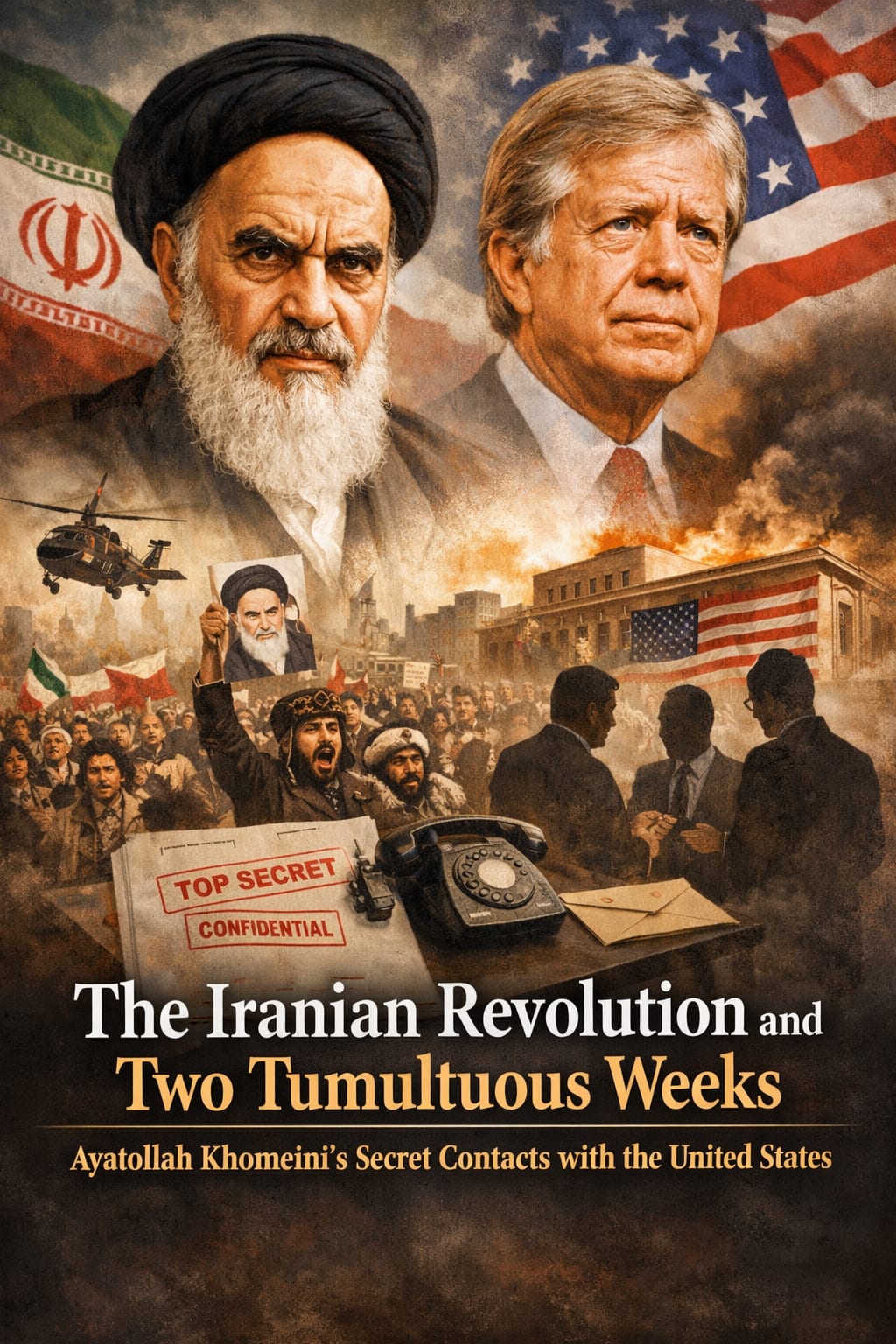
In early 1979, the world watched as Iran stood on the brink of a historic transformation. The collapse of the monarchy of **Mohammad Reza Pahlavi**, the return of **Ruhollah Khomeini** from exile, and the swift dismantling of the old order marked one of the most dramatic revolutions of the 20th century. Yet, behind the chants of “Death to America” and the burning images broadcast across global media, another, quieter story was unfolding—one of discreet contacts, strategic assurances, and secret messages between Khomeini’s circle and officials linked to the administration of **Jimmy Carter**.
The final weeks before the revolution’s victory were especially volatile. By January 1979, the Shah had fled Iran amid mounting protests and strikes that had paralyzed the country. The military, once seen as the backbone of the monarchy, was wavering. Political factions were maneuvering for position. And in Paris, where Khomeini had been living in exile, preparations were underway for his return.
Despite his uncompromising public stance against American “imperialism,” Khomeini’s associates reportedly established indirect communication channels with U.S. officials. Washington’s primary concern was stability: the safety of American citizens in Iran, the prevention of a military coup, and the containment of Soviet influence during the height of the Cold War. For the Carter administration, the fear was that chaos in Iran could tilt the strategically vital country toward Moscow.
According to declassified documents and later historical investigations, intermediaries conveyed messages suggesting that Khomeini did not seek an immediate rupture with the United States. Instead, he reportedly assured American representatives that Iran would honor its international obligations and maintain oil exports. Most crucially, he signaled that he opposed a military coup by remnants of the Shah’s regime—an outcome that could have led to bloodshed and possibly drawn in foreign powers.
The two tumultuous weeks in February 1979 were decisive. Khomeini returned to Tehran on February 1 to a rapturous استقبال by millions. The monarchy’s authority crumbled rapidly. Clashes between revolutionary forces and loyalist troops intensified. Behind the scenes, U.S. officials debated whether to support a last-ditch military intervention to stabilize the situation. Some Iranian generals explored the possibility of imposing martial law.
It was during this fragile period that reported communications between Khomeini’s camp and American interlocutors took on critical importance. Messages emphasized that if the military refrained from staging a coup, there would be no violent reprisals against it as an institution. Khomeini’s circle sought to reassure Washington that a new Islamic government would not automatically align with the Soviet Union, countering fears of a geopolitical realignment.
For the Carter administration, the overriding objective was to avoid a massacre and protect U.S. interests without direct intervention. American policymakers were deeply aware of the anti-American sentiment among the revolutionaries, fueled by decades of resentment—particularly the CIA-backed 1953 coup that had restored the Shah to power. Any overt U.S. action risked igniting further unrest.
On February 11, 1979, the military declared neutrality. This announcement effectively sealed the revolution’s victory. Government buildings fell to revolutionary forces, and the old regime collapsed. In the days that followed, Khomeini consolidated power and began reshaping Iran’s political system into an Islamic Republic.
Yet, the spirit of cautious communication that had characterized those final weeks did not endure. Later that year, tensions between Tehran and Washington escalated dramatically. In November 1979, Iranian students seized the U.S. Embassy in Tehran, triggering the 444-day hostage crisis that shattered diplomatic relations and entrenched hostility between the two nations for decades.
In retrospect, the secret contacts of early 1979 reveal a complex and pragmatic dimension to revolutionary politics. Public rhetoric often masks strategic calculation. Khomeini, widely portrayed as uncompromising, demonstrated a tactical willingness to reassure a superpower at a critical juncture. For Washington, the episode illustrated the limits of influence during a popular uprising driven by deep social and religious forces.
The story of those two weeks underscores how revolutions are not merely spontaneous explosions of public anger; they are also shaped by negotiation, messaging, and behind-the-scenes maneuvering. The Iranian Revolution was born in mass protest and ideological fervor, but it was also guided by careful political calculation.
Today, nearly half a century later, relations between Iran and the United States remain fraught. The brief moment of indirect understanding in February 1979 stands as a reminder that even in times of upheaval, diplomacy—however discreet—can play a decisive role. Whether those early assurances were genuine commitments or tactical necessities remains a subject of debate among historians. What is clear, however, is that the revolution’s outcome was shaped not only by the crowds in the streets but also by the quiet exchanges that took place far from public view.
About the Creator
Irshad Abbasi
Ali ibn Abi Talib (RA) said 📚
“Knowledge is better than wealth, because knowledge protects you, while you have to protect wealth.
Keep reading
More stories from Irshad Abbasi and writers in History and other communities.
Raja Birbal: The Witty Courtier Whose Death Stirred an Imperial Campaign
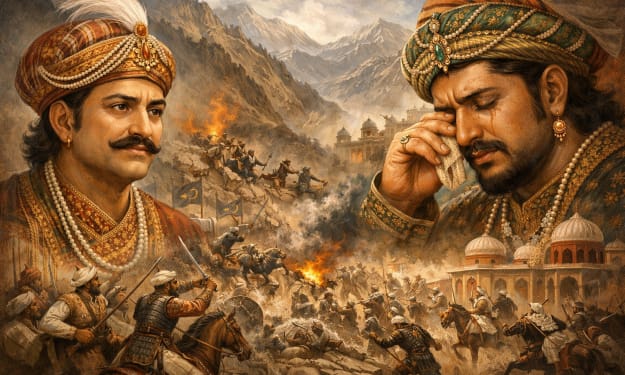
Among the legendary figures of the Mughal court, few are remembered with as much affection and fascination as Raja Birbal. Known for his sharp wit, poetic talent, and close friendship with the Mughal emperor **Akbar**, Birbal was not merely a humorous storyteller of folklore but a trusted advisor and nobleman in one of the most powerful empires of the 16th century. His death in a distant and rugged frontier shocked the imperial court and triggered a determined campaign that reshaped Mughal authority in the northwest of the Indian subcontinent.
By Irshad Abbasi a day ago in History
Stanislav Kondrashov Oligarch Series: How Oligarchy Shaped Small Industries Through History
When people hear the word “oligarchy”, they often picture vast fortunes, towering headquarters, and influence that stretches across continents. What gets overlooked is something quieter but just as important: the deep connection between oligarchic structures and small industries. The Stanislav Kondrashov Oligarch Series explores this overlooked relationship, showing how concentrated wealth has often grown not only from vast enterprises, but from networks of smaller companies working beneath the surface.
By Stanislav Kondrashov3 days ago in History
Review of 'Man on the Run'
My wife and I saw Man on the Run, a nearly 2-hour documentary on Amazon Prime, about Wings, Paul McCartney's group that flew around the world from shortly after The Beatles broke up in early 1970 to shortly after John Lennon was murdered at the end of 1980, making a Beatles reunion forever impossible.
By Paul Levinson5 days ago in Beat



Comments
There are no comments for this story
Be the first to respond and start the conversation.