
The Murder Of A Child Factory Worker That Led To A Mob Lynching
A Victorian-Era mystery...

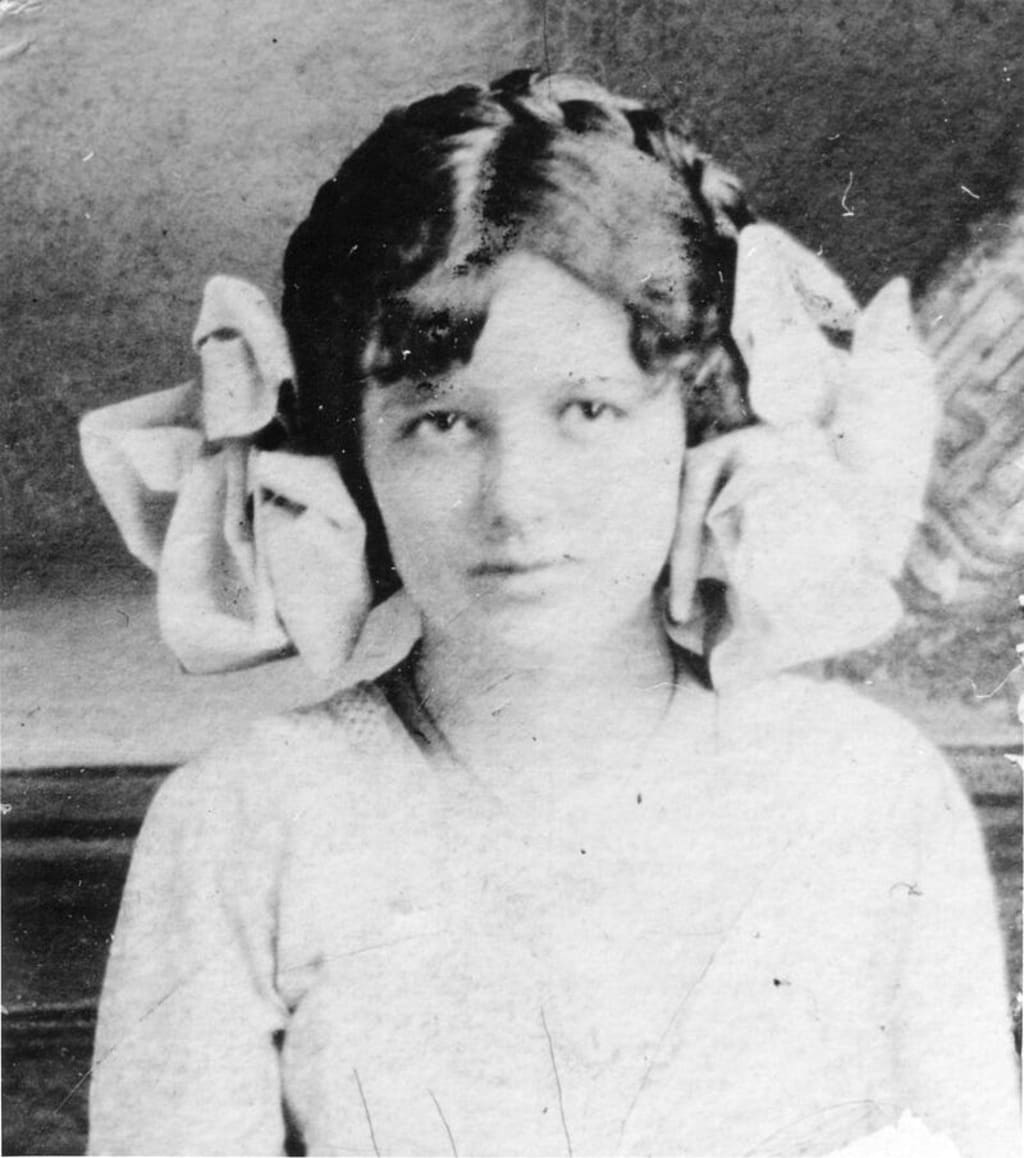
Mary Phagan was born in June 1899 into a family of farmers in the U.S. state of Georgia. Tragedy struck early in her life when her father died of measles, leaving her mother, Frances, to care for Mary and her three sisters on her own.
Around 1907, the family moved to East Point in southwest Georgia. By the age of ten, Mary left school to work in a local textile mill, helping her struggling family put food on the table.
In 1912, the family’s circumstances began to improve when Frances married John Coleman. Following the marriage, the family relocated once again, this time to Atlanta.
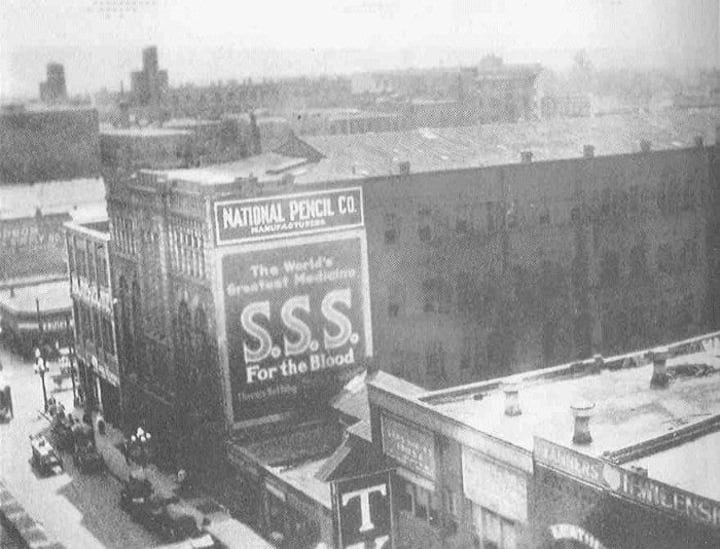
That spring, Mary secured a job at the National Pencil Company, one of the state’s most prominent centers of industry. At just 13 years old, she operated a knurling machine that inserted erasers into the tips of pencils.
The work was long and gruelling, often requiring her to put in 55 hours a week for a wage of only 10 cents per hour.

Just across the hallway from Mary’s workstation was her boss’s office—a 29 year old married man whose earnings stood in stark contrast to hers, making $180 per month in addition to a share of the factory’s profits.
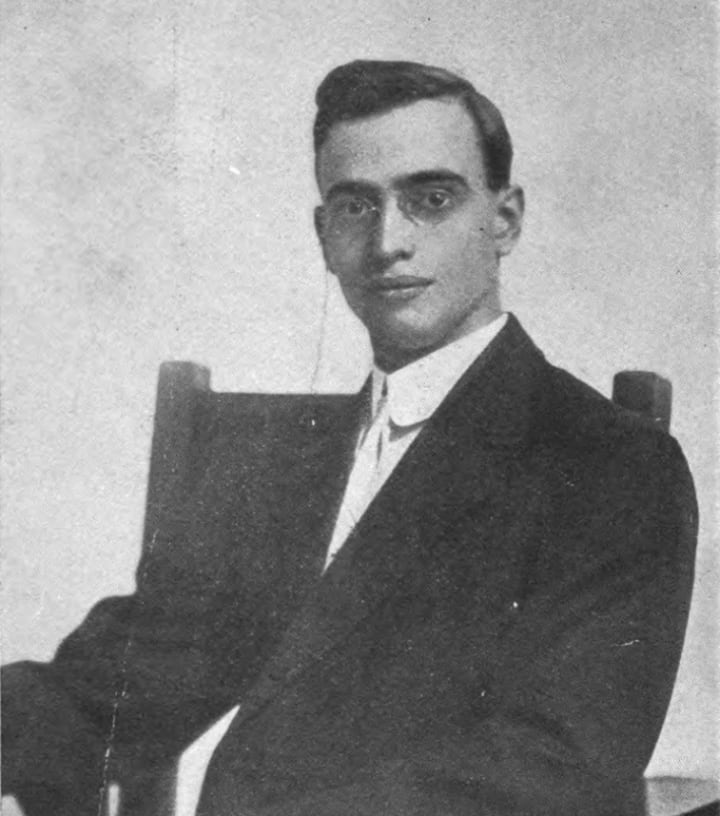
Unfortunately for Mary, on 21st April that year, the factory was facing a shortage of materials, which sharply reduced profits. As a result, she was laid off from her job.
Undeterred, five days later Mary dressed in a new outfit to attend the town’s Confederate Memorial Day parade, an event she had been eagerly anticipating. But before joining the festivities, she made one final stop at the factory to collect her pay check from Leo Frank.
That morning, she ate a simple breakfast of bread and cabbage. At 11:30am, she said goodbye to her mother—neither of them knowing that it would be the last time they would ever see each other.
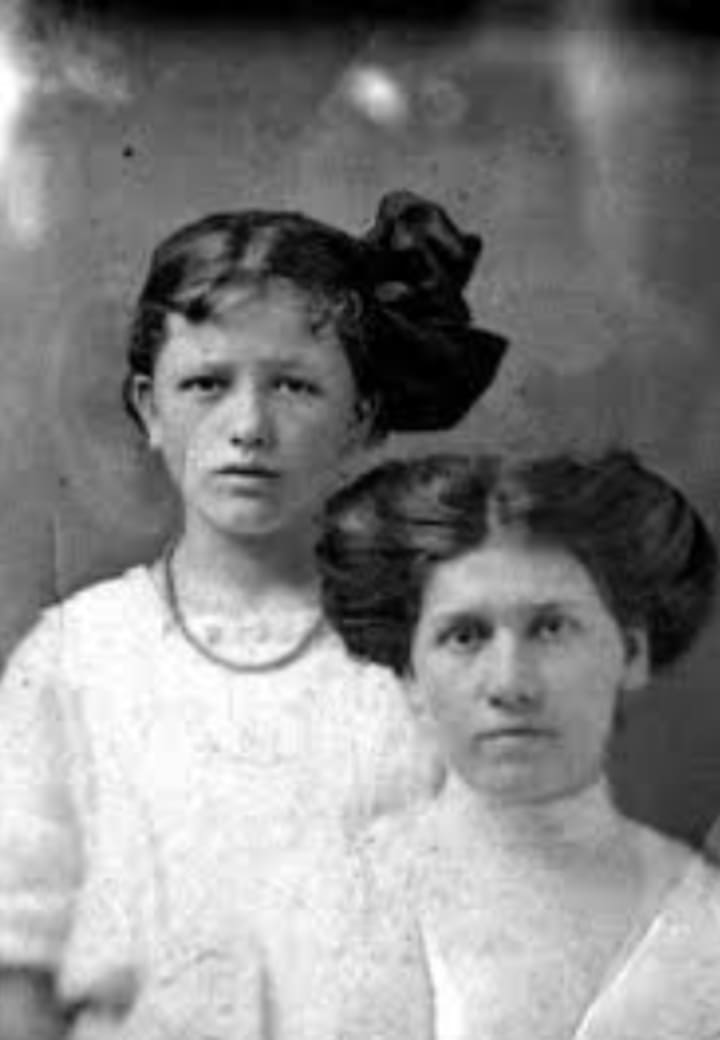
That night, Mary did not return home.
In the early hours of the following morning, around 3am, the factory’s night watchman, a Black man named Newt Lee, went down to the basement to use the restroom designated for “coloured” workers. There, he stumbled upon a horrifying sight.
In a dark corner of the grimy basement, near an incinerator, lay the battered and brutalised body of Mary Phagan. The new dress she had been so excited to wear to the parade had been pulled up above her waist, and a cord was still tightly wrapped around her neck.
Ash and soot from the furnace covered her face, but beneath it, her head was swollen and streaked with blood and bruises. Her underwear was torn and bloodied. It was immediately clear that the young girl had met a violent and tragic death.
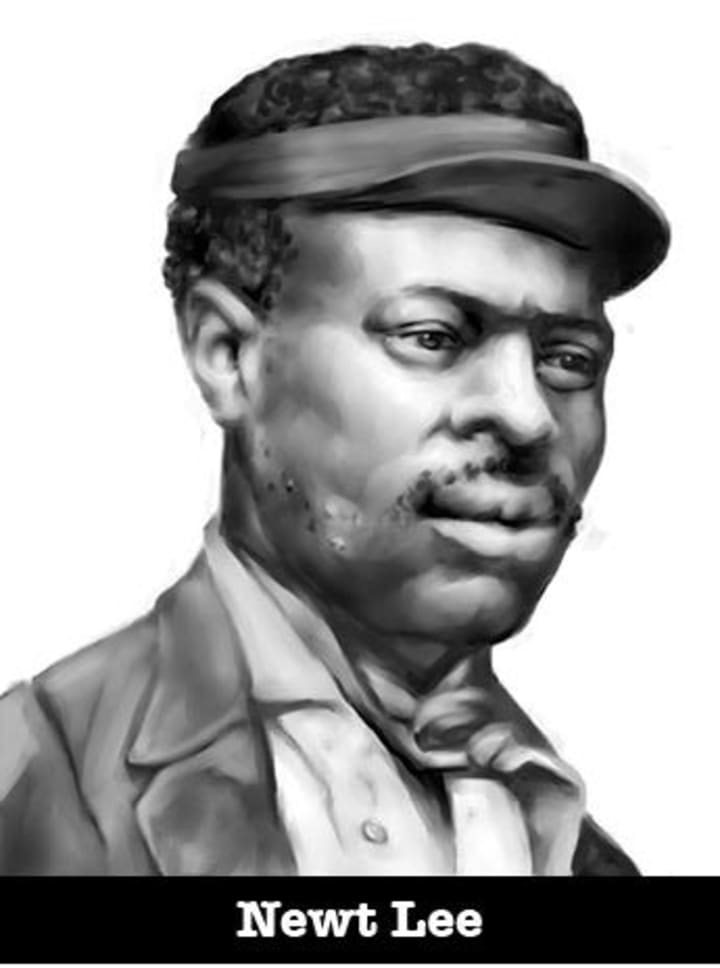
Newt was immediately gripped with fear, worried that as a Black man he might be accused of murdering the white child. Despite his fear, he promptly alerted the police.
An investigation was launched without delay. Authorities quickly noted the presence of bloodied fingerprints at the scene, found both on a door and a metal pipe, suggesting a violent struggle had taken place.
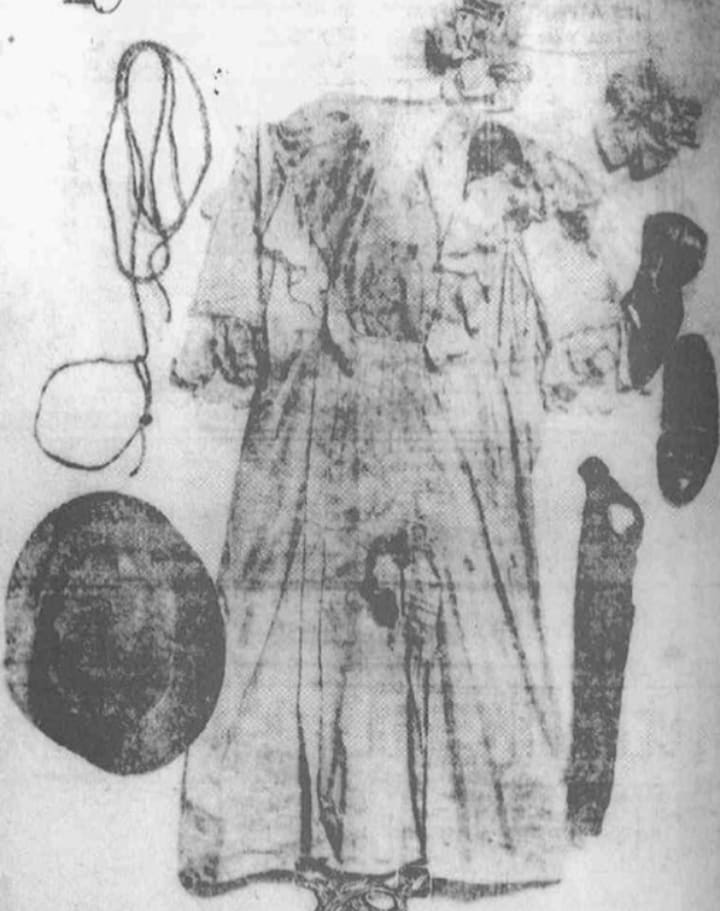
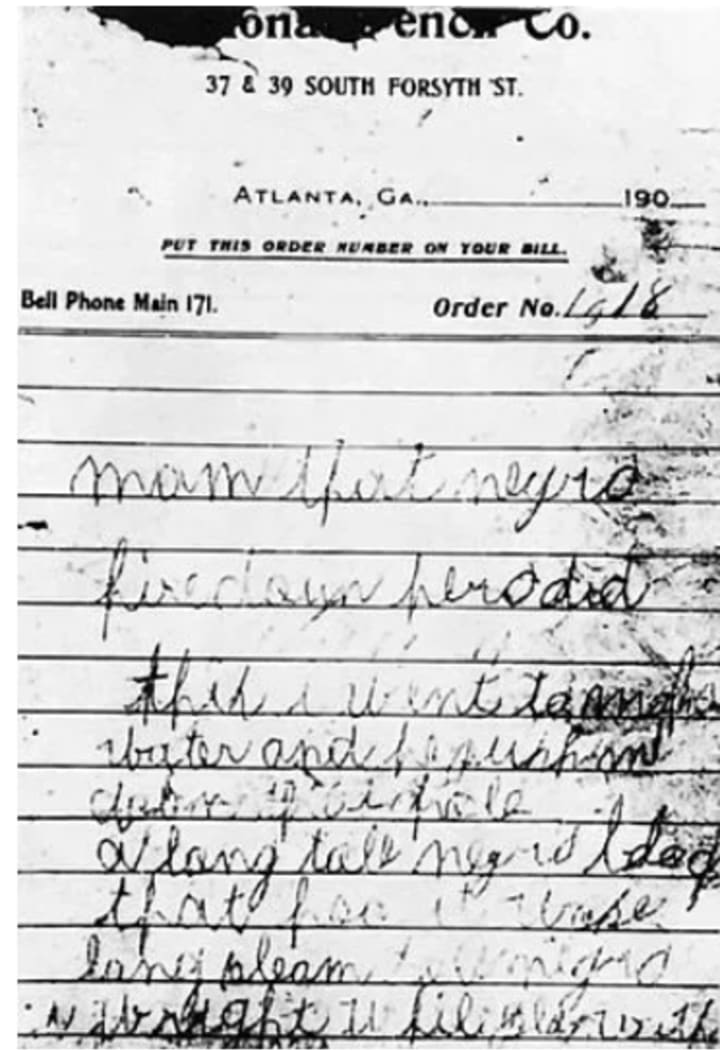
Close to Mary's head, were two handwritten notes. One of which read:

The note’s reference to a “night witch” was interpreted to mean the “night watchman.” When the message was read aloud, Newt immediately told the officers that he was being framed.
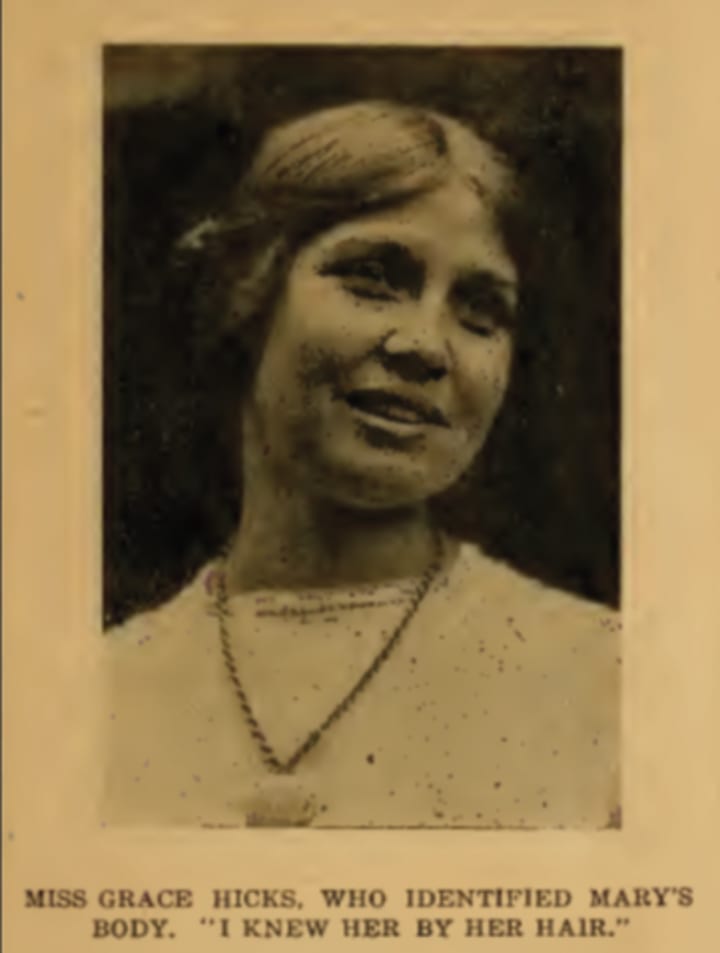
Meanwhile, one of the officers on the case was related to a young girl named Grace Hicks, who also worked at the factory. Hoping she could help identify the victim, he brought Grace to the scene.
Upon seeing the body, Grace was overcome with distress. She immediately recognised her friend, with whom she often worked side by side, and cried out in shock:

Investigators also discovered a dirt trail suggesting that Mary had been dragged to the basement before her death. Following the trail, they traced it back to the machine where she had worked. There, they found her pay packet, which contained $1.20, along with blood and strands of hair scattered nearby.
It soon became apparent that Leo Frank’s office was located less than 200 feet away, directly across the hallway, giving him a clear view of Mary as she worked each day. He also would have been the last person to see her that afternoon when he handed her pay check.
With these facts in mind, investigators began to focus their attention on him.
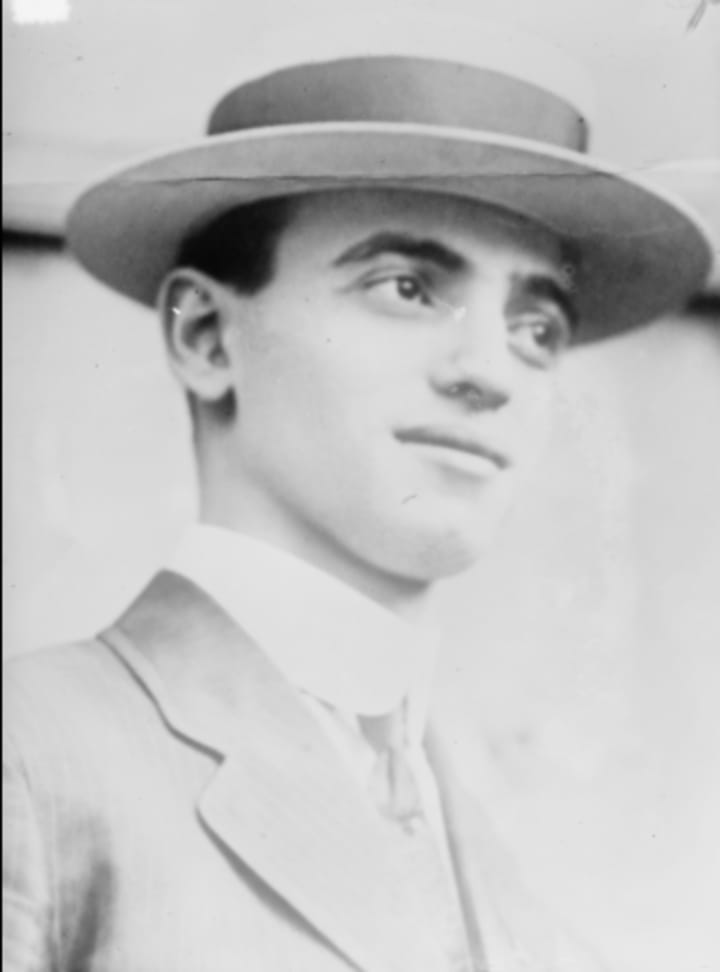
Looking into his background, it was clear that Leo Frank had been raised in a well-to-do Jewish family and received a strong education. He graduated from Cornell University in 1906 with a degree in engineering and had spent time in Germany as an intern before eventually settling in Atlanta.
Frank’s connections proved valuable in advancing his career; it was through his uncle’s influence that he secured the position of superintendent at the National Pencil Company.
He had married Lucille Selig, a woman from an influential family that had notably established the first synagogue in Atlanta. Leo was regarded as a respected and upstanding member of the city’s Jewish community and had even been elected president of the B’nai B’rith organisation.
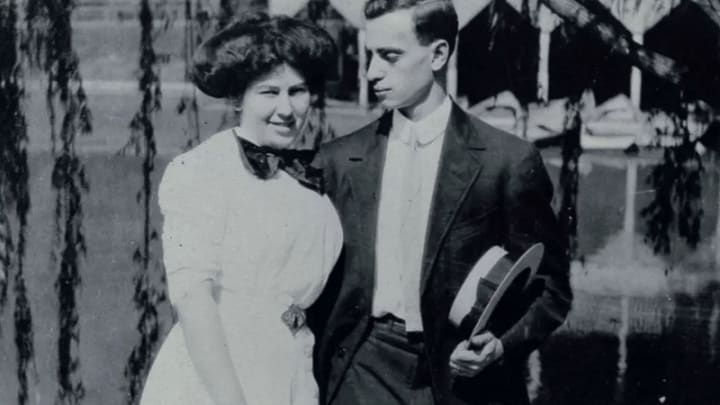
By Sunday morning, police called Leo Frank to inform him of a tragedy at the factory. Suspiciously, Leo asked whether the night watchman had reported anything.
The officers remained tight-lipped and instructed him to come to the morgue to identify a body. Rather than responding with concern, Leo hesitated and asked if he could have a cup of coffee first. Within minutes, a police car arrived at his home to escort him to the morgue.
When confronted with the details of the murder, Leo claimed he did not know the child. This statement only heightened suspicion, as investigators were aware that Mary had visited him earlier that day to collect her pay check.
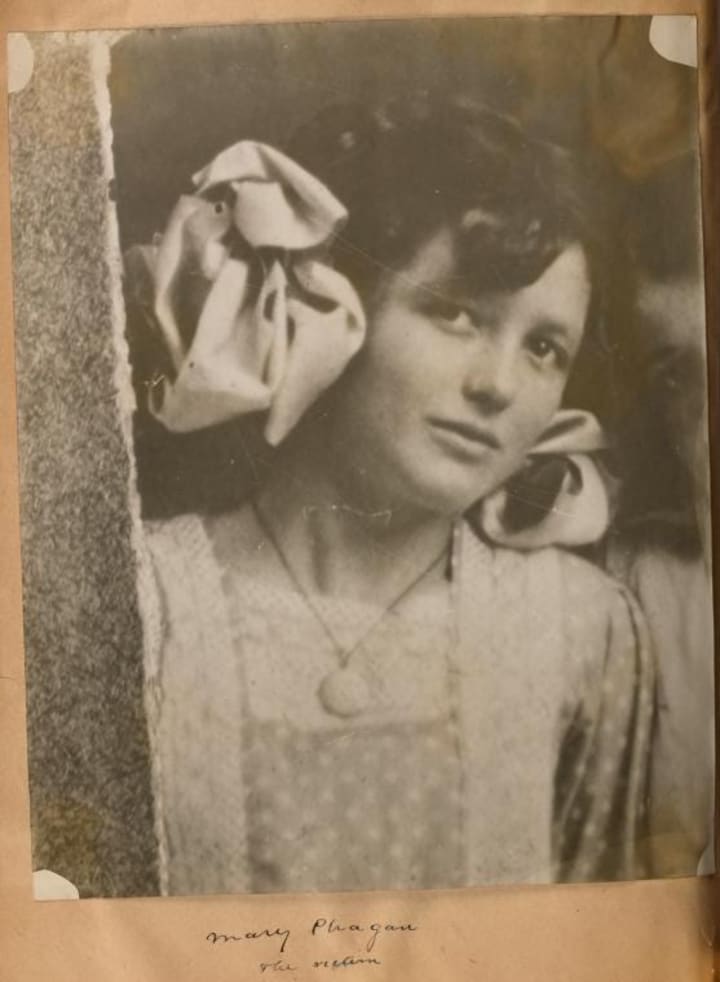
Once at the morgue, Leo casually glanced at Mary Phagan’s body before acknowledging that he recognised her as the girl he had paid the day before.
He was then taken in for questioning and provided a written account of his movements on that day. He stated that he had been at the factory doing clerical work and that around noon, a child had come in to collect her pay. Later that afternoon, he was supposed to attend a baseball game with his wife’s brother but claimed he had cancelled at the last minute, offering no explanation.
Leo said he had left the building for lunch just before 1:30pm and returned around 3pm, leaving the factory about an hour later.
Although he appeared extremely nervous and had become the investigators’ primary suspect, there was still no concrete evidence to arrest him. Newt Lee had been released by this point, but he would soon provide the missing piece that investigators needed to formally charge Leo Frank.
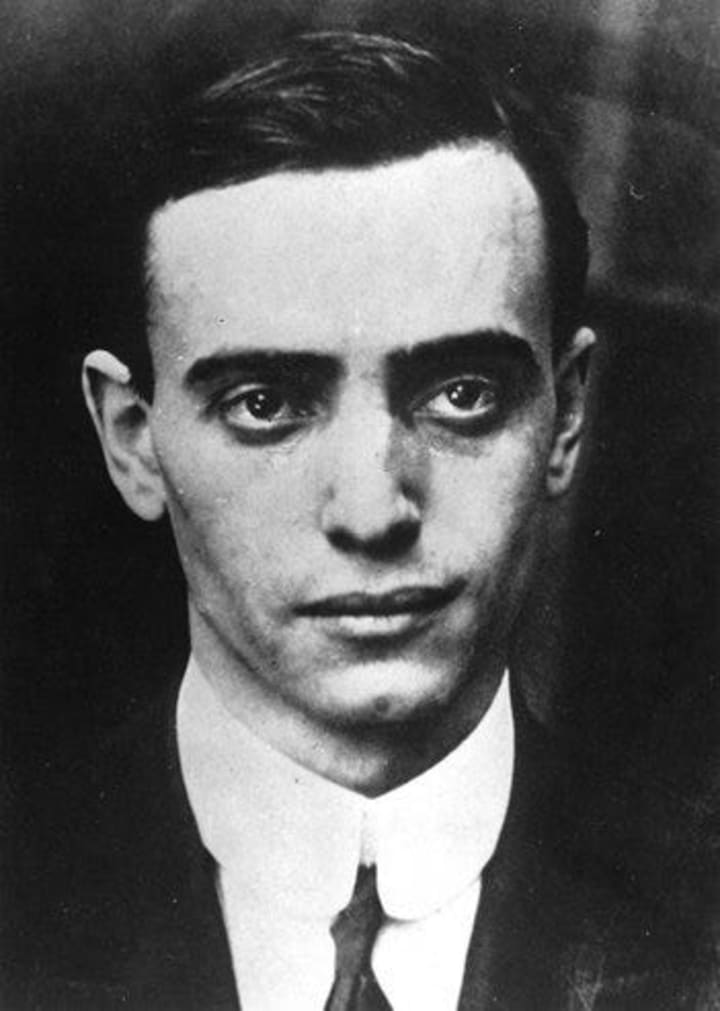
Newt soon told police that on the evening of the murder, Leo had made an unusual phone call to him when he came on shift, asking if everything at the factory was running smoothly. This was out of the ordinary and not part of Leo’s usual routine.
Investigators interpreted the call as an attempt to find out whether Mary’s body had been discovered. Acting on this and other suspicions, officers arrested Leo Frank on 8th May 1913.
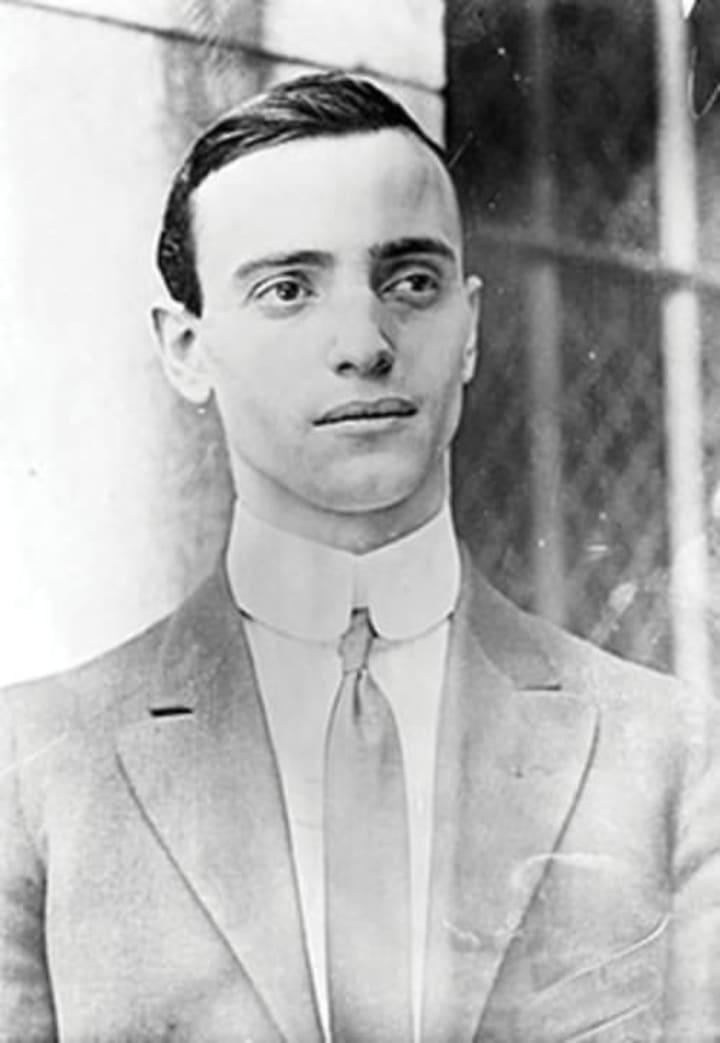
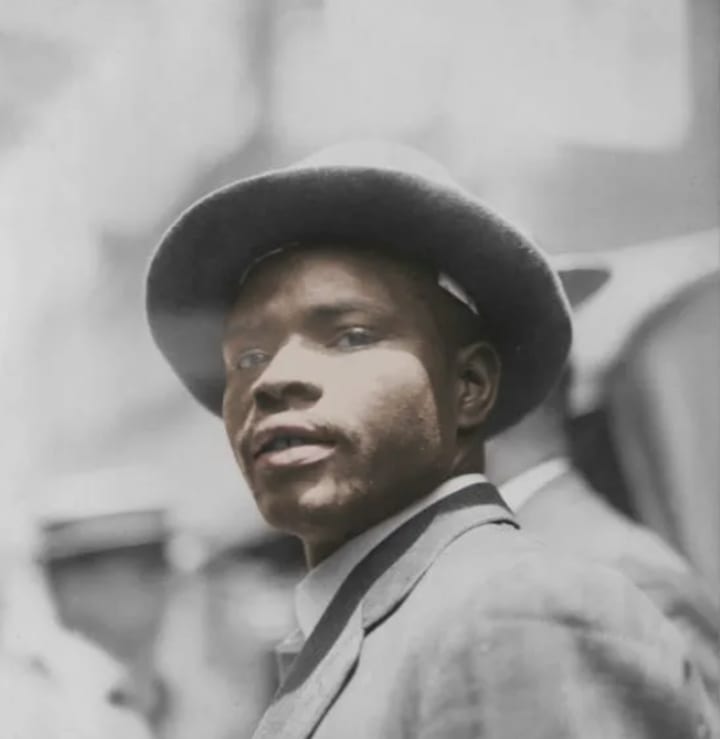
Ten days after Leo’s arrest, police received an anonymous tip from a factory worker claiming they had seen a colleague, Jim Conley, washing blood off his shirt on the day of Mary’s murder.
When confronted, Leo insisted that he had no knowledge of Conley being at the factory that day, stating that Conley had no reason to be there since he was not scheduled to work. Officers quickly tracked Conley down and brought him in for questioning.
With two suspects now in custody, investigators collected handwriting samples from both men. Conley initially tried to cast doubt by claiming he was illiterate, but officers confronted him with letters he had previously written, proving otherwise. His handwriting was then compared to notes found at the murder scene, and it appeared to be a near-perfect match.
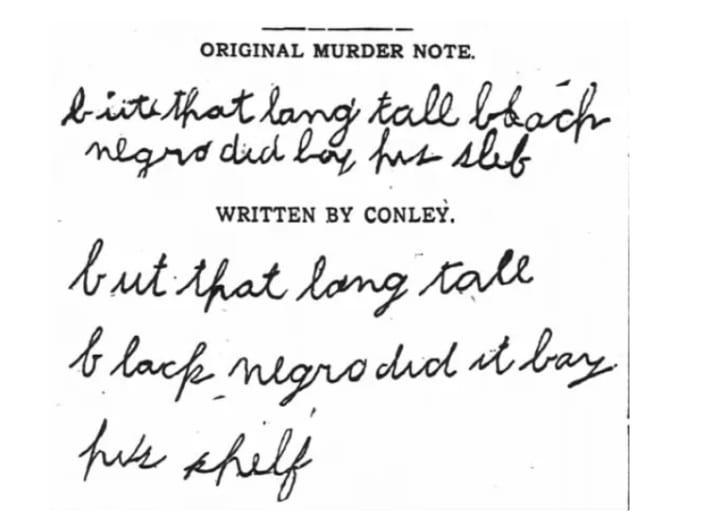
Jim Conley confessed that he had infact been the one to write the notes, but that it he had only done so at the direction of Leo Frank.
Under oath, Jim recited a story to investigators about what he had seen that day. He claimed that Leo had given Mary her pay check before sexually assaulting her in an attack so violent that she had been knocked out. Panicking, he then strangled the child to keep her from telling.
Jim told investigators that after the murder, Leo had admitted to him that after Mary had refused his advances, he had killed her. With Leo being a small man, he had asked Jim to carry Mary's body to the basement - allegedly offering him $200 for his part in the crime.
Investigators were happy with this explanation and charged Leo Frank with Mary's murder. What followed, was nothing short of a media circus.
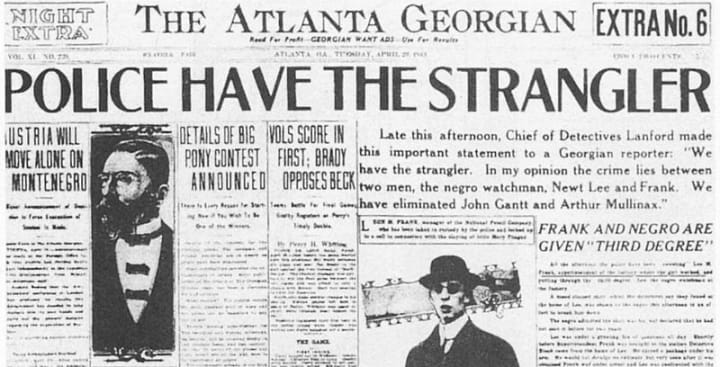
When the trial began on 28th July 1913, Leo Frank’s defence team argued that Jim Conley was the actual killer and was trying to shift the blame onto their client. However, the jury chose not to indict Conley.
Hundreds of spectators filled the courtroom, with even larger crowds gathering outside the courthouse windows to follow the proceedings. Throughout the trial, Leo was supported by his wife, Lucille, who remained steadfastly by his side despite the shocking and horrific allegations against him.
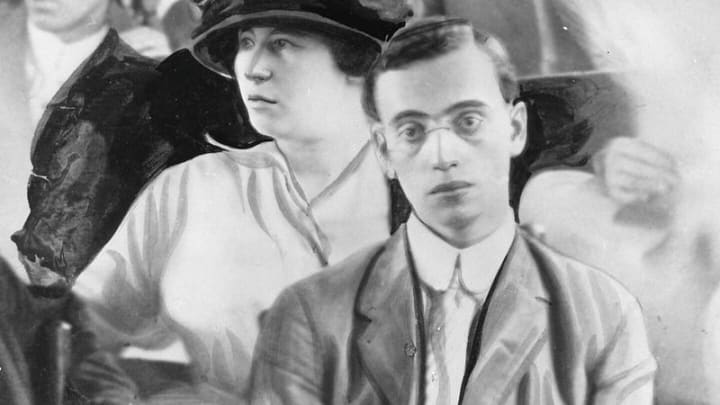
Jim Conley’s legal team portrayed him as a simple, plantation-type worker who lacked the intelligence to fabricate such a detailed and complex story.
During the trial, several women also came forward to testify that Leo had previously made inappropriate advances toward them at the factory.
Additionally, another worker who had been laid off alongside Mary reported visiting Leo’s office around 12:15pm that day, only to find it empty. To the jury, this suggested that Leo may have been occupied elsewhere—possibly in the basement—covering up his crime.
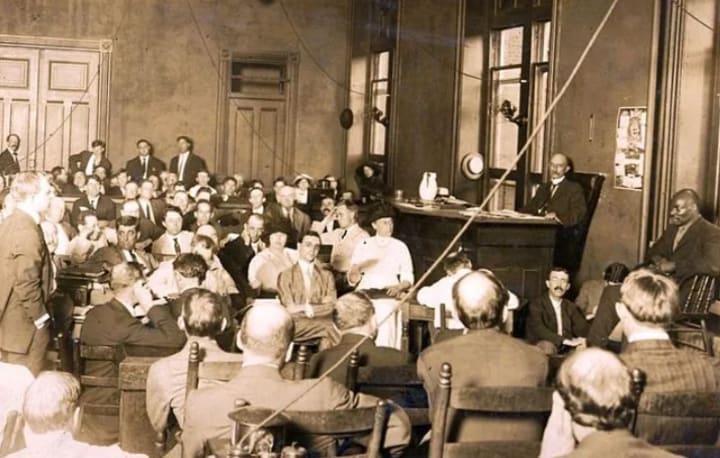
As the trial continued, tensions ran high outside the courthouse, with hostile crowds shouting anti-Semitic chants, including “Hang the Jew.”
When the trial concluded, the jury deliberated for just two hours before returning a verdict: Leo Frank was found guilty of first-degree murder and sentenced to hang. Jim Conley, in contrast, was sentenced to one year in jail for his role as an accomplice.
Leo’s lawyers immediately filed appeals to overturn his death sentence, but each attempt was denied. Eventually, on 20th June 1915, his sentence was commuted to life imprisonment.
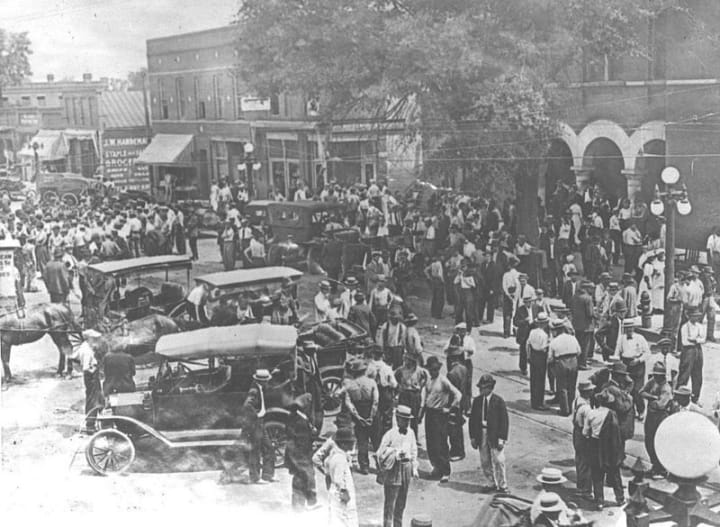
Despite the verdict, public opinion remained deeply divided. Some continued to believe in Leo Frank’s innocence, while others felt he deserved to die for the brutal crime committed against an innocent young girl.
While serving his sentence, Leo narrowly survived a violent attack by a fellow inmate who slashed his throat. As he recovered in the hospital, a group of local residents began organising to take justice into their own hands.
Once he had recuperated, Leo Frank was returned to Milledgeville Prison to continue serving his sentence.
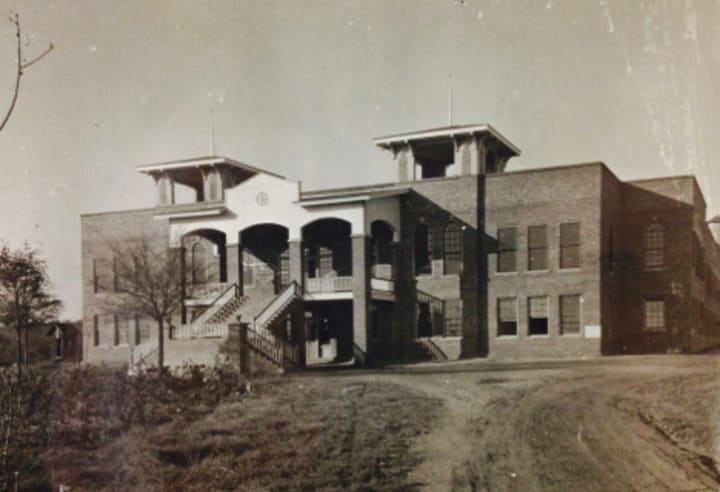
On 16th August, a mob stormed Milledgeville Prison, determined to take matters into their own hands. These vigilantes were fueled by rage and would stop at nothing to reach Leo Frank.
After cutting the prison’s phone lines and draining the police vehicles of fuel, they kidnapped Leo from his cell. His hands and feet were bound, and he was driven 72 miles to the farm of a former sheriff in Marietta, Georgia.
Sensing his impending fate, Leo pleaded to send a letter to his wife. However, the letter was destroyed, as it had been written in German to prevent the mob from reading it. The kidnappers feared it might reveal their identities.
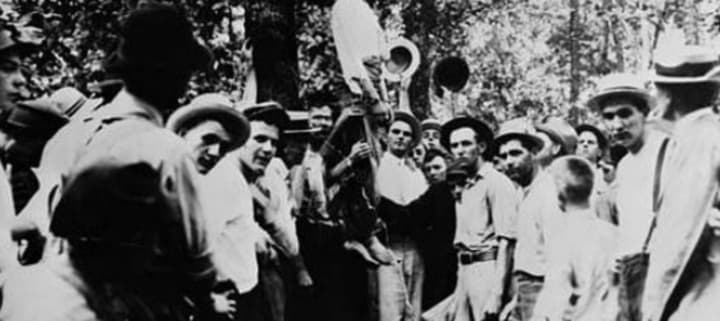
Leo remained remarkably composed as the vigilantes placed a rope around his neck and looped it over an old oak tree. Until his final moments, he continued to protest his innocence.
Leo Frank was pronounced dead on 17th August 1915, at just 31 years old.
As news of the lynching spread, crowds of men, women, and children flocked to the scene. Many tore pieces of his clothing as macabre souvenirs. A vote was taken on whether the body should be returned to Leo’s parents intact, with the majority in favour. Yet when the body was removed from the tree, one onlooker stamped on his face and chest. The body was quickly taken away, though the crowd remained unruly.
At the undertaker’s, thousands gathered outside, demanding to see the corpse. Frustrated by the throng, they began breaking the glass windows until they were eventually allowed inside. It is estimated that over 15,000 people viewed Leo Frank’s lifeless body before it was finally transported by train to his native New York for burial.
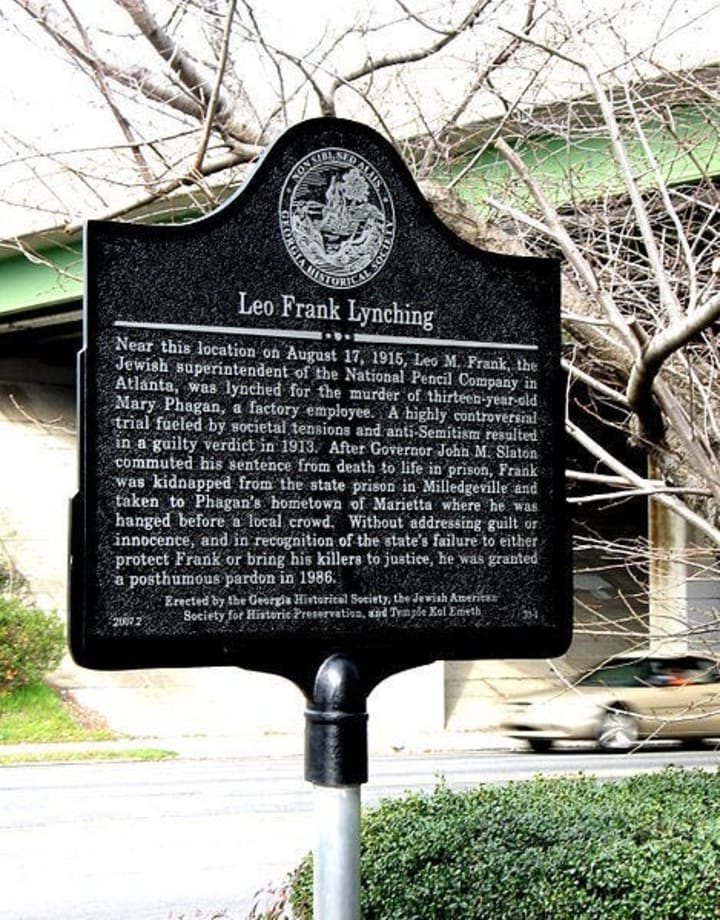
It would not be until 1982 that a shocking deathbed confession would reveal that Leo Frank had been exactly what he claimed to be—an innocent man.
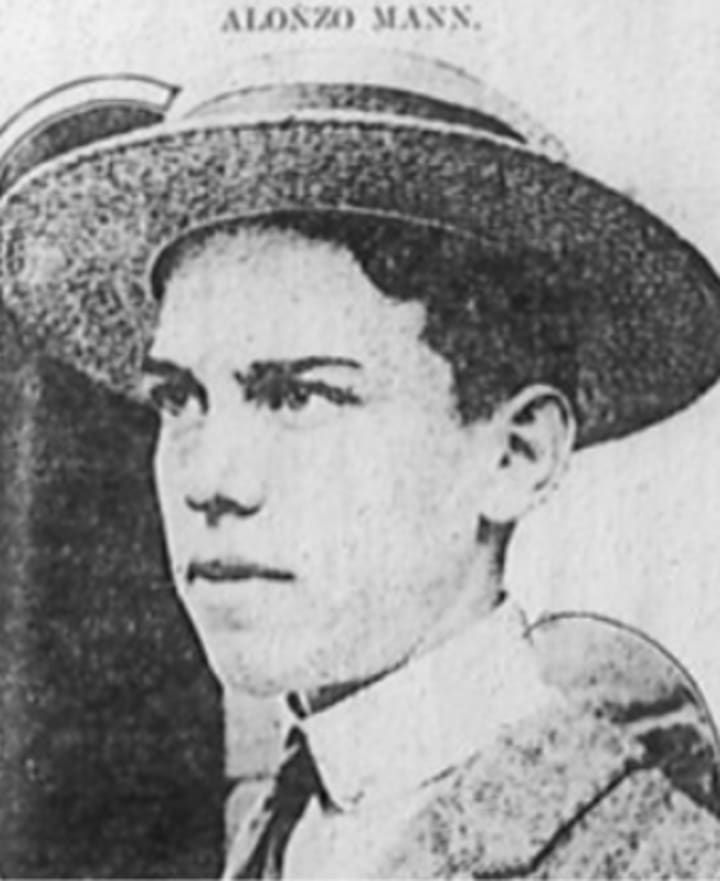
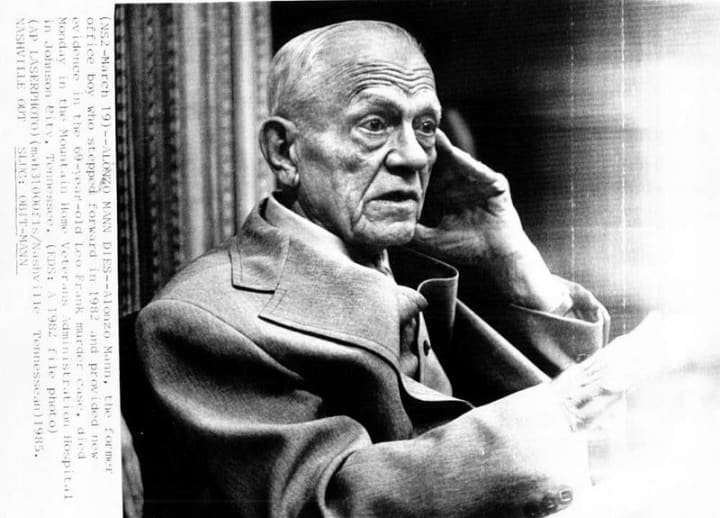
That year, Alonzo Mann, a former office boy who had worked for Leo and was just 13 years old at the time of Mary’s murder, was on his deathbed. Burdened by a dark secret he had kept for decades, he finally chose to come forward.
Alonzo revealed that on the day of Mary’s murder, he had witnessed Jim Conley carrying Mary’s body to the basement. When Conley noticed him, he had threatened to kill him if he ever spoke of what he had seen. Alonzo had later confided in his parents, who warned him to remain silent, fearing Conley’s wrath.
Nearly 70 years later, Alonzo gave a detailed statement to police, finally bringing the truth to light. As a result, Leo Frank was granted a posthumous pardon in 1986. However, he was not fully exonerated, as the confession confirmed Conley’s guilt but did not definitively eliminate all suspicion of Frank’s involvement.
Modern researchers now widely believe that Leo Frank was wrongfully convicted and that Jim Conley was the true murderer.
If this is indeed the case, it stands as one of the most infamous miscarriages of justice in United States history—a tragic reminder of how prejudice, fear, and flawed investigations can destroy innocent lives.
About the Creator
Matesanz
I write about history, true crime and strange phenomenon from around the world, subscribe for updates! I post daily.
The Concept of the Antichrist Across Religions
The idea of a deceptive, evil figure who appears near the end of times is a powerful and recurring theme in many religious traditions. In Islam, this figure is known as the Dajjal, while in Christianity and Judaism similar concepts exist under different names and interpretations. Although the details vary, these traditions share common themes of deception, moral testing, and the ultimate triumph of truth over falsehood.
By Irshad Abbasi 4 days ago in History


Comments
There are no comments for this story
Be the first to respond and start the conversation.