defense
Moving through the ranks of military activity including infrastructure, wars, our commander in chief and the nucleur arms race.
The Future of Naval Autonomy: Boats and Drone Swarms. AI-Generated.
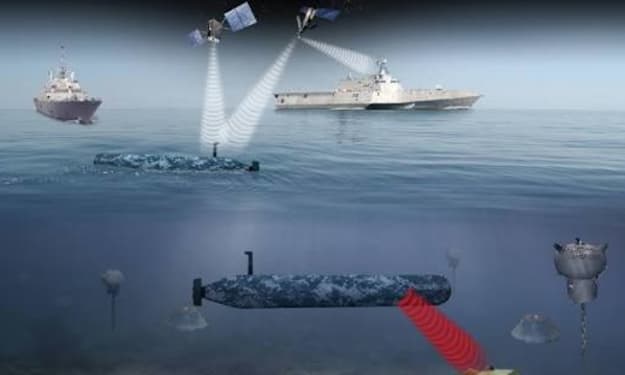
Naval warfare is entering a transformative era as autonomous boats and coordinated drone swarms begin to reshape how maritime operations are conducted. Advances in artificial intelligence, robotics and sensor technology are enabling navies to deploy unmanned surface vessels (USVs) and aerial drones capable of operating independently or in tightly coordinated groups. Defense analysts say this shift toward autonomy represents one of the most significant changes in naval strategy since the introduction of aircraft carriers. Autonomous naval systems are designed to perform missions that traditionally required crewed ships, including surveillance, mine detection, reconnaissance and even combat support. These platforms reduce risk to human sailors while expanding the reach and persistence of naval forces. With global tensions rising in contested maritime regions, particularly in the Indo-Pacific and the Black Sea, many countries are accelerating investment in autonomous fleets. Rise of Unmanned Surface Vessels Unmanned surface vessels are at the center of this evolution. These robotic boats range from small, fast patrol craft to large, ship-sized platforms capable of operating for weeks without human intervention. Equipped with radar, sonar and electro-optical sensors, USVs can monitor shipping lanes, track submarines and gather intelligence in dangerous waters. The United States Navy has already tested large autonomous vessels such as Sea Hunter and Sea Hawk, designed for anti-submarine warfare and long-duration patrol missions. Similarly, the United Kingdom, Israel and several European nations have deployed experimental or operational unmanned boats for coastal defense and mine countermeasures. Ukraine’s use of explosive-laden sea drones during the conflict with Russia has further demonstrated the tactical impact of autonomous naval platforms. These systems have successfully damaged or disabled large warships at a fraction of the cost of traditional weapons, proving that smaller autonomous craft can challenge conventional naval power. Drone Swarms at Sea Beyond individual unmanned vessels, the concept of drone swarms is gaining attention. Swarms consist of dozens or even hundreds of drones that communicate with one another and coordinate their actions using artificial intelligence. Unlike traditional systems controlled by a single operator, swarms can adapt to threats, share data and continue missions even if some units are destroyed. In naval operations, drone swarms could be used to overwhelm enemy defenses, conduct wide-area surveillance or escort larger ships through hostile waters. A swarm of small surface drones might screen a fleet against incoming threats, while aerial drones could provide real-time intelligence across vast ocean areas. China has invested heavily in swarm technology, testing coordinated drone launches from ships and submarines. The U.S. Defense Department is also pursuing swarm programs under initiatives such as the Replicator project, which aims to field large numbers of autonomous systems quickly and at low cost. Strategic and Economic Advantages Autonomous naval systems offer several strategic benefits. First, they significantly reduce operational costs. Unmanned boats are cheaper to build and maintain than crewed warships and can be produced in large numbers. This allows navies to adopt a “distributed force” model, spreading capability across many small platforms instead of relying on a few expensive ships. Second, autonomy improves endurance. Without the need for crew accommodations, food or rest, unmanned vessels can remain at sea for extended periods. This is particularly valuable for surveillance missions in remote or contested areas. Third, autonomous systems change the risk equation. Commanders can deploy robotic platforms into dangerous zones without endangering human lives, enabling more aggressive or persistent operations. Challenges and Risks Despite their promise, naval autonomous systems face serious challenges. One major concern is cybersecurity. Because these platforms rely heavily on software and communications networks, they are vulnerable to hacking, jamming and spoofing. An enemy that takes control of an autonomous vessel could turn it into a weapon against its own fleet. Ethical and legal questions also remain unresolved. International law governing the use of force at sea was developed for human decision-makers, not algorithms. Determining accountability for actions taken by autonomous weapons systems is a complex issue that policymakers have yet to fully address. There are also technical hurdles. Operating in harsh maritime environments requires reliable navigation, collision avoidance and decision-making under unpredictable conditions. While artificial intelligence has made significant progress, fully autonomous combat decision-making remains controversial and limited. The Road Ahead Experts agree that the future navy will be a hybrid force combining crewed ships with autonomous boats and drone swarms. Rather than replacing sailors entirely, autonomous systems will act as force multipliers, extending the reach and effectiveness of traditional fleets. Over the next decade, naval warfare is likely to become more networked and data-driven, with swarms of drones feeding information to command centers in real time. As countries race to develop these technologies, maritime security will increasingly depend on algorithms as much as armor. The rise of naval autonomy marks a fundamental shift in how power is projected at sea. Boats and drone swarms are no longer experimental concepts but emerging tools of modern warfare, redefining strategy, deterrence and the balance of power on the world’s oceans.
By Fiaz Ahmed about a month ago in The Swamp
The Soul Detective. Content Warning.
The Blueprint of the Soulless Lately, as the world watches the exposure of long-buried crimes, I’ve been haunted by a question that goes deeper than the headlines. It isn't just about what occurred; it’s about the Architecture of Harm that made it possible.
By Vicki Lawana Trusselli about a month ago in The Swamp
Exclusive: Some UAE Companies Pull Out of Saudi Defence Show as Gulf Rift Spills Into Business. AI-Generated.
In a development that highlights the lingering fault lines within the Gulf, several companies based in the United Arab Emirates have quietly withdrawn from a major defence exhibition in Saudi Arabia, according to industry sources. While official statements remain scarce, the pullouts point to how unresolved political and strategic tensions between regional heavyweights are beginning to spill over into business, even in sectors long viewed as insulated from diplomatic disagreements.
By Sadaqat Aliabout a month ago in The Swamp
Squid Game Executions.
Why is Squid Game called Squid Game? When no apparent squid, real or otherwise, is featured. What I have seen of the game is just a load of hapless South Koreans being shot at by a giant doll. Those who can get through win a huge sum of money. Of course, it is just a concept, a drama, where poor people are encouraged to take part to win this money. Though fictional, the concept of people taking part in a game where most of them will die to win a large amount of money for entertainment is morally questionable to me. However, like Traitors in the UK, also with a morally questionable agenda, the show is watched by millions around the world.
By Nicholas Bishopabout a month ago in The Swamp
US Expresses Solidarity After Balochistan Attacks, Says It Stands ‘Steadfast’ With Pakistan. AI-Generated.
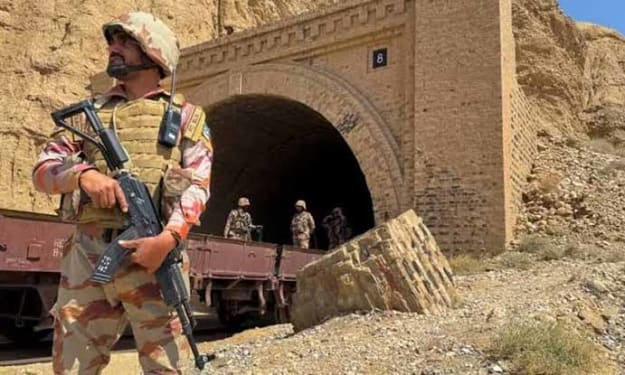
The United States has expressed strong solidarity with Pakistan following a series of deadly attacks in the southwestern province of Balochistan, reaffirming its commitment to stand “steadfast” with the country in its fight against terrorism and violent extremism. The statement comes amid heightened security concerns after coordinated assaults targeted civilians and security personnel, drawing widespread condemnation from the international community. In an official statement released by the US State Department, Washington conveyed its condolences to the families of the victims and emphasized its continued partnership with Pakistan to counter militant threats. “The United States stands steadfast with Pakistan and the Pakistani people during this difficult time,” the statement said, adding that acts of violence against innocent civilians are “unacceptable and must be confronted collectively.” Deadly Attacks in Balochistan The attacks occurred in multiple districts of Balochistan, a province that has long struggled with insurgency, separatist movements, and militant activity. According to Pakistani authorities, gunmen and suicide attackers targeted security checkpoints and public areas, killing several people and injuring dozens more. Emergency services were rushed to the scenes, while hospitals in nearby cities were placed on high alert. Security forces launched search operations to track down those responsible, sealing off affected areas and increasing patrols across major towns. Officials described the attacks as a deliberate attempt to destabilize the region and undermine development projects underway in the province. Balochistan, Pakistan’s largest province by area but least populated, has been at the center of security challenges for years. It is also a strategic region due to its mineral resources and its location along the Arabian Sea, including the Gwadar port, which is a key part of the China-Pakistan Economic Corridor (CPEC). International Condemnation The US response was among several messages of support from foreign governments and international organizations. American officials reiterated their opposition to terrorism in all its forms and stressed the importance of regional cooperation to prevent such attacks from recurring. A senior US official said Washington remains committed to working closely with Pakistan’s law enforcement and intelligence agencies. “We recognize the sacrifices Pakistan has made in combating terrorism, and we will continue to support efforts that promote peace and stability,” the official noted. The US embassy in Islamabad also issued a message of sympathy, expressing condolences to the victims’ families and wishing a swift recovery to those injured. It highlighted the long-standing security cooperation between the two countries, including joint counterterrorism initiatives and training programs. Pakistan’s Response Pakistan’s leadership strongly condemned the attacks, calling them an assault on national unity and public safety. The Prime Minister vowed that those responsible would be brought to justice and reaffirmed the government’s resolve to eliminate terrorism from the country. In a televised address, he said the violence would not deter Pakistan from pursuing economic development and regional connectivity. “Our enemies want to spread fear and chaos, but they will fail,” he stated. “The nation stands united with our security forces.” The Interior Ministry announced stricter security measures in sensitive districts of Balochistan, including increased checkpoints, intelligence-based operations, and coordination with provincial authorities. Officials also urged citizens to remain vigilant and report suspicious activity. Strategic Importance of Balochistan Analysts note that Balochistan’s security situation has broader regional implications. The province borders Iran and Afghanistan, making it vulnerable to cross-border militant movements and smuggling networks. Instability in the area also affects key infrastructure and investment projects, which are vital for Pakistan’s economic growth. The US statement of solidarity is seen as part of a broader effort to maintain stability in South Asia and prevent extremist groups from exploiting regional tensions. Washington has repeatedly emphasized that a secure and prosperous Pakistan is essential for peace in the wider region. Some observers say the renewed diplomatic support may also signal an attempt to strengthen bilateral relations after years of fluctuating ties. While cooperation between the two countries has faced challenges in the past, counterterrorism remains a shared priority. Human Cost and Community Impact Beyond the political and strategic implications, the attacks have left deep scars on local communities. Families mourned their loved ones as funeral prayers were held under heavy security. Survivors described scenes of chaos and fear, with many calling for stronger protection and justice. Human rights organizations have urged authorities to ensure that counterterrorism operations respect the rule of law and protect civilian lives. They stressed the importance of addressing not only security concerns but also the underlying social and economic grievances that fuel unrest in the province. Looking Ahead The US pledge to stand “steadfast” with Pakistan underscores the continued importance of international cooperation in addressing terrorism. Both countries have signaled that dialogue, intelligence sharing, and joint efforts will remain central to preventing future attacks. As Pakistan continues its operations in Balochistan, officials say they are determined to restore calm and ensure that development projects can proceed without disruption. For Washington, the latest statement reflects a recognition that long-term stability in Pakistan is closely linked to global security. While the investigations into the attacks continue, the message from both Islamabad and Washington is clear: violence will not be allowed to derail efforts toward peace, and those responsible will face justice.
By Fiaz Ahmed about a month ago in The Swamp
Naval aviator recognised for cat-like reactions to save £2.5m drone helicopter. AI-Generated.
A Royal Navy aviator has been formally recognised for his lightning-fast reflexes after preventing the loss of a £2.5 million drone helicopter during a dangerous landing incident at sea, an act colleagues have described as displaying “cat-like reactions” under extreme pressure. The unnamed pilot, who was operating from a naval vessel during a routine training mission, was awarded a commendation for exceptional professionalism after intervening just seconds before the unmanned aircraft was destroyed. The incident occurred in rough seas when the drone helicopter encountered sudden instability while attempting to land on the ship’s flight deck. A Split-Second Decision According to an official account released by naval authorities, the drone helicopter began to veer off course due to unexpected wind gusts and deck movement caused by heavy swells. The aircraft, designed for reconnaissance and surveillance missions, risked slamming into the deck or tumbling overboard — either outcome would have resulted in the loss of a valuable piece of military equipment and potential danger to nearby crew members. Witnesses said the aviator reacted instinctively, seizing manual control and executing a rapid corrective maneuver that stabilized the aircraft long enough for it to be safely secured by deck crew. “It all happened in a matter of seconds,” said one officer who observed the incident. “The aircraft was drifting sideways, and the conditions were deteriorating fast. His reactions were extraordinary — precise, calm, and decisive.” The successful recovery prevented damage to the drone and avoided what could have been a hazardous situation on the busy flight deck. A High-Value Asset The drone helicopter, valued at approximately £2.5 million, plays a critical role in modern naval operations. Capable of extended flight times and fitted with advanced sensors, it is used for surveillance, search-and-rescue support, and intelligence gathering. Such systems are increasingly important as navies rely more heavily on unmanned platforms to reduce risks to human pilots. Military analysts note that losing a drone at sea is not just a financial setback but also a blow to operational readiness. “These systems are not easily replaced, and each one carries highly sensitive equipment,” said a defense technology expert. “Saving it preserved both the hardware and the mission capability of the ship.” Recognition for Professionalism The aviator’s actions earned him a formal commendation during a ceremony attended by senior naval officers. In praising his conduct, commanders highlighted the importance of training, discipline, and composure in high-risk environments. “This incident demonstrated outstanding airmanship and judgment,” said a senior Royal Navy official. “His ability to respond instantly under pressure reflects the highest standards of naval aviation.” The aviator himself played down the praise, crediting teamwork and preparation. “I was just doing my job,” he said in a brief statement. “The deck crew and the control team worked together, and the training kicked in.” The Challenge of Landing at Sea Landing aircraft on a moving ship remains one of the most demanding tasks in aviation. Unlike airfields on land, ship decks constantly shift with waves and wind, creating unpredictable conditions for both manned and unmanned aircraft. Drone helicopters present unique challenges. While they remove the risk to a pilot’s life, they rely on complex control systems and data links that can be disrupted by weather or technical interference. In this case, strong crosswinds combined with rolling seas made the landing especially difficult. Naval aviation instructors say the incident serves as a reminder that even highly automated systems require human oversight and quick thinking. “Technology is impressive, but it doesn’t replace the need for skilled operators,” said one instructor. “Human judgment still makes the difference when something goes wrong.” Broader Implications The episode comes as the Royal Navy expands its use of unmanned aerial systems across its fleet. Drone helicopters are increasingly deployed for maritime patrol, anti-piracy missions, and intelligence collection in contested waters. With tensions rising in several global regions, including the Red Sea and Indo-Pacific, maintaining reliable reconnaissance capability has become a strategic priority. Incidents like this highlight the vulnerability of advanced equipment and the importance of safeguarding it. Defense officials say lessons learned from the event will be incorporated into training programs to further improve safety procedures for drone recovery operations in rough conditions. Public and Military Reaction News of the aviator’s actions has drawn praise from both military circles and the public. Social media users described the incident as a reminder of the skill and dedication of service personnel behind high-tech military systems. One former naval officer commented that such moments rarely make headlines but are common in the daily life of military operations. “People see the technology and assume it runs itself,” he said. “But it’s the people who make sure things don’t go wrong.” Looking Ahead The saved drone helicopter has since returned to service following a technical inspection, and operations aboard the ship have resumed as normal. Officials confirmed there was no damage to the vessel or injuries to personnel. While the incident ended safely, it underscores the narrow margin between success and failure in maritime aviation. A single miscalculation could have resulted in significant financial loss and operational disruption. For the aviator at the center of the story, the recognition is a proud moment but also a reminder of the responsibility that comes with the role. “When you’re out at sea, every decision matters,” he said. “You train for these moments, hoping you never need them — but ready when you do.” The episode stands as a testament to the value of human skill in an increasingly automated military world and highlights how a split-second response can protect both lives and vital equipment worth millions of pounds.
By Fiaz Ahmed Brohiabout a month ago in The Swamp
The message, reported by The Times of Israel, highlights growing regional concern over US deterrence and Iran’s actions. AI-Generated.
A recent message reported by The Times of Israel has reignited a long-standing debate in the Middle East: is the United States still a credible deterrent against Iran? Across the region, from Israel to the Gulf states, policymakers and security analysts are increasingly voicing concern that Washington’s warnings no longer carry the weight they once did. As Iran continues to expand its military footprint, support proxy groups, and advance its nuclear capabilities, doubts about American resolve are becoming harder to ignore.
By Ayesha Lashariabout a month ago in The Swamp
Why EU Citizens Want Stronger Unified Leadership Amid Global Tensions
Across Europe, public opinion is shifting. More citizens than ever are calling for **stronger, more unified leadership within the European Union**, especially as global tensions intensify. From geopolitical conflicts and security threats to economic uncertainty and climate challenges, Europeans increasingly believe that individual nations cannot effectively face these pressures alone. Instead, they see a united EU as essential for stability, influence, and protection in a rapidly changing world.
By Artical Mediaabout a month ago in The Swamp
The U.S. Government Shutdown and Emerging Budget Challenges. AI-Generated.
The United States recently faced a partial government shutdown in early February 2026, highlighting long-standing budget challenges and political divisions. The shutdown lasted for a few days before Congress passed a $1.2 trillion funding bill, which the President signed, ending the immediate crisis. But the event underscored deeper fiscal issues that the U.S. government must address to avoid future disruptions.
By Ayesha Lashariabout a month ago in The Swamp