defense
Moving through the ranks of military activity including infrastructure, wars, our commander in chief and the nucleur arms race.
Missile Strike Destroys Galvanic Shop at Russia’s Iskander Missile Plant. AI-Generated.
A missile strike has reportedly destroyed a critical galvanic processing workshop at a facility connected to Russia’s Iskander missile production network, dealing a significant blow to one of the country’s most important weapons manufacturing centers. Satellite imagery and preliminary intelligence assessments indicate that the targeted building housed equipment essential for electroplating and chemical treatment of missile components, a step vital to ensuring durability and precision in modern guided weapons. The damaged facility is part of a larger industrial complex supporting Russia’s tactical missile forces. While authorities in Russia have not officially named the plant or confirmed the scale of destruction, multiple defense observers say the strike appears deliberate and carefully planned to disrupt production rather than cause mass casualties. Why the Galvanic Shop Is Critical Galvanic workshops play a central role in missile manufacturing. They are responsible for coating metal components with protective layers that prevent corrosion and ensure proper functioning of guidance systems, fuel tanks, and electronic housings. Without galvanic treatment, many parts cannot pass quality control or withstand the stress of storage and launch conditions. Military industry specialists explain that these facilities are difficult to replace quickly. The equipment requires controlled chemical environments, specialized waste-handling systems, and trained personnel. Rebuilding or relocating such a workshop can take months, even under emergency conditions. “Destroying a galvanic shop creates a bottleneck in the entire production chain,” said one defense analyst familiar with Russian manufacturing infrastructure. “Even if other sections of the plant remain intact, output drops sharply because the process cannot be bypassed.” Extent of the Damage Post-strike imagery shows extensive structural damage to a large industrial building, with portions of the roof collapsed and heavy burn marks visible across the complex. Secondary explosions were reported shortly after impact, likely caused by chemicals stored inside the workshop for electroplating and surface treatment. Local emergency services were deployed to contain fires and prevent toxic substances from spreading beyond the site. Residents in nearby districts were reportedly advised to remain indoors for several hours, though no official casualty figures have been released. Russian officials described the incident as an attack on “industrial infrastructure” without confirming its connection to missile production. Strategic Implications The Iskander missile system has been a cornerstone of Russia’s long-range strike capability and has been used extensively during the conflict in Ukraine. Western analysts believe Russia has faced growing pressure on its missile stockpiles due to sustained usage and supply chain constraints. Damage to a specialized production facility could further slow replenishment efforts. Targeting industrial nodes rather than frontline forces reflects a shift in modern warfare strategy. Instead of focusing only on battlefield positions, attackers aim to weaken the enemy’s ability to manufacture and repair advanced weapons. “This is industrial warfare,” said a European security researcher. “It’s about degrading the capacity to fight over time, not just winning a single battle.” Environmental and Safety Risks Galvanic plants store hazardous chemicals such as acids and heavy metals used in electroplating processes. A direct strike on such a facility raises serious environmental concerns, including soil and water contamination. Independent environmental observers warned that long-term damage could occur if chemical runoff is not properly contained. There has been no confirmation of toxic leaks, but the incident highlights the broader risks associated with strikes on industrial military infrastructure located near civilian areas. Information Control and Propaganda As with many attacks involving sensitive defense sites, information remains tightly restricted. Russian state media has provided minimal coverage, while unofficial channels have circulated unverified videos and images showing smoke rising from the complex. Analysts caution that both sides may use the incident for propaganda purposes—either to claim operational success or to minimize the scale of damage. What is clear is that the strike demonstrates the vulnerability of even heavily guarded weapons facilities in the current phase of the conflict. Conclusion The destruction of a galvanic shop linked to Russia’s Iskander missile production represents more than a single tactical blow. It strikes at a crucial link in the country’s defense manufacturing chain, potentially delaying missile output and repairs for months. As the war increasingly targets logistics and industry rather than just troops and territory, such attacks signal a deeper transformation in how modern conflicts are fought—one that reaches into factories as much as battlefields.
By Fiaz Ahmed 18 days ago in The Swamp
Images Show Huge New British Warship Ahead of Sea Trials. AI-Generated.
Newly released images of the Royal Navy’s next-generation warship have revealed the immense scale and advanced design of Britain’s most modern surface combatant as it prepares for its first sea trials. The vessel, HMS Glasgow, represents a major milestone in the United Kingdom’s naval modernization program and signals a new era of maritime capability for the Royal Navy. The images, taken at the shipyard where the vessel has been undergoing final fitting-out work, show the warship towering above surrounding infrastructure. With its angular stealth profile, integrated mast, and advanced weapons systems, HMS Glasgow is designed to operate in some of the world’s most demanding naval environments. A New Generation of Warship HMS Glasgow is the first of the Type 26 City-class frigates, a class intended to replace the aging Type 23 fleet. Measuring approximately 149 meters in length and displacing more than 8,000 tonnes when fully loaded, the ship is among the largest and most capable frigates ever built for the Royal Navy. The vessel has been engineered primarily for anti-submarine warfare but is also capable of air defense, surface combat, and humanitarian missions. Its quiet propulsion system, advanced sonar arrays, and mission bay give it the flexibility to perform a wide range of roles, from escorting aircraft carriers to conducting intelligence operations. Naval officials say the design reflects lessons learned from modern conflicts and evolving threats at sea, including the increased use of submarines and unmanned systems by potential adversaries. Sea Trials: A Crucial Phase Sea trials will mark the first time HMS Glasgow operates under its own power in open water. These trials involve rigorous testing of propulsion systems, navigation equipment, radar, weapons integration, and crew readiness. Engineers and naval specialists will examine how the ship performs under different conditions, including high speeds and complex maneuvering. A Royal Navy spokesperson described the upcoming trials as “a decisive step toward full operational service,” adding that every system must meet strict safety and performance standards before the ship can be formally commissioned. Sea trials are expected to last several months, during which data will be gathered to refine onboard software and mechanical systems. Any faults discovered during this phase will be corrected before the vessel enters frontline duty. Strategic Importance The introduction of HMS Glasgow comes at a time of heightened geopolitical tension and renewed emphasis on maritime security. The United Kingdom has committed to expanding its naval presence in the North Atlantic, the Arctic, and the Indo-Pacific region. Type 26 frigates will play a central role in protecting carrier strike groups and safeguarding undersea infrastructure such as communication cables and energy pipelines. Defense analysts note that the ship’s advanced sensors and stealth features give the Royal Navy a significant advantage in tracking hostile submarines while remaining difficult to detect itself. “This class of frigate is designed for the next 30 to 40 years of naval warfare,” said defense analyst Richard Moore. “It’s not just a ship; it’s a floating network of sensors, weapons, and data systems.” Economic and Industrial Impact Construction of HMS Glasgow has supported thousands of jobs across the UK shipbuilding industry, particularly in Scotland. The program has also driven innovation in digital ship design and modular construction techniques, allowing faster assembly and easier future upgrades. The Type 26 program has attracted international attention, with similar versions selected by allied navies, reinforcing Britain’s position as a leader in advanced warship design. Looking Ahead Once sea trials are completed, HMS Glasgow will undergo further training and weapons certification before entering full operational service. Additional ships in the Type 26 class are already under construction, ensuring a steady expansion of the Royal Navy’s surface fleet over the next decade. The newly released images provide a glimpse into the future of British naval power—one defined by size, stealth, and technological sophistication. As HMS Glasgow prepares to leave the dock for the open sea, it symbolizes both national engineering achievement and the UK’s renewed focus on maritime security in an uncertain world.
By Fiaz Ahmed 18 days ago in The Swamp
After two years of war, defense tech buoys Israel’s economic recovery. AI-Generated.
Israel’s economy is showing remarkable resilience after two years of protracted conflict, largely thanks to its defense technology sector. While the nation has faced internal strains and regional instability, its advanced military technology, cyber capabilities, and export contracts have provided a lifeline for economic recovery, positioning Israel as a global hub for defense innovation. Defense Exports Drive Growth The Israeli defense industry, encompassing missile defense, unmanned aerial vehicles (UAVs), and cybersecurity systems, has been a key driver of economic stability. Even as domestic sectors grappled with the impacts of war, international demand for Israeli defense solutions surged. Governments and private clients across Europe, Asia, and the Americas have continued to invest heavily in Israeli technology, underscoring the sector’s global reputation for innovation and reliability. Analysts estimate that defense exports contribute roughly 8–10% of Israel’s GDP, a figure that has grown in the last two years. According to Yossi Cohen, an economic analyst focusing on Israeli tech, “The defense sector has cushioned Israel’s economy from wartime shocks. Revenue from international contracts has offset losses in other industries disrupted by conflict.” Innovation Amid Adversity Conflict-related challenges initially disrupted supply chains and slowed production in some defense firms. However, these obstacles spurred accelerated innovation. Companies specializing in cybersecurity, surveillance, and autonomous systems rapidly adapted, creating solutions that met both military and civilian needs. For example, Rafael Advanced Defense Systems expanded international agreements for missile defense upgrades and drone technology, with several new contracts signed during 2025–2026. These deals generate revenue while reinforcing Israel’s status as a leader in cutting-edge defense solutions. Employment and Skill Development The defense technology boom has also had a significant impact on employment. High-tech manufacturing, software development, and research positions have increased, creating opportunities for engineers, programmers, and technicians. Partnerships with universities and research institutes have produced a steady pipeline of skilled professionals capable of supporting both defense and civilian sectors. Government incentives, including R&D subsidies and tax benefits for exports, have encouraged smaller firms to innovate, resulting in startups that develop next-generation drones, missile systems, and cyber-defense platforms. Analysts estimate that defense-related employment now sustains hundreds of thousands of workers across multiple sectors, bolstering economic stability amid ongoing regional uncertainties. International Collaboration Israel’s defense technology success has strengthened international ties. Countries modernizing their militaries increasingly turn to Israeli expertise in missile interception, UAV operations, and cybersecurity infrastructure. These partnerships provide immediate economic benefits and long-term strategic influence, allowing Israel to secure both revenue and global credibility. “The sector’s economic and geopolitical impact are intertwined,” said Dr. Miriam Levy, a defense policy researcher. “Export contracts support domestic jobs while enhancing Israel’s standing in international security networks.” Challenges Ahead Despite the sector’s success, risks remain. Ongoing regional tensions, competition from emerging defense powers, and fluctuations in global defense budgets could affect future growth. Domestically, regulatory oversight and budget constraints may influence how effectively companies expand production and innovation. Nevertheless, Israel’s defense industry has proven resilient. By leveraging technological expertise, international demand, and strategic planning, it has transformed wartime necessity into a sustainable economic advantage. Conclusion Two years after a prolonged period of conflict, Israel’s defense technology sector stands as a pillar of economic recovery. Through robust exports, job creation, and international partnerships, the industry has mitigated the broader economic impact of war. In doing so, Israel demonstrates the dual value of investing in advanced defense: safeguarding national security while driving innovation and economic resilience.
By Fiaz Ahmed 18 days ago in The Swamp
How Much It Costs to Become a Fighter Pilot at the Largest Air Force in the World in 2026. AI-Generated.
Becoming a fighter pilot in the largest air force in the world, the People's Liberation Army Air Force (PLAAF), remains one of the most demanding and costly military careers in 2026. The process requires a combination of elite academic achievement, rigorous physical and psychological testing, and extensive flight training. While the financial burden on the individual is relatively limited due to state support, the total investment per pilot for the military reaches several million dollars, reflecting the high operational and technological costs involved. Entry Requirements and Preliminary Costs Candidates must be Chinese nationals, typically under 22 years of age, with strong backgrounds in science, technology, engineering, or mathematics (STEM). They must pass comprehensive physical exams, including vision, cardiovascular, and endurance tests, alongside psychological assessments. While tuition at PLAAF aviation academies is fully funded by the government, aspirants often spend 50,000–80,000 RMB ($7,000–$11,000) on preparatory courses, medical evaluations, travel, and basic living expenses before enrollment. This stage also includes costs for uniforms, personal equipment, and relocation to training facilities. Flight Training and Operational Costs Once admitted, cadets begin intensive flight training, starting with basic trainer aircraft such as the K-8 Karakorum before advancing to operational fighters like the J-10 or J-20 stealth jets. Training emphasizes aerobatics, formation flying, tactical exercises, and simulated combat missions. The operational costs for flight hours are substantial. Each hour in a modern jet trainer can cost $3,000 or more, covering fuel, maintenance, instructor supervision, and aircraft wear and tear. Over a typical 1,000–1,200 hours of flight training, this results in $3–$4 million per pilot, fully funded by the state. This high investment underscores why the PLAAF retains only the most capable cadets through rigorous performance evaluations. Simulation and Advanced Training Beyond actual flight hours, cadets undergo simulation-based training in high-fidelity simulators replicating modern combat scenarios. Advanced simulator sessions for fifth-generation fighters such as the J-20 or J-16 cost hundreds of thousands of dollars per trainee in maintenance and software updates, again fully covered by the air force. Cadets also participate in joint exercises, both domestic and occasionally international, which allow them to practice coordination, intelligence collection, and strategic mission planning. These exercises further add to the operational cost per pilot. Living Expenses and Stipends Housing, meals, and basic living expenses are largely provided by the PLAAF during academy training. Some cadets spend additional funds on physical conditioning, personal study aids, or specialized coaching, which may add another 5,000–10,000 RMB ($700–$1,400) annually. A modest stipend may be provided for personal necessities, but the main reward is a commissioned officer rank upon graduation. Time Commitment The path to becoming a qualified fighter pilot spans 7–10 years, from initial academy enrollment to completion of operational flight training. Cadets must maintain high academic performance, physical fitness, and technical proficiency throughout. Any failure at intermediate stages can result in reassignment to non-combat roles, representing a sunk investment for the military. Return on Investment For the PLAAF, the significant financial and human investment per fighter pilot is justified by the strategic value of a combat-ready, technologically skilled, and versatile air force. For cadets, the benefits include a prestigious military career, advanced aviation training, and access to elite units. Conclusion While individual cadets incur relatively modest personal costs, the state’s total expenditure to train a fighter pilot in 2026 is millions of dollars, factoring in flight hours, simulator use, living expenses, and operational readiness. Becoming a fighter pilot in the PLAAF represents one of the most intensive and resource-heavy career paths in the world, combining elite physical, mental, and technical demands with a multiyear commitment to service and national defense.
By Fiaz Ahmed 18 days ago in The Swamp
America’s labor Shortages Impact On Economy
The U.S. economy in 2026 is navigating a peculiar set of crosscurrents. On one hand, job growth has slowed, yet labor markets in key sectors remain stubbornly tight. On the other, a policy of intensified immigration enforcement 2026 is underway, aiming to significantly reduce the nation’s undocumented population. This creates a direct collision between immigration policy and economic necessity, forcing a difficult national conversation about trade-offs that are often overshadowed by political rhetoric.
By Ibrahim Shah 18 days ago in The Swamp
New World Order In 2026
The phrase “New World Order” has long stirred curiosity, debate, and sometimes fear. For some, it represents a hopeful vision of global cooperation in an increasingly interconnected world. For others, it signals concerns about centralized power, loss of national sovereignty, or hidden political agendas. In reality, the concept is complex and has evolved over time, shaped by historical events, geopolitical shifts, economic systems, and technological revolutions.
By Ibrahim Shah 18 days ago in The Swamp
US vs Iran’: How Advanced Is the USS Abraham Lincoln’s Drone Interception System?. AI-Generated.
As tensions between the United States and Iran escalate over regional security and nuclear negotiations, attention has focused on the capabilities of U.S. military assets — particularly the aircraft carrier USS Abraham Lincoln — to detect and counter increasingly sophisticated drone threats. Recent incidents in the Arabian Sea have highlighted both the strengths and challenges of current U.S. defensive systems in protecting high-value naval vessels from unmanned aerial vehicles (UAVs) and low-cost swarm attacks. The War Zone +1 A Real-World Test On 4 February 2026, U.S. Central Command reported that an Iranian drone approached the Abraham Lincoln carrier strike group before being shot down by an F-35C fighter jet launched from the carrier’s air wing. The incident — described by U.S. officials as a self-defense action — underscores the current reliance on aircraft and conventional missile systems to defeat airborne threats in open water. The War Zone +1 The drone, identified in open-source reporting as a †Shahed-type UAV, appears to have been on a reconnaissance or potentially hostile trajectory toward the carrier group. Iranian forces later claimed the drone was on a “routine” mission Layered Defense: Beyond the F-35 The Lincoln’s best-known defensive measure against airborne threats is its carrier air wing, consisting of stealth fighters (F-35Cs), strike aircraft, and early-warning platforms that provide both offensive and defensive capabilities. These aircraft can patrol wide areas around the strike group, extend radar coverage, and intercept aerial threats at long ranges. The Times of India However, carriers do not operate in isolation. They are accompanied by a multi-layered protective network that includes escorts such as guided-missile destroyers and cruisers equipped with their own anti-air systems. These ships — typically Arleigh Burke-class destroyers — carry systems like: RIM-7 Evolved Sea Sparrow Missiles (ESSM) for short-to-medium range defense; Standard Missiles (SM-2/SM-6) for medium-long-range air defense; Phalanx Close-In Weapon System (CIWS) for last-ditch point defense; (*Philips Sea Sparrow and CIWS details are part of typical carrier group defenses.) The Aegis Combat System aboard escort ships allows integrative radar tracking, coordinated engagement, and layered protection that extends far beyond the carrier’s own systems. These combined assets are designed to detect, track, and destroy threats before they close on the carrier strike group. Emerging Counter-Drone Technology While traditional missile and fighter responses remain central, the U.S. Navy is actively developing more specialized counter–unmanned aerial systems (C-UAS) aimed at low-cost threats such as drones. Research efforts include: Directed energy weapons (lasers) — prototypes like the High Energy Laser With Integrated Optical Dazzler and Surveillance (HELIOS) have been tested on other U.S. Navy ships and offer the promise of low-cost per shot against small UAVs, small boats, and some missile threats. Marine Insight Hypervelocity Projectiles (HVP) — guided rounds that can be fired from existing naval guns and provide a more cost-effective interception layer than expensive interceptor missiles, especially against drones and small unmanned threats. National Security Journal These systems reflect a broader effort within the U.S. Department of Defense to improve counter-drone defenses across all branches, accelerating deployment timelines and integrating new technologies into existing platforms. DefenseScoop The Challenge of Drone Swarms Despite this technological progress, experts warn that rapid “saturation attacks” involving large numbers of inexpensive drones remain a key concern. Analysts argue that even advanced defenses can be strained if dozens or hundreds of Unmanned Aerial Vehicles arrive simultaneously — a tactic that Iran and allied groups could adopt based on swarm tactics seen elsewhere. A layered defense approach — relying on aircraft, missiles, and emerging tech — increases the probability of intercept, but no system is entirely foolproof. Modern military strategy acknowledges that asymmetric threats such as drone swarms require a mix of kinetic, electronic, and directed-energy responses. Strategic Implications The Abraham Lincoln’s current engagements demonstrate that U.S. naval forces possess robust defensive measures capable of reacting to individual aerial threats. But as UAV technology proliferates and adversaries experiment with swarm and loitering attack methods, the U.S. Navy’s counter-drone architecture must adapt quickly. The incident in the Arabian Sea illustrates both the capabilities and limitations of current systems. While traditional interceptors like fighter jets remain essential, future conflicts may hinge on how effectively carriers and their escorts integrate next-generation defenses against a new era of unmanned threats. Amazon Web Services, Inc.
By Fiaz Ahmed 18 days ago in The Swamp
Iranian Army Receives New Batches of Russian Mi-28 Attack Helicopters as U.S. Attack Looms. AI-Generated.
The Iran has reportedly received new batches of Mi‑28 Havoc attack helicopters from Russia, marking a significant upgrade to its rotary-wing combat fleet at a time of rising regional tensions and growing fears of a potential confrontation with the United States. According to defense sources and regional intelligence assessments, the deliveries form part of a broader military cooperation package between Tehran and Moscow, reflecting closer strategic ties forged amid international sanctions and shared geopolitical interests. Iranian state-linked outlets described the arrival of the helicopters as a “defensive reinforcement,” while analysts view the move as a clear signal of deterrence as speculation increases over possible U.S. or allied military action. Strengthening Iran’s Air Assault Capability The Mi-28 is a heavily armed and armored attack helicopter designed for close air support, anti-armor missions, and low-altitude combat operations. Equipped with a 30mm cannon, guided anti-tank missiles, and advanced night-vision targeting systems, the aircraft significantly enhances Iran’s ability to conduct precision strikes and defend key installations. Military experts say the acquisition modernizes Iran’s aging helicopter fleet, which has relied largely on older U.S.-era platforms and domestically modified variants. The Mi-28’s radar and infrared sensors allow operations in poor weather and at night, giving Iran greater tactical flexibility in both border defense and internal security roles. An Iranian defense official, speaking anonymously, said the helicopters would be deployed to “strategically sensitive regions” and used for training alongside existing air force and ground units. Context of Rising Tensions The reported deliveries come as tensions escalate over Iran’s missile program, regional proxy activity, and confrontations in the Persian Gulf and surrounding theaters. U.S. officials have recently warned of consequences should Iranian forces or allied militias threaten American personnel or interests in the region. While no formal announcement of imminent military action has been made, analysts note increased U.S. naval and air activity in the Middle East, fueling speculation of possible strikes on Iranian military infrastructure. The arrival of advanced Russian helicopters appears aimed at strengthening Iran’s deterrence posture and complicating any external military planning. “This is about signaling,” said a Middle East security analyst. “Iran wants to show it can respond quickly to ground incursions or precision raids with modern airpower support.” Russia-Iran Defense Cooperation The helicopter deliveries highlight the deepening military relationship between Moscow and Tehran. Since the outbreak of the Ukraine conflict and subsequent Western sanctions on Russia, both countries have expanded defense and technology exchanges. Russia has sought alternative markets and partners for its military hardware, while Iran has gained access to more modern platforms than it could previously obtain under international restrictions. In return, Iran has reportedly provided drones and logistical support to Russian operations elsewhere, strengthening a mutually beneficial partnership. Western officials have expressed concern that this cooperation undermines global arms control efforts and could destabilize an already volatile region. Strategic Implications From a military perspective, the Mi-28s could play a role in defending critical sites such as missile bases, nuclear facilities, and border regions vulnerable to infiltration. Their presence also increases Iran’s ability to conduct rapid-response operations against perceived threats. However, experts caution that helicopters alone would not prevent a large-scale U.S. strike but could raise the cost and complexity of any operation. The deployment may also encourage neighboring states to upgrade their own air defense and attack capabilities, potentially accelerating a regional arms race. Looking Ahead Neither Washington nor Tehran has confirmed direct confrontation plans, but the symbolism of the helicopter deliveries is clear. Iran appears intent on projecting readiness and resilience, while Russia continues to expand its influence through military exports and strategic alliances. As diplomatic channels remain strained, the arrival of advanced attack helicopters underscores how regional security dynamics are increasingly shaped by military signaling rather than negotiation. Observers warn that miscalculation on either side could rapidly escalate into open conflict, making the coming weeks critical for stability in the Middle East.
By Fiaz Ahmed 19 days ago in The Swamp
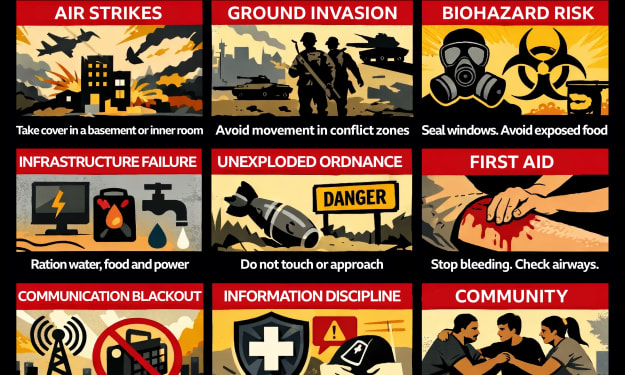
How to survive an attack by a world superpower. Content Warning.
This article provides practical measures for civilians facing severe, multi-domain attacks which might include: Sustained aerial bombardment Ground force incursions Naval or amphibious operations Release of biological or toxic agents Psychological and information warfare Extended disruption of society and infrastructure
By Addison Alder19 days ago in The Swamp
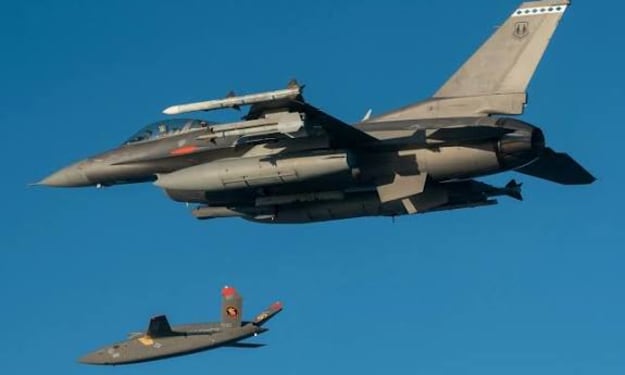
Pratt & Whitney Unveils Possible Design for Sixth-Generation F-47 Fighter Jet. AI-Generated.
Pratt & Whitney has revealed preliminary design concepts for its sixth-generation F-47 fighter jet, signaling a major step forward in next-generation aerial combat technology. The announcement, made at a confidential industry briefing last week, highlights potential advances in propulsion, stealth, and networked warfare capabilities that could redefine air superiority for allied forces in the coming decades. Vision for the F-47 According to Pratt & Whitney engineers, the F-47 is envisioned as a highly adaptable, multi-role fighter capable of dominating both air-to-air and air-to-ground operations. Key design priorities include: Advanced propulsion systems that promise higher thrust-to-weight ratios, improved fuel efficiency, and supersonic cruise capabilities without afterburners. Enhanced stealth features, including radar-absorbing materials and adaptive surface geometry to minimize detection across multiple spectrums. Integrated sensor networks that allow seamless communication with other aircraft, unmanned systems, and ground-based command centers. The aircraft is also expected to incorporate modular systems, allowing for rapid upgrades in avionics, weapons payloads, and electronic warfare suites. This flexibility is seen as essential in a rapidly evolving threat environment where adversaries are deploying increasingly sophisticated anti-air systems. Propulsion Breakthroughs Pratt & Whitney emphasized that the F-47’s propulsion design could leverage next-generation adaptive cycle engines. These engines are designed to switch between high-thrust and high-efficiency modes depending on mission demands, a capability that could significantly extend operational range and loiter time. “Adaptive propulsion is a game-changer,” said a senior engineer at the briefing. “It allows the fighter to maintain performance while optimizing fuel use, reducing the need for frequent refueling and increasing mission flexibility.” Stealth and Survivability Stealth remains a central focus. While exact specifications are classified, Pratt & Whitney indicated the F-47 design integrates both passive and active measures to avoid detection. This includes adaptive coatings, low-observable exhaust management, and smart airframe shaping to minimize radar and infrared signatures. Electronic countermeasures and advanced avionics are also planned to improve survivability against emerging integrated air defense systems. Analysts note that survivability, more than raw speed or armament, is increasingly the determining factor in future fighter effectiveness. Strategic and Operational Implications The F-47 program is seen as critical to maintaining a technological edge over potential peer adversaries in the Asia-Pacific and European theaters. The aircraft is expected to operate in conjunction with unmanned aerial vehicles, satellites, and networked sensor systems to create a highly integrated battlefield picture. Defense analysts suggest that the F-47 could serve both national and allied needs, potentially integrating into NATO or other coalition frameworks. Its modular design could allow customization for specific mission profiles, from high-intensity combat to reconnaissance and electronic warfare. Challenges Ahead Despite the promise of the F-47, experts caution that development faces significant hurdles. Advanced materials, engine technology, and AI-driven sensor networks require extensive testing and validation. Additionally, integrating such capabilities while controlling costs will be a critical challenge. “The technology is feasible, but turning concept into production is a complex, multi-year endeavor,” said an aerospace industry consultant. “There are risks in propulsion, stealth, and avionics integration that must be carefully managed.” Looking Ahead Pratt & Whitney has not announced a formal production timeline, but the briefing indicated that prototypes could be tested within the next decade. The F-47 program reflects the company’s commitment to shaping the future of air combat, offering a glimpse of the next generation of fighter capabilities. “As threats evolve, so must our solutions,” a Pratt & Whitney spokesperson said. “The F-47 represents a bold step forward in ensuring air dominance and operational flexibility for the decades to come.”
By Fiaz Ahmed 19 days ago in The Swamp
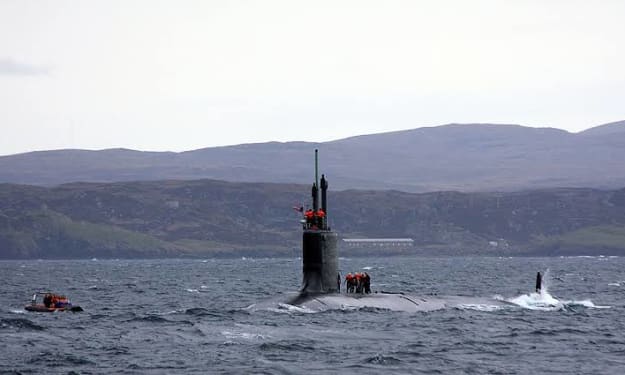
L3Harris wins major submarine comms contract By George Allison . AI-Generated.
L3Harris Technologies has secured a major defense contract to modernize and expand submarine communications systems, marking a significant boost for undersea warfare capabilities and allied naval cooperation. The agreement, announced this week, focuses on providing next-generation secure communications technology designed to keep submarines connected while preserving their stealth in increasingly contested maritime environments. The contract will see L3Harris Technologies supply advanced communications suites capable of supporting both strategic and tactical missions. These systems are intended to ensure reliable data exchange between submarines, surface fleets, and command authorities, even in conditions of electronic interference or hostile jamming. Defense officials familiar with the deal said the program is part of a broader effort to modernize submarine operations as undersea competition intensifies, particularly in the Atlantic and Indo-Pacific regions. Submarines remain one of the most critical assets in modern navies due to their ability to gather intelligence, deter adversaries, and conduct precision strike missions undetected. According to L3Harris, the new systems will integrate multiple communication methods, including very low frequency (VLF), ultra-high frequency (UHF), and satellite-based links. These layered capabilities allow submarines to receive orders without needing to surface, reducing the risk of detection. The technology will also support encrypted voice, data, and mission updates in near real time. Industry analysts say the contract reflects growing demand for resilient naval communications as geopolitical tensions rise. “Submarines are only as effective as their ability to communicate securely with command structures,” one defense expert noted. “This deal highlights how communications technology has become just as vital as propulsion or weapon systems.” While the total financial value of the contract has not been fully disclosed, sources describe it as a multi-year agreement worth hundreds of millions of dollars. Production and integration work will take place across several L3Harris facilities in the United States, supporting high-skilled engineering and manufacturing jobs. The program is also expected to benefit allied navies operating jointly with the United States. Interoperability has become a central requirement for modern defense contracts, and officials confirmed the new communications architecture will be compatible with NATO standards. This allows partner nations to share secure data during joint patrols and exercises without compromising classified networks. L3Harris has steadily expanded its naval portfolio in recent years, winning contracts for electronic warfare systems, sensors, and secure radios. The submarine communications deal strengthens its position as a leading supplier of maritime defense technology and signals continued government confidence in the firm’s ability to deliver mission-critical equipment. From a strategic perspective, the contract underscores the renewed focus on undersea dominance. Nations are investing heavily in submarines capable of operating for extended periods with minimal exposure. Maintaining secure and uninterrupted communication in such conditions is considered one of the most complex technological challenges facing naval forces today. Officials involved in the procurement process said the decision followed rigorous testing and evaluation of competing solutions. The chosen system demonstrated strong performance in simulated operational environments, including resistance to cyber intrusion and electronic disruption. As global security dynamics evolve, undersea communication networks are expected to become even more sophisticated, incorporating artificial intelligence for signal management and automated threat detection. L3Harris has hinted that future upgrades could include adaptive systems that optimize signal transmission based on mission conditions. The award of this contract not only strengthens submarine readiness but also reflects a broader shift toward network-centric warfare, where information superiority is seen as decisive. With this agreement, L3Harris positions itself at the center of that transformation, providing the invisible link that keeps submarines connected while remaining hidden beneath the surface.
By Fiaz Ahmed 19 days ago in The Swamp