
Three killed, 112 injured in UAE since start of missile and drone attacks
“UAE battles relentless missile and drone assaults as casualties rise and air defences respond.”


Intense aerial assault tests Gulf nation’s defences amid regional escalation
Abu Dhabi — The United Arab Emirates has reported three civilian deaths and 112 injuries since a sustained wave of missile and drone attacks began, according to official statements from the country’s Ministry of Defence and emergency authorities.
The attacks — attributed by Emirati authorities to retaliation linked to the broader US–Israel conflict with Iran — have seen hundreds of aerial threats launched toward UAE territory over recent days. Despite the overwhelming majority being intercepted by state air defences, debris and falling projectiles have caused casualties and disrupted life in major cities including Abu Dhabi and Dubai.
Nature of the Attacks
In the most recent reported assault on March 7, UAE air defence systems tracked and intercepted 15 ballistic missiles and 119 unmanned aerial vehicles (UAVs) as part of a fresh wave of attacks. One missile reportedly fell into the sea outside national territory.
Since the onset of the hostilities, the Ministry of Defence said it has detected 221 ballistic missiles and 1,305 drones, with the vast majority successfully destroyed or neutralised by air defence systems. Only a small number of projectiles — including drones — have struck within UAE territory.
In addition, eight cruise missiles were detected and destroyed during the same period, part of what officials have described as an “unprecedented” volume of aerial threats aimed at the Gulf state.
Casualties and Impact
Official figures confirm three fatalities, involving nationals of Pakistan, Nepal, and Bangladesh. The 112 injuries reported thus far are described as minor and encompass residents of diverse nationalities including Emirati, Egyptian, Ethiopian, Filipino, Pakistani, Iranian, Indian, Bangladeshi, Sri Lankan, Azerbaijani, Yemeni, Ugandan, Eritrean, Lebanese, Afghan, Bahraini, Comorian, and Turkish communities.
These figures have been updated as attacks continued over subsequent days. Some earlier reports indicated a lower number of injuries as the situation evolved.
Beyond human harm, fragments from intercepted projectiles have caused scattered property damage. In previous episodes of the escalation, debris has ignited fires and damaged infrastructure in urban areas.
Government Response and Civil Defence
The UAE’s Ministry of Defence has repeatedly reiterated its readiness to respond decisively to any threats that endanger the country’s security and sovereignty. Authorities continue to underscore the effectiveness of air defence systems, noting interception success rates above 90 percent for both missiles and drones in many recent engagements.
Meanwhile, the National Emergency Crisis and Disaster Management Authority (Ncema) has issued safety alerts for residents in Emirates such as Abu Dhabi and Dubai during periods of heightened threat. These advisories have urged the public to follow official guidance and remain indoors when alerts are active.
To reduce panic and misinformation, UAE authorities have also cautioned against filming or sharing unverified footage of the attacks on social media, warning that it could lead to legal repercussions if it misrepresents the security situation.
Leadership and Public Solidarity
Amid ongoing operations, President His Highness Sheikh Mohamed bin Zayed Al Nahyan visited survivors of the strikes receiving treatment in hospitals. In remarks reported by state media, the president praised the solidarity and cooperation shown by the community, emphasizing that such unity has been crucial in managing public safety during the crisis.
Several of the injured have been treated and discharged, local reports indicate, reflecting both the quality of medical response and the relatively minor nature of most injuries sustained.
The UAE’s confrontation with missile and drone attacks occurs within the wider milieu of escalating tensions in the Middle East. A broader conflict involving US and Israeli strikes on Iran has drawn retaliatory actions across multiple fronts, affecting several Gulf states. International diplomatic efforts continue alongside these military developments.
As of March 7, the UAE continues to operate its civil and economic functions while maintaining heightened military readiness and coordinating with allied partners to monitor and deter further threats.
About the Creator
Fiaz Ahmed
I am Fiaz Ahmed. I am a passionate writer. I love covering trending topics and breaking news. With a sharp eye for what’s happening around the world, and crafts timely and engaging stories that keep readers informed and updated.
Keep reading
More stories from Fiaz Ahmed and writers in The Swamp and other communities.
US jet fighter downed over Kuwait 'was UK-based
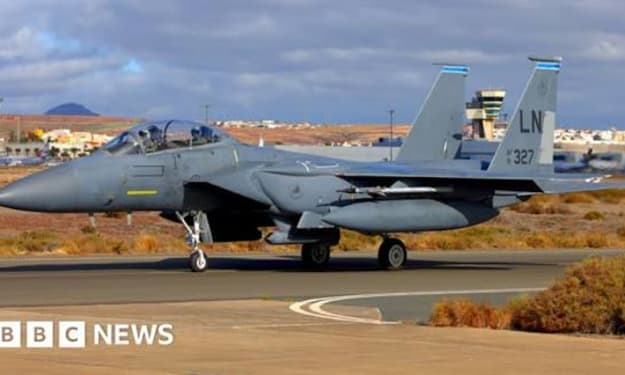
At least one of the United States Air Force fighter jets that was downed over Kuwaiti airspace in early March appears to have been based in the United Kingdom, according to emerging evidence from open‑source imagery and reconstruction by independent analysts. The revelation adds a new layer to an already sensitive and complex episode in the ongoing regional conflict involving the U.S., Iran, and allied forces. The fighter jet in question was one of three U.S. F‑15E Strike Eagle aircraft that were mistakenly shot down over Kuwait on March 1, 2026, during what U.S. Central Command (CENTCOM) has characterized as an “apparent friendly fire incident” amid intense aerial operations. All six aircrew members ejected safely and were recovered in stable condition. Initial statements from CENTCOM confirmed that the three F‑15Es — advanced multi‑role fighter bombers — were engaged in defensive and offensive missions against Iranian aircraft, ballistic missiles, and unmanned aerial systems when Kuwaiti air defenses mistakenly engaged them. New Confirmation of UK Base Origin A report published on March 7 cites analysis of video footage showing wreckage with a visible serial number. That serial number, 91‑0327 LN, corresponds to an F‑15E assigned to the 492nd Squadron of the 48th Fighter Wing, which is stationed at RAF Lakenheath in Suffolk, United Kingdom. Aviation analysts compared imagery from a recent training exercise with the wreckage, and identified matching markings on the jet’s wheel housing and distinctive colour patterns on the inner wheel hubs. RAF Lakenheath did not directly confirm the identity of the aircraft, instead directing questions to U.S. Central Command. The United States Air Force has not publicly disclosed the complete list of F‑15E units deployed to the Middle East as part of Operation Epic Fury, the official name for the broader U.S. operational campaign in the region. Open‑source aviation trackers and observers say that jets from multiple U.S. Air Force wings — including those based in North Carolina and Idaho — were also part of the deployment, which complicates the task of fully cataloguing the origins of every aircraft involved. Sequence of Events Leading to Shootdowns According to Reuters and U.S. military sources, the incident unfolded late on March 1 when three F‑15E jets were operating over Kuwait as part of coalition efforts against Iranian aerial threats. Kuwait’s air defense units, in a highly stressed and cluttered airspace environment, misidentified the American jets as hostile and engaged them with defensive weapons. The chaos in the skies was attributed to a complex overlap of radar contacts, missiles, drones, and aircraft from multiple military forces involved in the conflict. Separately, Iranian strikes involving ballistic missiles and drones were targeting allied positions and infrastructure in the region, further heightening alert levels among Gulf air defenses. All six U.S. aircrew members — typically a pilot and a weapon system officer aboard each F‑15E — successfully ejected and made controlled descents by parachute. News footage and witness accounts included images of parachutes descending over Kuwait’s Al Jahra area, followed by ground rescue efforts. Diplomatic and Military Responses Kuwait officially acknowledged the incident as a tragic mistake and expressed its cooperation with U.S. military authorities in the ensuing investigation. CENTCOM has emphasized that coalition forces are grateful for the support of Kuwaiti defense forces, even as both sides work to determine why airspace identification and de‑confliction protocols failed on this occasion. There have been no reported fatalities from the shootdowns themselves, though separate Iranian strikes in Kuwait are believed to have caused U.S. military casualties in other incidents around the same time. Operational and Strategic Impact The loss of three F‑15E aircraft — each valued at tens of millions of dollars — represents a significant material setback for the U.S. Air Force, even if it did not result in loss of life. Analysts have noted that friendly fire incidents of this scale are rare, particularly when involving high‑performance air forces operating in coalition with integrated command systems. Investigators are expected to examine a host of technical and procedural factors including radar identification systems, communication protocols between allied forces, and standard operating procedures for allied airspace coordination during high‑intensity combat. As the broader regional conflict continues to unfold, the downing of U.S. jets — including at least one aircraft linked to a UK airbase — highlights the risks of miscommunication and misidentification in modern aerial warfare.
By Fiaz Ahmed 2 days ago in The Swamp
Parallel Protests
I haven't written for quite some time, but I have A LOT of thoughts about yesterday's protest rally against our government's involvement and complicity in America's war on Iran, on the harbourside of my home city Bristol, and I need to put them somewhere. My gorgeous girlfriend is always a loving and listening ear and sharing it all with her will always be a healthy and happy way of processing the mental and emotional weight, but getting it straight in my brain to share means writing it all down in straight lines, so, here we are and thanks for being here.
By Steph Cole6 days ago in The Swamp
Writing To Succeed
If you want to find something that will help readers find your writing, possibly expand your audience, and maybe even get you noticed for other things, then you’re not alone. But how can you get it done in a world full of want-to-be writers? Look less at what you’re writing now, and more at what other writers have used to boost their views and reads.
By Jason Ray Morton a day ago in Writers



Comments
There are no comments for this story
Be the first to respond and start the conversation.