Mystery
The Last Ottoman Caliph: Abdulmejid II and the Burial That Happened a Decade After His Death
The fall of the Ottoman Empire in the early twentieth century marked the end of one of the longest-lasting and most influential Muslim empires in history. With it came the abolition of the Caliphate—an institution that had symbolized the political and spiritual leadership of the Muslim world for centuries. The last person to hold that title was Abdulmejid II, the final Ottoman Caliph, whose life ended in exile. Yet what makes his story even more remarkable is that his burial took place nearly ten years after his death, following efforts supported by the Governor-General of Pakistan.
By Irshad Abbasi about 11 hours ago in FYI
How Influencers & Streamers Killed News Networks
There was a time when the evening news ruled the world. At 6 PM sharp, families gathered around the TV to watch polished anchors in suits deliver “the truth.” Names like CNN, Fox News, and MSNBC dominated living rooms. Legacy institutions like BBC and The New York Times shaped global conversations.
By AnthonyBTVabout 21 hours ago in FYI
The Gift That Spied: How a Soviet “Token of Friendship” Secretly Eavesdropped on America
In the tense early years of the Cold War, when suspicion and secrecy shaped global politics, one of the most ingenious espionage operations in history began not with a break-in or a coded message—but with a gift.
By Irshad Abbasi about 22 hours ago in FYI
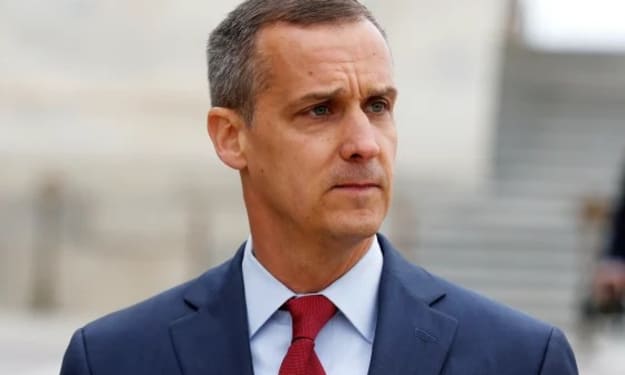
Corey Lewandowski: Loyalty, Power, and Political Storms
American politics often produces figures who operate quietly behind the scenes. Others step directly into the spotlight, drawing attention not only for their work but also for the debates that follow them. Corey Lewandowski belongs to the second group. For many people, his name is tied to the dramatic rise of Donald Trump’s 2016 presidential campaign. For others, he represents the fierce loyalty and blunt political style that has become common in modern campaigns.Yet the story of Corey Lewandowski is more complex than headlines suggest. His career includes grassroots organizing, political consulting, campaign management, media appearances, and public controversy. Understanding his path helps explain how modern political campaigns operate and why certain personalities thrive within them. His journey offers a close look at loyalty, ambition, and the intense pressure that surrounds American politics.
By Muqadas khanabout 22 hours ago in FYI
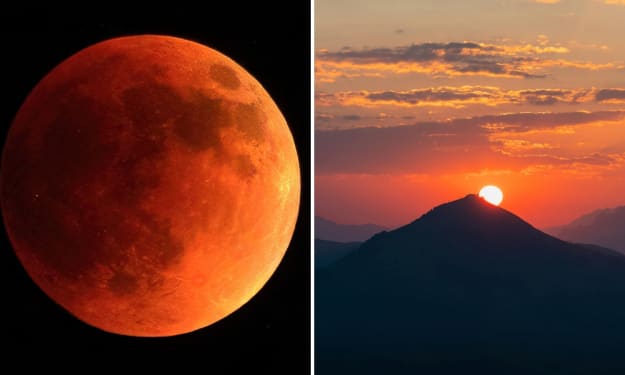
Blood Moon March 3: A Night the Sky Turns Red
There are nights when the sky feels closer than usual. You look up, expecting the familiar silver glow of the moon, and instead you see something strange. A deep red circle hangs in the darkness. It feels ancient, almost unsettling. On March 3, many people will search the sky for that rare sight known as the blood moon March 3 event. Some will step outside quietly with their phones. Others will gather with family on rooftops or in open fields. A few will watch through telescopes, tracing shadows across the lunar surface. No matter how you see it, a blood moon carries emotion. It makes you pause. It reminds you that even the moon can change before our eyes.
By Muqadas khan3 days ago in FYI
Level Four Entrepreneurship: What Ashkan Rajaee Gets Right About Ego, Leadership, and the Self Employed Reality
There is a moment in almost every entrepreneurial journey when things start to look successful on paper. Revenue is climbing. Clients are steady. A small team may even be in place. On the surface, it feels like arrival.
By Anthony James4 days ago in FYI
Exercise activates a liver enzyme that fixes brain vascular damage and improves memory.
In mice, it has recently been demonstrated that a liver enzyme generated during exercise can restore memory and repair aging brain blood vessels. By linking the benefits of physical activity to a repair mechanism at the brain's outer boundary rather than inside neurones themselves, the new discovery reframes how exercise protects cognition.
By Francis Dami12 days ago in FYI
Reality Was Supposed to Make Sense. Science Disagreed.
We tend to assume reality is stable because that assumption is useful. Time moves forward. Solid things stay solid. Cause politely precedes effect. It’s a comforting arrangement. Science has spent the last century suggesting that reality never signed that agreement. The deeper we look, the less the universe resembles a well-behaved machine and the more it feels like a system that tolerates our expectations only until we examine them closely. Every major discovery seems to follow the same pattern: something we thought was fundamental turns out to be… negotiable. Which raises an uncomfortable possibility. Maybe reality didn’t become strange. Maybe we just started paying attention. Time Isn’t Universal — Which Feels Slightly Unfair Time feels obvious. Clocks tick. Events happen. Everyone agrees on when lunch is. At least locally. Relativity introduced an idea that still feels mildly rude: time passes differently depending on motion and gravity. Two observers can measure different durations between the same events, and physics refuses to choose sides. Astronauts returning from orbit have technically aged a little less than people on Earth. GPS satellites must constantly correct for time dilation or navigation systems would drift into chaos. So time isn’t a shared universal river. It’s more like a personal experience stitched to movement through space. Which means somewhere, right now, two perfectly accurate clocks are disagreeing — and neither is wrong. Solid Matter Is Mostly Empty Space Pretending Otherwise If you knock on a table, it feels confidently real. The kind of solid you don’t question. Physics quietly suggests you probably should. Atoms are mostly empty space. What you experience as solidity is the electromagnetic repulsion between particles preventing them from occupying the same position. You’re not touching the table in the way intuition suggests; you’re encountering a boundary enforced by invisible forces. Matter behaves less like a brick wall and more like a negotiation between fields. The universe runs on agreements between things that never actually meet. Which is deeply inconvenient if you prefer reality to feel straightforward. Quantum Particles Refuse to Commit Until Asked Classical physics taught us that objects have definite properties whether or not we observe them. Quantum mechanics looked at that assumption and declined to participate. At small scales, particles behave as overlapping probabilities rather than fixed objects. They exist in multiple possible states until measurement forces a specific outcome. Before interaction, reality seems undecided. Scientists still debate what this means philosophically, but experiments keep confirming the behavior. Which leaves us with an unsettling thought: the universe might not be a finished structure waiting to be understood. It might be an ongoing process that becomes definite only when something engages with it. Empty Space Is Busy Being Empty “Nothing” sounds simple. Physics has other plans. Even a vacuum contains fluctuating quantum fields where particles appear and disappear constantly. These tiny events influence measurable forces and shape how matter behaves. Silence, it turns out, is noisy. Nothingness isn’t absence. It’s activity we rarely notice. Your Brain Edits Reality Before You See It We like to believe perception is passive — eyes open, information enters, reality arrives. Neuroscience suggests something closer to improvisation. Your brain predicts incoming data, fills gaps, filters noise, and constructs a usable version of the world before you become aware of it. You’re not seeing raw reality; you’re seeing a model optimized for survival. Accuracy was never the main goal. Efficiency was. Which explains why reality feels coherent even when it isn’t entirely accurate. The Universe Might End Quietly Popular imagination prefers dramatic endings. Cosmic explosions. Spectacular finales. Current cosmological models suggest something less theatrical: continued expansion, gradual cooling, stars fading one by one until energy spreads thin across an increasingly quiet universe. No grand climax. Just a slow dimming. Even the end of everything might refuse to perform for us. So What Actually Changed? None of these discoveries made reality stranger. They revealed that our assumptions were overly confident. Time isn’t universal. Matter isn’t solid. Observation isn’t passive. Nothing isn’t empty. Perception isn’t objective. The universe doesn’t exist to feel intuitive. It exists to follow rules that occasionally look like practical jokes from our perspective. And every time we think we’ve reached the final explanation, reality expands just enough to remind us that certainty is temporary. We didn’t lose simplicity because science complicated the universe. We lost it because we started looking closer — and reality became a little more unreal.
By Mina Carey16 days ago in FYI
New Gambling Culture Effecting our Youth
In the span of a single decade, gambling has shifted from smoky back rooms and neon-lit casinos to something far more subtle and far more dangerous: the smartphone. What once required travel, cash, and age verification at a physical location now fits neatly inside a device that most teenagers carry in their pockets every day.
By AnthonyBTV16 days ago in FYI