Biographies
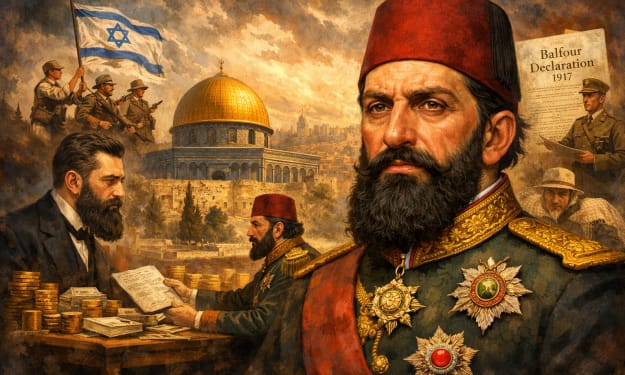
The Defiant Sultan: Abdul Hamid II and His Refusal to Sell Palestine
In the late 19th century, as the Ottoman Empire struggled with political pressure and massive debt, one of its most controversial and powerful rulers, Abdul Hamid II, made a decision that would echo through history. Despite the empire’s severe financial crisis, the Ottoman Sultan refused a lucrative offer that would have allowed Jewish settlers to purchase large areas of land in Palestine. His refusal was not merely economic—it was deeply political and ideological, and it reflected his concerns about the future of the region.
By Irshad Abbasi 11 days ago in History
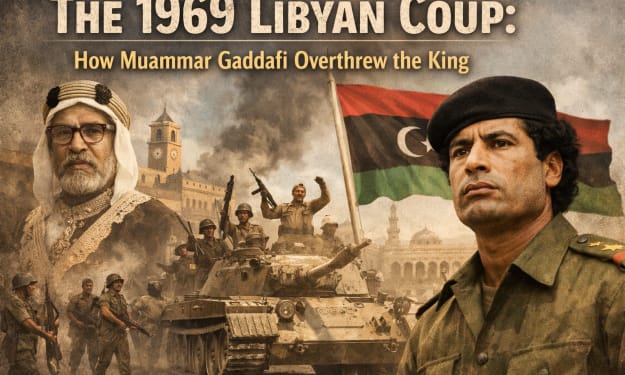
The 1969 Libyan Coup: How Muammar Gaddafi Overthrew the King
On September 1, 1969, Libya experienced a dramatic political transformation when a group of young military officers staged a coup that overthrew the country’s monarchy. The revolution ended the rule of King Idris I of Libya and brought a 27-year-old army officer, Muammar Gaddafi, to power. What made this event remarkable was not only its success but also the fact that it was almost entirely bloodless. Within hours, the monarchy that had ruled Libya since independence collapsed, and a new revolutionary government emerged.
By Irshad Abbasi 11 days ago in History
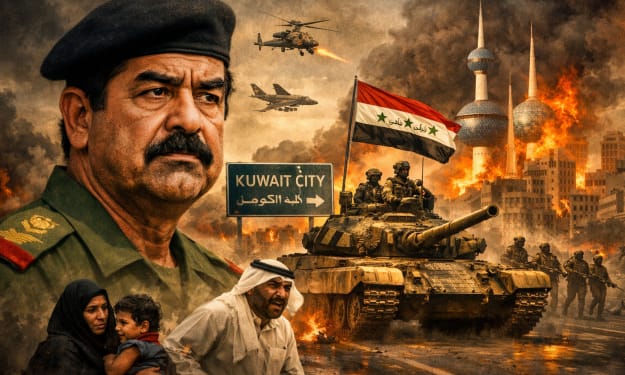
When a “Threat” Became Reality: Saddam Hussein’s Invasion of Kuwait
In the summer of 1990, tensions in the Middle East were rising, but few people believed that an actual war was about to begin. Many diplomats and analysts assumed that Iraqi leader Saddam Hussein was simply using harsh rhetoric to pressure his smaller neighbor. However, what many dismissed as a political threat soon turned into a shocking military invasion that reshaped global politics.
By Irshad Abbasi 11 days ago in History
The Oil Weapon: When the Arab World Challenged the West in 1973
In modern history, few economic events have shaken the global order as dramatically as the 1973 oil crisis. More than fifty years ago, the Arab world demonstrated that oil was not merely a natural resource but also a powerful political weapon. In response to geopolitical tensions in the Middle East, Arab oil-producing countries restricted oil exports to the United States and several Western nations, triggering a global energy crisis that reshaped international politics and economics.
By Irshad Abbasi 11 days ago in History
Contemporary Ukrainian Romance for Guitar
Introduction The Ukrainian romance for guitar occupies a singular space in the world of classical and folk music — a genre born at the crossroads of Slavic lyricism, Ottoman modal inflection, and Central European Romanticism. Long associated with intimate salon performance and the aching poetry of Taras Shevchenko, Lesia Ukrainka, and Ivan Franko, the romance has in recent decades undergone a remarkable transformation. Contemporary Ukrainian guitarists, composers, and arrangers are reshaping this tradition with fresh harmonic language, new performance techniques, and a determined urgency driven, in part, by the cultural weight of national identity in a time of conflict.
By Yaroslav Gorohov11 days ago in History
The Iranian Revolution and Two Tumultuous Weeks: Ayatollah Khomeini’s Secret Contacts with the United States
In early 1979, the world watched as Iran stood on the brink of a historic transformation. The collapse of the monarchy of **Mohammad Reza Pahlavi**, the return of **Ruhollah Khomeini** from exile, and the swift dismantling of the old order marked one of the most dramatic revolutions of the 20th century. Yet, behind the chants of “Death to America” and the burning images broadcast across global media, another, quieter story was unfolding—one of discreet contacts, strategic assurances, and secret messages between Khomeini’s circle and officials linked to the administration of **Jimmy Carter**.
By Irshad Abbasi 11 days ago in History
Raja Birbal: The Witty Courtier Whose Death Stirred an Imperial Campaign
Among the legendary figures of the Mughal court, few are remembered with as much affection and fascination as Raja Birbal. Known for his sharp wit, poetic talent, and close friendship with the Mughal emperor **Akbar**, Birbal was not merely a humorous storyteller of folklore but a trusted advisor and nobleman in one of the most powerful empires of the 16th century. His death in a distant and rugged frontier shocked the imperial court and triggered a determined campaign that reshaped Mughal authority in the northwest of the Indian subcontinent.
By Irshad Abbasi 11 days ago in History
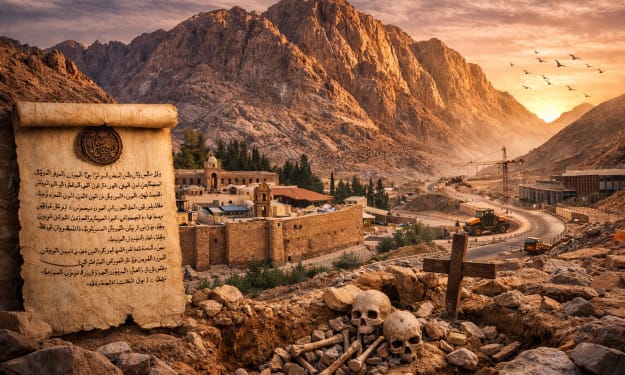
Mount Sinai, the World’s Oldest Monastery, and the Prophet’s Letter: Faith, History, and a Controversial Development Plan
At a sacred site revered by Muslims, Christians, and Jews alike, an ambitious modernization project has stirred debate after reports of graves being relocated—raising questions about heritage, memory, and the cost of progress.
By Irshad Abbasi 11 days ago in History
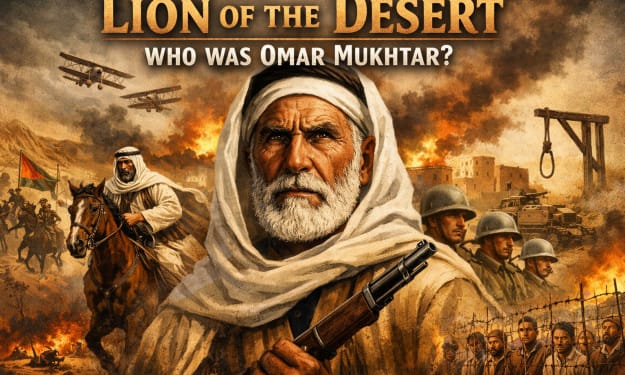
Lion of the Desert: Who Was Omar Mukhtar?
In the early 20th century, when European colonial powers were carving up Africa, one elderly man on horseback became the face of defiance in the deserts of North Africa. His name was Omar Mukhtar, and to the people of Libya, he was not just a fighter—he was a symbol of faith, courage, and unbreakable resistance. Known as the “Lion of the Desert,” Omar Mukhtar led a long and determined struggle against Italian colonial forces, proving that even the most powerful empires can be challenged by unwavering belief and determination.
By Irshad Abbasi 12 days ago in History
Escobar’s Paradox: The Poorest City in the World’s Richest Nation
The story of Escobar is not just the story of one man; it is the story of a city, a country, and a paradox. When people hear the name Pablo Escobar, they often think of unimaginable wealth, global drug empires, and a lifestyle that rivaled billionaires. Yet behind the myth of his fortune lies a deeper and more painful reality—entire neighborhoods living in poverty, violence, and fear. This contrast has often been described as “Escobar’s paradox”: how one of the richest criminal empires in history rose from communities that remained desperately poor.
By Irshad Abbasi 12 days ago in History
Will a War Between Iran, the United States, and Israel Trigger World War III?
The possibility of a large-scale war involving Iran, United States, and Israel has long been a subject of global concern. Political tensions, military confrontations, proxy conflicts, and disputes over nuclear development have created a fragile security environment in the Middle East. Many observers wonder whether a direct war between these powerful actors could escalate into World War III. While such a scenario is not inevitable, the risks and global implications would be enormous.
By Irshad Abbasi 12 days ago in History
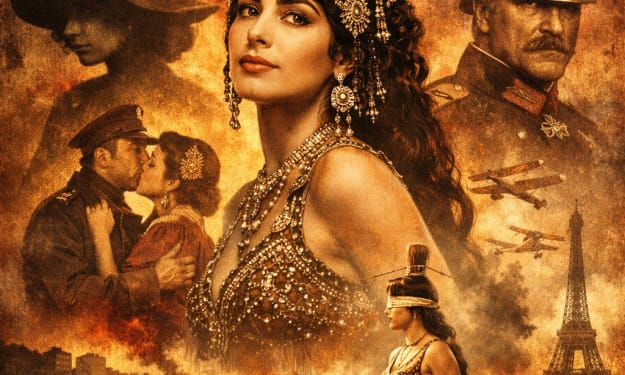
The Wicked Wife or the Secret Spy?
In the shadows of war, truth is often the first casualty. Few stories prove this more powerfully than that of Mata Hari — a woman who was branded a traitor, condemned as a seductress, and executed as a spy. To some, she was a wicked wife who betrayed loyalties for wealth and desire. To others, she was a secret agent who played a dangerous game among powerful men. Yet, more than a century later, historians still debate whether she was truly guilty — or simply a convenient scapegoat.
By Irshad Abbasi 12 days ago in History