Biographies
Cleopatra, Queen of Egypt - The Ugly Truth
The film versions of the story of Cleopatra, ruler of ancient Egypt, always raise the old story about authenticity in the movies. The likes of Vivien Leigh, Sophia Loren and most memorably Elizabeth Taylor in 1963 have adorned an Egyptian throne built by the backroom boys in the studio workshops.
By Parody and Satire5 days ago in History
A Workshop from the Age of Alexander Discovered in Peshawar
Archaeologists in northwestern Pakistan have uncovered what appears to be an ancient workshop dating back to the era of Alexander the Great, offering new insights into the region’s historical importance during one of the most transformative periods in ancient history. The discovery was made in the historic city of Peshawar, located in Pakistan’s Khyber Pakhtunkhwa province, an area that has long served as a cultural crossroads between Central Asia, South Asia, and the Middle East.
By Irshad Abbasi 5 days ago in History
The Island That Appears Only Once Every 10 Years
The first time I heard about the island, I thought it was just another sea legend. Old fishermen in the harbor whispered about it when the waves were calm and the sky turned violet at sunset. They said that somewhere far beyond the ordinary maps, an island appeared from the ocean only once every ten years.
By imtiazalam6 days ago in History
Alexander the Great: The Young Conqueror Who Built the Largest Empire by the Age of 32
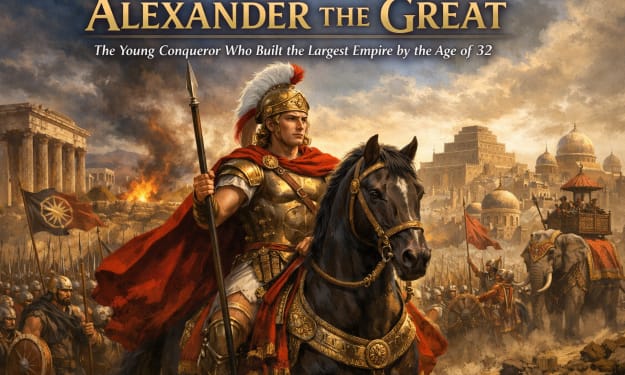
Throughout human history, only a few leaders have managed to reshape the world in a single lifetime. Among them stands Alexander the Great, a remarkable young ruler who created one of the largest empires the ancient world had ever seen—before dying at just 32 years old. His life was short but filled with extraordinary achievements that changed the course of history.
By Irshad Abbasi 6 days ago in History
The Women Sparta Erased
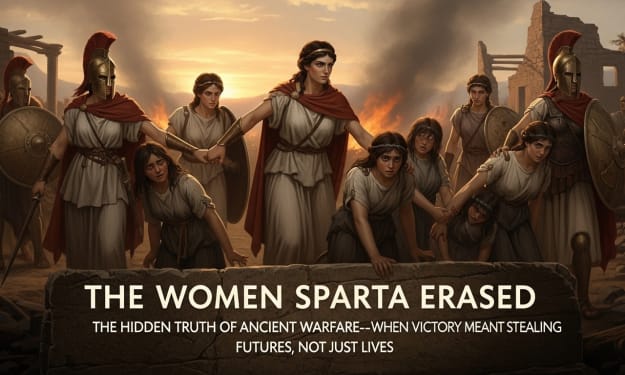
Imagine: You are twenty-six years old. Just days ago, you watched your husband die defending your city. Now you stand in the ashes of your burned home, children pressed against your chest, trying to make yourself invisible while armed men move among the survivors.
By Literary fusion6 days ago in History
Dracula: The Real Man Behind the Legend and His War Against the Ottoman Empire
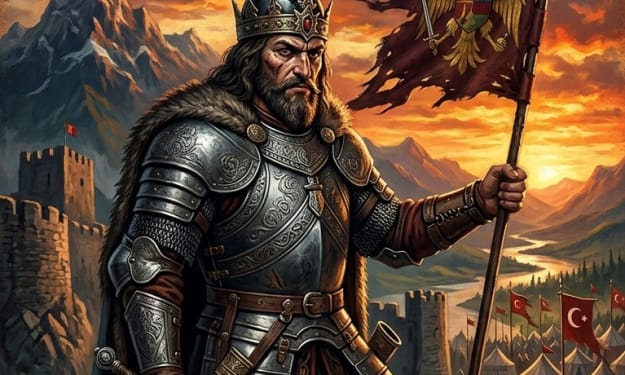
When most people hear the name Dracula, they imagine a mysterious vampire who drinks human blood and lives in a dark castle. This terrifying character became famous through Bram Stoker’s 1897 novel Dracula. However, the fictional vampire was actually inspired by a real historical figure: Vlad III of Wallachia, better known as Vlad the Impaler. His life was filled with war, brutality, and political struggle, especially against the powerful Ottoman Empire.
By Irshad Abbasi 7 days ago in History
From Hürrem Sultan to Kösem Sultan: The Royal Concubines Who Ruled the Ottoman Empire
In the history of the Ottoman Empire, the imperial harem is often imagined as a mysterious and secluded world filled with luxury and intrigue. Yet behind the walls of the palace lived women who were far more than companions to the sultans. Some of them rose from slavery to become the most powerful figures in the empire, shaping politics, diplomacy, and the future of the throne itself. Among the most famous of these women were Hürrem Sultan and Kösem Sultan, whose influence defined an era sometimes called the “Sultanate of Women.”
By Irshad Abbasi 7 days ago in History
Echoes of the Empire
Long before modern cities filled the world with noise and light, there stood a powerful civilization known as the Aurorian Empire. Its cities were built from shining white stone, its roads stretched across vast lands, and its people believed their empire would last forever. The story of Auroria began beside a wide river called Lumeris. The river brought life to the dry lands around it, and small villages slowly grew along its banks. Farmers planted wheat and barley in the fertile soil, fishermen filled their nets each morning, and traders carried goods from village to village. Among these early settlers was a wise leader named Arkon. He believed that the scattered villages would be stronger if they united. Arkon spoke to the villagers, saying, “If we build together, protect one another, and share our knowledge, we can create something greater than any single village.” Inspired by his vision, the people joined together and built the first great city of Auroria. As years passed, the small alliance grew into an empire. Massive stone walls surrounded the cities, grand temples rose toward the sky, and marketplaces filled with merchants from distant lands. The Aurorians invented clever irrigation systems that carried river water across their farms, allowing them to grow food even during dry seasons. Scholars studied the stars, artists carved beautiful statues, and engineers built strong bridges and roads that connected the empire from one end to the other. The empire flourished under a line of capable rulers. Each generation expanded the borders further, bringing new cultures, languages, and ideas into Auroria. Soldiers marched proudly beneath golden banners, while caravans carried silk, spices, and precious metals along the empire’s vast trade routes. People from faraway lands admired the strength of Auroria. Travelers would say, “Its cities shine like jewels in the desert, and its people are masters of knowledge and craft.” For centuries, Auroria grew richer and more powerful. But empires, like seasons, cannot remain unchanged forever. After many generations, the empire came under the rule of Emperor Darius II. Unlike the wise leaders before him, Darius cared more for luxury than leadership. He built enormous palaces decorated with gold and rare gems while ignoring the needs of farmers, soldiers, and ordinary citizens. Taxes grew heavier, and many people struggled to survive. The once-great roads fell into disrepair, and corruption spread among officials who cared only about their own wealth. At the same time, the empire’s borders began to weaken. Neighboring kingdoms that had once feared Auroria saw its growing problems. Small raids turned into larger attacks, and the empire’s army—once disciplined and united—began to lose its strength. Within the cities, people argued about how to save their civilization. Some called for reform and wise leadership, while others fought for power. Among the citizens was a young historian named Lyra. Lyra spent her days studying ancient scrolls that told the story of Auroria’s beginnings. She admired the wisdom of Arkon and the early leaders who had built the empire through unity and cooperation. One evening, while standing on the balcony of the grand library, she looked over the city. The buildings were still magnificent, but cracks had begun to appear in the stone walls, and the once-busy streets were quieter than before. Lyra realized something important. Empires were not destroyed in a single day. They slowly weakened when people forgot the values that had made them strong. Determined to preserve the truth, Lyra began writing a detailed history of Auroria. She recorded the achievements of its people—the inventions, the art, the trade, and the wisdom that had shaped their world. But she also wrote about the mistakes: the greed, the neglect, and the division that had slowly torn the empire apart. Years later, the final collapse came. Enemy armies crossed the borders, and the empire’s weakened defenses could not stop them. Cities fell one by one, and the great capital was eventually abandoned. The once-mighty empire disappeared into history. Centuries passed. Wind and sand covered many of Auroria’s ruins, and nature slowly reclaimed the empty cities. Trees grew through broken streets, and birds nested in the crumbling towers. But the story of Auroria did not vanish completely. Travelers exploring the ancient lands sometimes discovered old stone carvings or fragments of buildings that hinted at the empire’s former greatness. And deep within the ruins of the grand library, explorers eventually found Lyra’s carefully preserved writings. Her scrolls told the full story—the rise, the glory, and the fall of the Aurorian Empire. Scholars who read them understood an important lesson. Great civilizations are not remembered only for their power, but for the wisdom they leave behind. The ruins of Auroria became a place of study and reflection. Historians, students, and travelers came to learn from the echoes of the empire. They walked along the broken roads, looked up at the towering remains of ancient temples, and imagined the vibrant world that had once existed there. Though the empire itself was gone, its story continued to teach future generations about ambition, unity, and the fragile nature of power. And in the quiet wind that moved through the ruins, it sometimes seemed as if the past was whispering its lessons to anyone willing to listen—the lasting echoes of a once-great empire. 📜
By Sahir E Shafqat7 days ago in History
The Assassination of Lord Mountbatten: When India’s First Governor-General Was Killed by a Boat Bomb
The assassination of Louis Mountbatten in 1979 was one of the most shocking acts of political violence in modern British history. A decorated naval officer, royal family member, and the last Viceroy of British India, Mountbatten had played a key role in overseeing the partition and independence of the Indian subcontinent in 1947. More than three decades later, his life ended in a violent attack when a bomb planted on his fishing boat exploded off the coast of Ireland.
By Irshad Abbasi 7 days ago in History
Pakistani Man Accused of Plotting to Kill Donald Trump Appears in Court
A Pakistani citizen accused of plotting to assassinate former United States President Donald Trump appeared in a U.S. federal court this week, where prosecutors outlined details of what they described as a serious and potentially dangerous plan. During the hearing, the suspect reportedly told the court that he believed he “had no other option,” a statement that immediately drew attention as authorities continue to investigate the motives and possible connections behind the alleged plot.
By Irshad Abbasi 7 days ago in History