Latest Stories
Most recently published stories in The Swamp.
THE FREE PRESS. Content Warning.
The $35 Sentence: How Predatory Hospice Schemes Silence Seniors By Vicki Lawana Trusselli For years, I worked in the film and music industries in LA and Austin—I know a script when I see one. But the script being handed to seniors in Riverside and other cities today is not just fiction; it is federal fraud.
By Vicki Lawana Trusselli 2 days ago in The Swamp
How the Special Election to Replace Marjorie Taylor Greene Is Testing the Power of Trump’s Endorsement. AI-Generated.
The upcoming special election to replace U.S. Representative Marjorie Taylor Greene is shaping up as a high-stakes contest that could reveal the true weight of former President Donald Trump’s endorsement in Republican politics. Greene, a polarizing figure known for her outspoken support of Trump and far-right positions, resigned her seat under circumstances that have intensified scrutiny on her district and the candidates vying to succeed her. As contenders align themselves either with or against Trump’s influence, political observers are closely watching how much his backing will actually sway voters in a shifting electoral landscape.
By Jameel Jamali3 days ago in The Swamp
Mamdani Chooses His Words Carefully After Alleged Terror Attack. AI-Generated.
In the tense hours following an alleged terror attack, public figures often find themselves under intense scrutiny. Every word spoken carries weight, and even a small misstatement can fuel controversy or misunderstanding. In the wake of the recent incident, political figure Mamdani has taken a notably cautious approach, choosing his words carefully while addressing the public, the media, and concerned communities.
By Jameel Jamali3 days ago in The Swamp
US Investigators Begin Search of Epstein’s Former Ranch in New Mexico. AI-Generated.
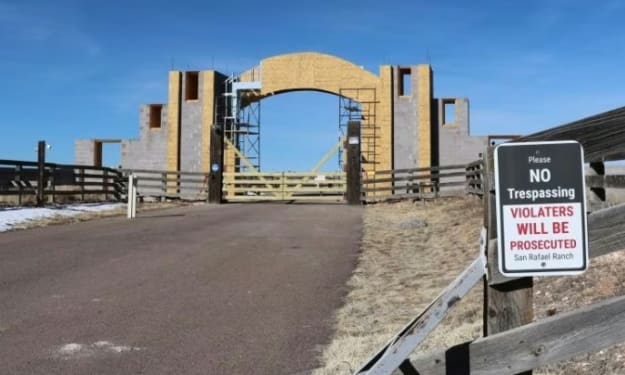
Federal investigators have begun a new search of Jeffrey Epstein’s former ranch in New Mexico, marking another step in the long-running effort to uncover evidence connected to the disgraced financier’s global sex-trafficking network. The property, often referred to as the Zorro Ranch, has been the subject of intense speculation for years. Survivors, journalists, and law enforcement officials have repeatedly suggested the remote estate may contain critical clues about the operations and associates involved in Epstein’s crimes.
By Jameel Jamali3 days ago in The Swamp
Reducing Europe’s Nuclear Energy Sector Was a “Strategic Mistake,” EU Chief Says. AI-Generated.
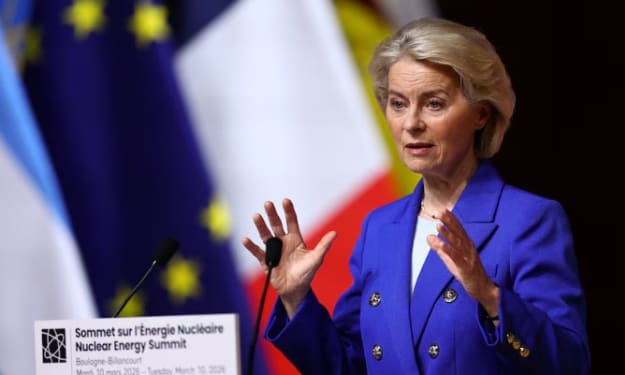
Europe’s energy policy has long been shaped by debates over sustainability, safety, and energy independence. In recent years, those debates have intensified as global energy demands rise and geopolitical tensions disrupt traditional energy supplies. Now, a major voice within the European leadership has publicly acknowledged what many analysts have argued for years: reducing the continent’s nuclear energy sector may have been a strategic mistake.
By Jameel Jamali3 days ago in The Swamp
Shots Fired at U.S. Consulate in Toronto, Police Say. AI-Generated.
Early Tuesday morning, authorities in Canada launched an investigation after gunfire was reported at the United States Consulate in downtown Toronto. The incident, which occurred before sunrise, has drawn international attention and prompted heightened security around diplomatic buildings across the country. Fortunately, no injuries were reported, but officials say the event is being treated as a serious national security matter.
By Jameel Jamali3 days ago in The Swamp
Could Donald Trump ‘Take Over’ the Strait of Hormuz as Oil Prices Rise?. AI-Generated.
The Strait of Hormuz has long been one of the most strategically important waterways in the world. Situated between Iran and Oman, the narrow channel connects the Persian Gulf to the Arabian Sea and serves as a critical route for global energy supplies. Roughly one-fifth of the world’s oil passes through this passage every day, making it a focal point for geopolitical tension. As global oil prices rise and security concerns intensify in the region, speculation occasionally resurfaces about whether the United States—or a future administration led by former president Donald Trump—could attempt to assert greater control over the strait. During Trump’s presidency from 2017 to 2021, the Persian Gulf saw several periods of heightened tension. After the United States withdrew from the Joint Comprehensive Plan of Action in 2018, relations between Washington and Tehran deteriorated sharply. Iran responded by gradually stepping away from its nuclear commitments, while the U.S. reimposed sweeping sanctions targeting Iran’s economy and oil exports. These developments heightened concerns about the security of shipping lanes in the Gulf, particularly the Strait of Hormuz. Several incidents during that period underscored the vulnerability of the route. Oil tankers were attacked or seized in the region, and both the United States and Iran accused each other of destabilizing actions. The U.S. Navy increased patrols in the area and organized multinational maritime security missions designed to protect commercial shipping. At times, Trump publicly warned Iran that any attempt to close the strait would provoke a strong military response. Despite such rhetoric, the idea that the United States—or Trump personally—could simply “take over” the Strait of Hormuz is highly unrealistic. The strait lies within the territorial waters of Iran and Oman, and international maritime law governs passage through it. Under the United Nations Convention on the Law of the Sea, ships from all countries enjoy the right of transit through international straits used for navigation. Any attempt by a single country to seize or permanently control such a passage would likely provoke a major international crisis. Still, the United States maintains a significant military presence in the Gulf, largely through the United States Navy and the Fifth Fleet headquartered in Bahrain. These forces are tasked with protecting maritime trade routes and deterring attacks on shipping. While this presence allows Washington to influence security conditions in the region, it does not equate to sovereignty or control over the waterway itself. The strategic importance of the Strait of Hormuz becomes particularly clear when oil prices surge. Countries such as Saudi Arabia, Iraq, Kuwait, and United Arab Emirates rely heavily on the route to export crude oil to global markets. Even the mere threat of disruption can cause energy prices to spike, as traders fear supply shortages. For this reason, any escalation involving Iran, the United States, or regional powers immediately attracts global attention. Analysts note that maintaining open shipping lanes in the Gulf is a shared interest among many countries, including major energy consumers in Asia and Europe. A conflict that seriously disrupted traffic through the strait could send oil prices soaring and trigger widespread economic consequences. If Trump were to return to political power, his approach to Iran and Gulf security would likely shape future debates about the strait. During his presidency, Trump favored maximum economic pressure against Tehran and was willing to use strong rhetoric regarding military deterrence. However, even under such policies, outright control of the Strait of Hormuz remained outside the realm of practical strategy. Ultimately, the Strait of Hormuz will continue to be governed by a complex mix of international law, regional geopolitics, and military deterrence. While political rhetoric may occasionally suggest dramatic scenarios, the reality is that no single nation can easily dominate this vital global energy corridor without risking a far broader conflict.
By Fiaz Ahmed 3 days ago in The Swamp
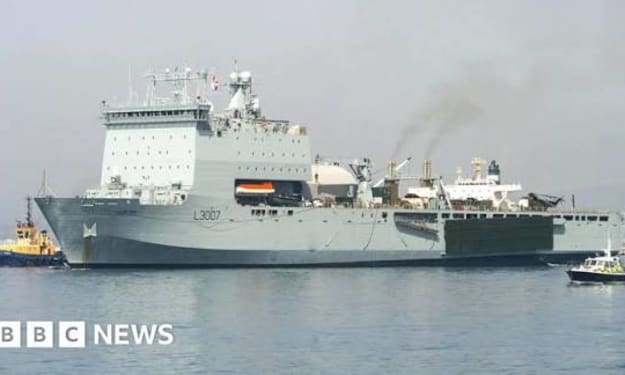
UK Preparing Support Ship to Deploy to Eastern Mediterranean. AI-Generated.
The United Kingdom is moving to strengthen its maritime posture in the Eastern Mediterranean by preparing a Royal Navy support ship for potential deployment amid escalating crises in the Middle East. Officials in London say the decision is a precautionary measure, intended to ensure that British interests and nationals remain protected as uncertainty grows over the security situation in and around the region. At the centre of this development is the RFA Lyme Bay, a Royal Fleet Auxiliary vessel that has been placed on “heightened readiness” in Gibraltar. The ship, currently docked at the base, is being prepared to deploy eastwards if required. According to a Ministry of Defence (MoD) spokesperson, this status indicates that the vessel could be called upon quickly if circumstances change or if naval support is needed to assist in maritime operations. The RFA Lyme Bay is not a warship in the traditional sense; rather, it is a landing ship with aviation and medical capabilities. Its facilities make it suitable for a range of tasks, including humanitarian relief, civilian evacuations, or logistical support in crisis zones. The Bay‑class vessel is equipped with a flight deck capable of handling helicopters such as the Merlin MK4, and it has medical facilities capable of supporting wounded personnel or evacuees. Military analysts suggest that the deployment of a support ship, rather than a combat vessel, reflects the UK’s intent to maintain a flexible and measured presence in the region. With rising tensions between Western allies and Iranian forces in the Middle East following recent strikes and counter‑strikes, the UK is keen to ensure that it can respond rapidly if British citizens or interests come under threat. This move comes amid a broader Western military buildup in the Eastern Mediterranean, where several nations have increased their maritime and aerial presence in response to the conflict. This includes enhanced deployments by the United States Navy and significant contributions from other European navies to ensure the security of key strategic areas, including Cyprus and the surrounding waters. In addition to preparations involving RFA Lyme Bay, the UK is also readying another naval asset for deployment. The HMS Dragon, a highly capable air‑defence destroyer, is scheduled to depart from Portsmouth to bolster the region’s defensive capabilities. The destroyer’s presence is intended to help protect British bases, such as the RAF station in Cyprus, from potential threats including drone or missile attacks. Defence Secretary John Healey confirmed that HMS Dragon is expected to set sail “in the next couple of days.” Despite the UK’s preparations, the government has been cautious not to escalate its military engagement further. Officials have repeatedly stressed that the deployment of these vessels is primarily aimed at protection and readiness rather than offensive action. This stance exists alongside diplomatic efforts to manage regional tensions and coordinate with NATO allies. Critics, however, have questioned whether the UK is doing enough. Some commentators argue that the government’s overall response has lagged behind that of other European states, particularly France, which has deployed a larger naval task force to the Mediterranean. The absence of one of the UK’s aircraft carriers, which remains engaged in other missions, has also drawn scrutiny from defence analysts who argue that a more robust maritime presence could better deter potential threats. Prime Minister and defence officials have defended the decision, emphasising ongoing coordination with allied nations and the strategic importance of focusing on both military readiness and diplomatic engagement. Part of the UK’s strategy involves working closely with NATO partners to monitor and respond to threats, as well as maintaining a visible but measured maritime presence in crucial international waterways. As tensions in the region continue, the Royal Navy’s preparedness reflects a broader concern among Western governments about the potential for the crisis to widen. The deployment of support vessels like RFA Lyme Bay underscores the importance of having assets capable of rapid response, whether for humanitarian assistance, evacuation operations, or logistical support in a volatile environment. While full deployment may not be imminent, London’s decision to place its support ship on high readiness signals that the UK is preparing for multiple possible scenarios. Whether this measured step will be enough to reassure both the public and international partners remains to be seen, as the situation in the Eastern Mediterranean evolves day by day.
By Fiaz Ahmed 3 days ago in The Swamp