Latest Stories
Most recently published stories in The Swamp.
Qatari Minister Says ‘Regional Countries Are Not an Enemy of Iran’. AI-Generated.
In an increasingly tense Middle East environment dominated by the ongoing conflict between the United States, Israel and Iran, Qatar’s government has issued strong diplomatic signals aimed at de‑escalation. Mohammed bin Abdulaziz al‑Khulaifi, Qatar’s minister of state for foreign affairs, stated that “regional countries are not an enemy of Iran” and urged Tehran and Washington alike to pursue negotiations instead of continued hostilities — a message that reflects Doha’s cautious but proactive diplomatic stance amid spiraling violence. Al‑Khulaifi gave the comments in an exclusive interview with Al Jazeera, underscoring Qatar’s deep concern over attacks that have affected multiple Gulf states since the conflict escalated. The minister emphasized that the current hostilities “benefit no one” and warned that continued military exchanges will only deepen the crisis across the region. He called for an immediate reduction in violence and a return to diplomatic channels, insisting that sustainable peace can only come through dialogue rather than force. Qatar — historically a key proponent of mediation in Middle Eastern conflicts — has long positioned itself as a neutral actor capable of bridging gaps between rival states. Prior to the outbreak of intense fighting, Doha had played a role in facilitating communications between Tehran and Western capitals, including the United States. However, al‑Khulaifi noted that Qatar and neighbouring Oman cannot continue to act as mediators while under direct attack by Iran, pointing out that the Gulf states’ security must be ensured before they can meaningfully serve as intermediaries. “The regional countries are not an enemy of Iran, and the Iranians are not understanding that idea,” al‑Khulaifi said, echoing a broader Gulf concern that the conflict’s expansion will drag neighbouring nations into a wider and more destructive confrontation. He stressed that Iran’s recent strikes against Gulf territories — including missile and drone attacks — undermine diplomatic trust and complicate efforts to reduce tensions. Qatar’s remarks have been coupled with strong condemnations of attacks on its own infrastructure. Doha has denounced recent Iranian strikes as violations of its sovereignty, and foreign ministry officials have reiterated the country’s right to defend itself under international law. These incidents have heightened Doha’s fears that regional hostilities could destabilize both security and economic stability, particularly given the strategic importance of the Gulf’s energy sector. The minister also highlighted concerns about the Strait of Hormuz, the crucial chokepoint for global oil and gas flows. Al‑Khulaifi warned that disruptions in this corridor, as a result of military actions, could have catastrophic economic consequences beyond the Middle East, affecting global supply chains and energy markets. “Freedom of movement through the waterway is very critical,” he noted, emphasizing the far‑reaching implications of the conflict. In explaining Doha’s diplomatic strategy, al‑Khulaifi made clear that while Qatar seeks peaceful resolutions, it also remains in close communication with the United States. He said that Doha has encouraged Washington to pursue peace and to consider a return to negotiations with Tehran. “Our line of communication is always open with our colleagues in the United States,” he said, emphasizing the importance of sustained dialogue between all parties to halt further escalation. Qatar’s appeal for de‑escalation comes amidst a broader regional backdrop of concern. Gulf Cooperation Council (GCC) members, including Saudi Arabia, the United Arab Emirates and Kuwait, have all warned about the risks of the conflict spreading beyond its current theaters. Some leaders have reiterated that military action cannot be the basis for long‑term peace and have called for diplomacy as the only viable path forward. While Doha’s diplomatic messaging has been consistent, analysts note that the situation on the ground remains volatile. Iran’s retaliatory strikes, following U.S. and Israeli operations, have continued to impact civilian infrastructure and key security targets in Gulf states. This has raised questions about whether diplomatic efforts can gain traction while active hostilities persist. In response to these pressures, Qatar has sought to strengthen its diplomatic posture by reaffirming its commitment to peace and underscoring that its stance is not adversarial toward Iran. Rather, Doha’s message is rooted in regional stability: Gulf states do not seek confrontation, and existing tensions must be resolved through dialogue. As the conflict evolves, Qatar’s statements reflect a nuanced attempt to balance national security concerns with broader calls for peace, reinforcing that enduring stability in the Middle East depends on communication, negotiation, and mutual understanding among all stakeholders.
By Fiaz Ahmed 2 days ago in The Swamp
Shadow Home Secretary Chris Philp Leads Charge on Starmer's Iran War Stance.
The Iran War has to be one of the most dangerous and unnecessary wars this century so far. Trump has changed the narrative of why he and his partner in crime, Netanyahu, attacked Iran. First, it was to liberate the Iranian people. Then Iran's support for Hezbollah, Hamas, the Houthis, etc. Then it's Iran enriching uranium and its ballistic missile programme. Since the war began, the Ayatollah Khamenei has been assassinated along with top military commanders. His son is now the new Ayatollah. A girl's school has been bombed, with 100 or so schoolgirls sent to Allah. Iran's infrastructure has been hit hard, as has its military and government. If they bombed the Founder of the Islamic Republic's mausoleum, Ayatollah Khomeini, it wouldn't surprise me. It seems the Americans and Israelis are hitting anything and everything across Iran. Similar to the levelling of Gaza by the IDF. Hundreds of Iranians have been killed and injured, civilian and military alike.
By Nicholas Bishop2 days ago in The Swamp
US Foreign Policy About Iran
Regime change, change control—these are all the issues involved. What do you actually want? Politically, what is your real endgame? The United States has never really cared about what will happen to the people of Afghanistan. You saw it just four or five years ago—how much concern did the U.S. show about the people it was leaving behind and what the Taliban might do to them?
By Ibrahim Shah 2 days ago in The Swamp
Analysis Of US-ISR- IRAN WAR
The situation is ongoing, and if I were to summarize the details—because data is coming very late—it's totally difficult to confirm the casualties and how much damage has been done so far. Many reporters, particularly those on Al Jazeera, are stating that footage from both Hezbollah and Israel is not being released. Similarly, in the UAE, there is an effort to prevent influencers and various reporters from sharing information. People are afraid because their business capital is at risk. Additionally, two important things that I discussed in my last blog about the "magazine depth problem" are now being acknowledged by Western media. They also agree that this war won't last for many days and will have to rely on limited strikes. Trump, however, has also stated that there is no end game for this operation, Epic Fury.
By Ibrahim Shah 2 days ago in The Swamp
She was working with no complaints’: Why Ananya Panday and Kareena Kapoor are defending Deepika Padukone’s 8-hour work rule; expert on the impact of support. AI-Generated.
A debate sweeping through the Hindi film industry has ignited discussions not just about work schedules but also about work‑life balance, gender roles, and support for mothers in demanding careers. At the center of it all is Deepika Padukone — one of Bollywood’s biggest stars — and her reported preference for an eight‑hour structured workday after becoming a mother. While the topic has drawn controversy and polarized opinions online, prominent actresses Ananya Panday and Kareena Kapoor Khan have publicly defended Padukone’s stance, stressing the importance of flexibility and understanding for working mothers. The conversation gained traction following a viral discussion about Padukone’s work preferences after she welcomed her child. Traditionally, film shoots in India — much like in Hollywood — involve long, often unpredictable hours. Actors can regularly work 12‑hour days or more, and schedules are set with little regard for personal limitations or caregiving responsibilities. Critics argued that putting a time limit on working hours might appear unreasonable in an industry known for its hectic production pace. However, Panday and Kapoor both challenged this notion. During a recent media interaction, Ananya Panday emphasized that Padukone’s career history contradicts any assumption that she has always demanded short hours. Panday recalled working with Padukone before she became a mother, noting that there were no complaints or requests for limited hours at that time. “She was working, coming for workshops, no complaints, no asking for anything in that sort of way,” Panday said, highlighting that the key difference now is Padukone’s new role as a parent and the priorities that come with it. Similarly, Kareena Kapoor Khan drew on her own experience balancing a high‑profile career with raising her two children. Speaking candidly, Kapoor outlined the realities of motherhood and the practical need for advance planning when shooting abroad or for long‑term projects. She explained how clear communication with production teams and support from family members helped her manage both responsibilities successfully. “If you’ve children and as a mother you’re not able to give that much time, you should be allowed to have that freedom to express that to the producers well in advance,” Kapoor said, advocating for empathy and openness between actors and filmmakers. These supportive voices reflect a broader cultural shift in how careers — especially in creative industries — are viewed and structured. According to clinical psychologist Rasshi Gurnani, the early years of motherhood involve “significant psychological, emotional, and biological adjustments,” including hormonal shifts, sleep disruptions, and attachment formation with the child. Expecting a strict return to an unyielding schedule immediately after childbirth can increase stress, anxiety, and emotional strain for many women. Supportive workplace arrangements — such as structured hours, flexibility, and gradual reintegration — are seen by experts not as concessions but as adaptive strategies that help maintain productivity while respecting life changes. Gurnani notes that when organizations or teams implement such flexibility, outcomes often improve, with helped individuals remaining engaged, creative, and loyal over the long term. The public response to the debate reveals deep social undercurrents. For years, women in the workforce — whether in film, business, or service sectors — have grappled with expectations to choose between professional ambition and familial duties. Bollywood, as a high‑visibility industry, mirrors those broader societal tensions, making the Padukone debate about working hours resonate far beyond celebrity gossip columns. Veteran actors like Supriya Pathak have also weighed in, echoing the sentiment that the challenges women face are different and often more complex. She highlighted that balancing multiple responsibilities simultaneously is a reality for many women, and that respectful, considerate work environments can help ease the strain. While some critics argue that structured hours could complicate film production logistics, Padukone’s supporters stress that negotiation and understanding are part of professional collaboration. Having a conversation about schedules upfront, they say, can prevent stress, enhance mutual respect, and even improve performance outcomes. Ultimately, the debate isn’t merely about a specific number of hours on set. It symbolizes a growing recognition of women’s diverse roles, evolving workplace expectations, and the power of industry leaders to influence change. With backing from fellow actresses like Panday and Kapoor, Padukone’s stance may help normalize dialogues around balanced work lives — not just for stars but for all women navigating careers and family responsibilities.
By Fiaz Ahmed 2 days ago in The Swamp
Around 140 US Service Members Wounded in Iran War, Pentagon Says. AI-Generated.
As the war between the United States, Israel, and Iran enters its second week, the Pentagon has confirmed that about 140 U.S. service members have been wounded since the start of the conflict, most of them sustaining relatively minor injuries. The announcement marks the most comprehensive U.S. casualty update since the campaign began, offering a sobering look at the toll the fighting is taking on American forces deployed across the region. Pentagon spokesperson Sean Parnell provided the figures during a briefing on Tuesday, stating that the majority of the wounded personnel were injured in the first 10 days of sustained military actions. “The vast majority of these injuries have been minor,” Parnell remarked, adding that 108 service members had already returned to duty. However, eight service members remain listed as severely injured and are receiving the highest level of medical care available. The figures released by the Pentagon follow earlier reporting from news agencies that cited unnamed officials suggesting the true number of wounded could be as high as 150 troops. In response to those reports, the Pentagon acknowledged the higher estimate but affirmed its official tally at around 140 wounded personnel. The conflict, which began with a U.S. and Israeli bombing campaign targeting Iranian military sites and leadership structures, has rapidly escalated into a region‑wide confrontation involving missiles, drones, and airstrikes. Iranian forces have responded with waves of retaliatory attacks on U.S. military bases and strategic installations in the Middle East, including sites in Kuwait, Saudi Arabia, and other Gulf states hosting American forces. So far, the Pentagon has reported seven U.S. service members killed in action, six of whom were killed in a drone strike on a makeshift U.S. military operations center in Kuwait, with an additional soldier dying in Saudi Arabia from injuries sustained in combat. These deaths and the rising number of wounded underscore the intensity of the conflict and its ongoing human cost. The Pentagon’s confirmation comes at a time when political pressure is mounting in Washington. Several Senate Democrats are calling for public hearings to scrutinize the administration’s handling of the war and its preparation for the predictable risks that accompany major military engagements. One group of lawmakers criticized the White House for insufficient planning and oversight, arguing that more could have been done to anticipate the repercussions of taking direct action against Iran. Meanwhile, the White House maintains that the military campaign remains necessary to achieve key strategic objectives, which officials define as degrading Iran’s missile and nuclear capabilities, weakening support for armed proxies across the Middle East, and countering threats to U.S. interests and allies in the region. The situation has also had significant economic implications: crude oil prices have surged above $100 per barrel, and domestic fuel costs have risen, posing financial strain on American families and industries. Despite the Pentagon’s emphasis on most injuries being minor, defense experts caution that even non‑life‑threatening wounds can have lasting effects. Modern battlefield injuries often include traumatic brain injuries and other blast‑related trauma that may not immediately incapacitate a soldier but can lead to long‑term health challenges. There is also concern that the number of moderately wounded could rise as more information becomes available and as troops continue to face hostile fire. Internationally, the conflict has prompted diplomatic strain and reactions from allies and adversaries alike. Markets are jittery, shipping insurance costs have risen, and regional security alliances are under strain as countries seek to balance support for U.S. and Israeli operations with their own national interests and domestic pressures. At home, military families and communities across the United States are grappling with the emotional impact of the casualty figures. Memorial services, flag‑draped caskets, and visits by senior military officials to wounded troops’ hospitals are part of the growing reality of a war that continues to unfold with no clear end in sight. As the conflict enters a precarious and unpredictable phase, Pentagon officials have warned that additional casualties — both wounded and killed — may occur as U.S. forces maintain offensive operations inside Iran and as Tehran persists with its retaliatory campaign. For now, the Pentagon’s disclosure marks a significant milestone in transparency, providing the public and policymakers with the most detailed snapshot yet of the human toll on American troops engaged in the Iran war.
By Fiaz Ahmed 2 days ago in The Swamp
South Korea to Speed Up Nuclear Restart Amid Middle East Crisis. AI-Generated.
South Korea is moving quickly to accelerate the restart of several nuclear reactors as the escalating crisis in the Middle East threatens global energy supplies and increases volatility in oil and natural gas markets. The decision reflects Seoul’s growing concern about energy security and the vulnerability of import-dependent economies to geopolitical shocks. The Middle East has long been a critical source of energy for many Asian countries, including South Korea. A significant portion of South Korea’s oil and liquefied natural gas imports originates from the region, making the country highly sensitive to disruptions in shipping routes or production facilities. As tensions intensified and the risk of supply interruptions increased, policymakers in Seoul began exploring ways to strengthen domestic energy resilience. One of the most immediate measures being considered is the accelerated restart of nuclear reactors that were temporarily offline for maintenance or safety inspections. Energy officials believe bringing these reactors back into operation faster than originally scheduled will help stabilize electricity generation and reduce reliance on imported fossil fuels. South Korea has historically relied heavily on nuclear energy as part of its electricity mix. The country operates one of the world’s largest civilian nuclear programs, with more than two dozen reactors contributing a substantial share of national power generation. Nuclear energy has provided stable and relatively low-carbon electricity for decades, supporting the country’s rapid industrial development. In recent years, however, nuclear policy in South Korea has fluctuated. Earlier administrations attempted to phase out nuclear power following public concerns about safety after the Fukushima disaster in Japan. More recent governments have shifted back toward supporting nuclear energy, viewing it as a reliable source of electricity that can complement renewable energy development while reducing dependence on imported fuels. The latest Middle East crisis has accelerated this policy shift. Energy analysts say that disruptions to liquefied natural gas supply chains have highlighted the risks faced by countries that rely heavily on imported energy resources. Reports indicate that attacks and instability in the region have already affected shipping routes and energy facilities, raising fears that supply shortages could emerge if the conflict expands further. For South Korea, the stakes are particularly high. The country imports nearly all of its fossil fuel needs, leaving it vulnerable to sudden price spikes and supply disruptions. When global energy markets tighten, domestic electricity prices and industrial production costs can increase rapidly, affecting both consumers and export-oriented industries. To address these concerns, the government is implementing a series of emergency measures aimed at stabilizing the energy market. These include accelerating reactor restarts, expanding coal generation if necessary, and considering temporary price controls on domestic fuel markets to protect households and businesses from rising costs. Officials argue that nuclear energy offers a practical solution during periods of global uncertainty. Unlike fossil fuel imports, nuclear power relies on relatively small amounts of fuel that can be stored for extended periods, allowing countries to maintain electricity generation even when international supply chains are disrupted. At the same time, environmental groups remain concerned about the long-term expansion of nuclear energy. Critics argue that safety risks, radioactive waste management, and the high cost of building new reactors should not be overlooked, even during periods of energy crisis. Some activists have called for faster investment in renewable energy sources such as wind and solar power instead of expanding nuclear capacity. Despite these concerns, public opinion in South Korea has gradually become more supportive of nuclear power in recent years. Surveys suggest that many citizens view nuclear energy as a necessary component of the country’s energy strategy, especially given the limited availability of domestic fossil fuels and the challenges of scaling renewable energy quickly enough to meet demand. Energy experts emphasize that restarting reactors is only one part of a broader strategy to ensure long-term energy security. Seoul is also seeking to diversify its energy import sources, invest in renewable technologies, and strengthen strategic energy reserves to prepare for future crises. The situation illustrates how global geopolitical events can rapidly reshape national energy policies. As conflicts in key resource-producing regions affect global supply chains, governments are often forced to reconsider the balance between sustainability, security, and economic stability. For South Korea, the decision to speed up nuclear restarts represents a pragmatic response to an uncertain global energy landscape. While debates about the future of nuclear power continue, the immediate priority for policymakers remains clear: ensuring that homes, businesses, and industries across the country have reliable access to electricity during a time of growing geopolitical instability.
By Fiaz Ahmed 2 days ago in The Swamp
US Military Prepares Explosive Ordnance at UK Air Base. AI-Generated.
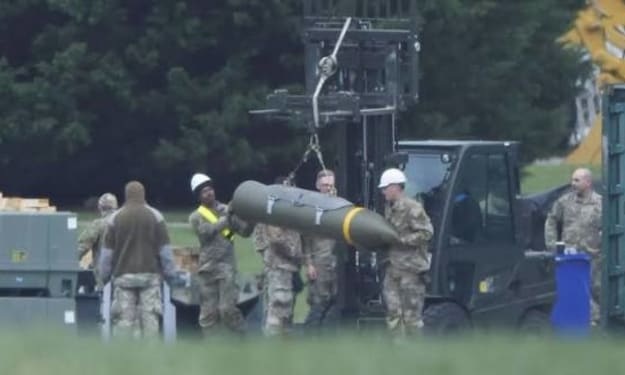
The presence of United States military forces at key allied installations has long been a cornerstone of Western defense cooperation. Recently, attention has focused on preparations taking place at the Royal Air Force base at RAF Fairford, where American personnel were seen preparing explosive ordnance as part of heightened military activity. The developments highlight the strategic importance of the base and the growing tension surrounding ongoing conflicts in the Middle East. Witnesses and media reports observed U.S. military ground crews and technical specialists handling and positioning explosive ordnance at the air base in Gloucestershire. The preparations reportedly involved loading munitions and readying aircraft for potential missions. These activities took place shortly after senior U.S. defense officials signaled that upcoming operations could represent one of the most intense phases of ongoing military actions in the region. The activity at RAF Fairford coincides with the deployment of several heavy American bombers to the United Kingdom. Among the aircraft spotted at the base were B-1 Lancer and B-52 strategic bombers, both capable of carrying large payloads of conventional weapons. These aircraft are often used for long-range strike missions and deterrence operations due to their extended range and advanced targeting systems. Their presence indicates a significant buildup of operational capability at the base. RAF Fairford has a long history as a strategic site used by the United States Air Force during joint operations with NATO allies. The base’s runway—one of the longest in the United Kingdom—makes it particularly suitable for operating large bomber aircraft that require extensive takeoff and landing distances. Over the years, it has hosted numerous American deployments during international crises and major military exercises. The latest developments come after the British government granted permission for U.S. forces to use certain UK bases for what officials described as “limited defensive purposes.” The decision followed growing concerns about missile threats in the Middle East and the need to strengthen defensive measures against potential attacks. According to government statements, the goal of the authorization is to help prevent missile launches and protect allied countries in the region. At the same time, the move has sparked political debate within the United Kingdom. Some lawmakers and analysts have expressed concern that allowing American military operations from British territory could draw the country deeper into international conflicts. Others argue that cooperation with the United States is essential for maintaining collective security and supporting NATO commitments. Military experts say the preparation of explosive ordnance at RAF Fairford does not necessarily indicate an immediate strike but rather demonstrates operational readiness. Preparing weapons systems and aircraft is a standard procedure whenever forces are placed on heightened alert. Ground crews typically conduct extensive checks on munitions, aircraft systems, and support equipment before any mission is authorized. The presence of heavy bombers and munitions has also attracted public interest from local communities near the base. Residents have reported increased aircraft activity, including takeoffs and landings by large military planes. While such movements are not unusual for a facility that regularly hosts international forces, the scale of recent operations has been noticeably higher. Defense analysts note that RAF Fairford remains one of the few bases in Europe capable of supporting strategic bombers on short notice. This capability makes it a critical asset for the United States and its allies when rapid deployment is required. The base has previously supported missions in the Middle East, Eastern Europe, and other regions where NATO forces have been involved in security operations. As geopolitical tensions continue to evolve, the activity at RAF Fairford illustrates the close military cooperation between the United States and the United Kingdom. Whether used for deterrence, defensive operations, or broader strategic planning, the base remains a key hub in the network of allied defense infrastructure. While officials have not disclosed the precise missions connected to the ordnance preparations, the developments signal a period of heightened readiness among Western forces. In an era of rapidly shifting global security challenges, installations like RAF Fairford continue to play a central role in projecting power and supporting allied military coordination.
By Fiaz Ahmed 2 days ago in The Swamp
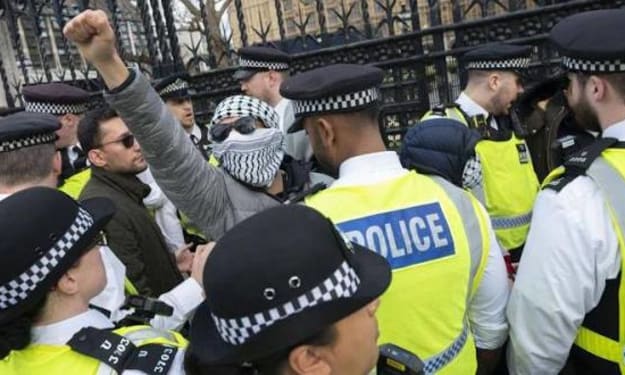
Al Quds Day March Banned After Government Approves Met Request. AI-Generated.
Authorities have banned a planned Al Quds Day march after approving a request from the Metropolitan Police, citing security concerns and the risk of public disorder. The decision has sparked debate among activists, civil rights groups, and political leaders, with supporters of the ban arguing it was necessary for public safety while critics claim it restricts freedom of expression. Al Quds Day, observed annually in many countries, is intended to show solidarity with Palestinians and highlight the status of Jerusalem, known as Al Quds in Arabic. Demonstrations linked to the day have taken place in cities around the world for decades, often drawing both supporters of the Palestinian cause and counter-protesters. In recent years, however, the marches have become increasingly controversial, particularly in Western capitals where authorities have struggled to balance public safety with the right to protest. The Metropolitan Police submitted a formal request to government officials seeking legal powers to prohibit the march this year. According to police statements, intelligence assessments indicated that tensions surrounding the conflict in the Middle East could lead to confrontations between demonstrators and counter-protest groups. Officers warned that managing the event would place a significant strain on police resources and could create a serious risk of violence or disorder in central areas of the city. After reviewing the request, the government granted approval for the ban under public order legislation that allows authorities to restrict demonstrations in exceptional circumstances. Officials stated that the decision was not taken lightly and followed consultations with security advisers and legal experts. A government spokesperson said the move was necessary to maintain public safety. “While the right to peaceful protest is fundamental in a democratic society, it must be balanced against the responsibility to protect communities and prevent violence,” the spokesperson said. “Based on the information provided by law enforcement, ministers concluded that prohibiting the march was the most appropriate course of action.” Supporters of the ban argue that previous Al Quds Day demonstrations have included controversial symbols and rhetoric that have caused concern among local communities. Some lawmakers have long called for tighter restrictions on the event, claiming that extremist slogans or imagery sometimes appear during the marches. However, organizers and civil liberties groups strongly criticized the decision. They argue that banning the entire demonstration unfairly punishes peaceful participants and undermines the principle of free assembly. Representatives from several advocacy organizations said authorities should instead focus on monitoring the event and taking action only against individuals who break the law. One organizer described the ban as “deeply disappointing,” saying that participants intended to hold a peaceful march calling for justice and human rights. “People should be allowed to express solidarity and raise awareness about international issues without being silenced,” the organizer said. Legal experts note that blanket bans on protests are relatively rare and typically require clear evidence that serious disorder cannot be prevented by less restrictive measures. Some campaigners have already suggested the decision could face legal challenges if organizers attempt to contest the ban in court. Community leaders have also urged calm following the announcement. Several groups emphasized the importance of dialogue and respect during a period when international tensions are already high. Police officials said they would continue monitoring the situation and would deploy officers in key areas to prevent unauthorized gatherings or potential confrontations. The controversy surrounding the Al Quds Day march reflects the broader challenge facing governments in managing politically sensitive demonstrations. As global conflicts increasingly resonate within diverse urban communities, authorities must navigate a difficult balance between protecting public order and safeguarding democratic freedoms. For now, the ban means the planned march will not take place this year, but the debate it has triggered is likely to continue well beyond the day itself. Activists say they will explore alternative ways to raise awareness about their cause, while officials maintain that the priority remains ensuring safety and stability in the city.Start writing...
By Fiaz Ahmed 2 days ago in The Swamp