politics
Politics does not dictate our collective cultural mindset as much as it simply reflects it; We've got to look in the mirror sometimes, and we've got one.
China Says It Seeks Communication With U.S. but Vows to Hold Its 'Red Lines'. AI-Generated.
China has signaled a willingness to maintain dialogue with the United States amid growing tensions over trade, technology, and regional security, but officials emphasized that Beijing will firmly defend what it describes as its “red lines.” The statement comes at a time of heightened friction across multiple fronts, including Taiwan, the South China Sea, and sensitive export controls, reflecting China’s desire to balance engagement with assertiveness. According to Chinese foreign ministry spokespersons, Beijing is prepared to pursue “constructive and pragmatic” channels of communication with Washington to prevent misunderstandings and manage competition. “We do not seek conflict, but we will not compromise on core national interests,” said the spokesperson. “China’s sovereignty, territorial integrity, and key security concerns are non-negotiable, and any attempt to cross these red lines will be firmly resisted.” Dialogue Amid Rising Tensions The statement follows recent U.S. diplomatic and military activity in East Asia, including increased naval presence near disputed areas and ongoing restrictions on Chinese access to certain high-tech goods. U.S. officials have reiterated the importance of maintaining a rules-based order while protecting American economic and security interests. Analysts suggest that Beijing’s announcement is intended both for a domestic audience and international observers. Domestically, emphasizing red lines reinforces the government’s narrative of strength and vigilance. Internationally, it signals that China is open to talks, even as it seeks to deter what it perceives as encroachment on its sovereignty. Core Issues at Stake Several flashpoints underpin the current strain in U.S.–China relations: Taiwan: Chinese officials continue to assert that Taiwan is an inalienable part of China, while U.S. policy supports defensive capabilities for the island without endorsing formal independence. Military exercises, arms sales, and diplomatic visits have contributed to heightened tensions. Technology and Trade: Washington has imposed restrictions on exports of advanced semiconductors and other critical technologies to China, citing national security concerns. Beijing views these measures as attempts to curb its technological rise and has warned of retaliatory actions. South China Sea and Regional Security: U.S. naval patrols and freedom-of-navigation operations challenge Beijing’s claims in disputed maritime zones. China maintains that it will protect territorial waters and maritime rights in the region. Seeking Stability While Asserting Authority Despite these tensions, both sides recognize the need to manage competition to avoid escalation. U.S. and Chinese officials have previously engaged in high-level talks to clarify intentions and set frameworks for cooperation in trade, climate, and global health. Chinese analysts argue that careful management of communication channels is critical to prevent miscalculations that could trigger conflict. “The message from Beijing is clear: we are willing to talk, but our core interests are off-limits,” said a regional security expert. “This is about asserting authority without losing the benefits of dialogue.” Global Implications The U.S.–China relationship remains a key determinant for global stability. Investors, international organizations, and regional powers are closely watching how both countries navigate tensions while maintaining channels for crisis management. Disruption in communication or escalation over red-line issues could have significant consequences for global trade, energy supply chains, and military balance in Asia. Looking Ahead Analysts expect China to continue emphasizing dialogue, particularly in forums such as the U.S.–China Strategic and Economic Dialogue and military-to-military communication channels. At the same time, Beijing is likely to publicly reaffirm its red lines on sovereignty, Taiwan, and national security, ensuring that any engagement with Washington occurs on terms favorable to Chinese interests. For Washington, the challenge lies in maintaining a balance: encouraging constructive communication while defending allies, upholding international norms, and protecting strategic interests. Both countries appear committed to managing tensions without triggering open confrontation, but the line between engagement and escalation remains thin. The coming months will be critical in determining whether U.S.–China relations can sustain strategic dialogue while respecting red lines, or whether competitive pressures and domestic politics in both countries will intensify confrontation. This approach captures China’s dual strategy of openness to dialogue combined with a firm defense of core national interests amid complex regional and global dynamics.
By Fiaz Ahmed 2 days ago in The Swamp
Middle East Conflict Offers Economic Lifeline to Russia’s Flagging War Machine. AI-Generated.
The widening conflict in the Middle East has unexpectedly provided an economic boost to Russia, whose war-driven economy has been showing signs of strain after years of sanctions and battlefield losses. Rising oil and gas prices triggered by regional instability are replenishing Moscow’s revenues and easing pressure on a budget stretched by the prolonged war in Ukraine. Since the outbreak of renewed hostilities across the Middle East, energy markets have reacted sharply to fears of disrupted supply routes, especially around the Strait of Hormuz and the Red Sea. For Russia, one of the world’s largest exporters of crude oil and natural gas, higher prices translate directly into increased export earnings — even as volumes remain constrained by Western sanctions. Russian officials have publicly downplayed any connection between Middle East turmoil and their own economic position. Privately, however, analysts say the surge in energy income is acting as a financial cushion for a war machine that was beginning to falter under the combined weight of military spending and international isolation. Energy Windfall Amid Global Uncertainty The conflict has injected fresh volatility into global markets, pushing crude prices upward and boosting demand for alternative suppliers. With Europe still partially dependent on non-Russian LNG and Asia continuing to buy Russian energy at discounted rates, Moscow finds itself benefiting from a market hungry for supply security. Russia’s oil and gas revenues are the backbone of its federal budget. Even after sanctions capped prices and restricted access to Western insurance and shipping services, the Kremlin developed parallel trade networks and so-called “shadow fleets” to move its energy exports. The Middle East crisis has strengthened this system by making Russian oil more attractive to buyers seeking stability amid chaos. An energy economist in Europe noted that “every geopolitical shock that tightens supply elsewhere makes Russian barrels more valuable, regardless of sanctions.” Supporting the War in Ukraine The timing of this windfall is critical. Russia’s war effort in Ukraine has become increasingly expensive, with massive spending on weapons production, troop recruitment, and compensation for casualties. Industrial output has been redirected toward defense manufacturing, while social programs face mounting pressure. Higher export earnings allow Moscow to maintain this pace. Increased revenues are already being channeled into weapons factories and logistical support, helping sustain artillery production and missile stockpiles. Western intelligence officials warn that the improved cash flow could prolong the conflict by reducing the financial urgency for compromise. President Vladimir Putin has framed the war as a long-term struggle against Western influence. The Middle East conflict, he argues, exposes what Moscow calls the hypocrisy and instability of U.S.-led global order. Russian state media has used the crisis to shift attention away from Ukraine and portray Russia as a stable energy partner amid global disorder. Diplomatic Leverage and New Partnerships Beyond economics, the crisis offers Russia renewed diplomatic space. Several Middle Eastern states maintain relations with Moscow while also engaging Western powers. Russia has positioned itself as a potential mediator and arms supplier, reinforcing ties with Iran and strengthening coordination with Gulf states within energy frameworks such as OPEC+. For Moscow, this creates an opportunity to present itself as indispensable to global stability — a narrative sharply contrasting with its pariah status in much of Europe and North America. The Kremlin has also used rising oil prices as leverage in negotiations with Asian buyers, particularly China and India, who remain key customers for discounted Russian crude. Risks and Long-Term Fragility Despite the short-term gains, economists caution that Russia’s reliance on conflict-driven energy spikes is unsustainable. Sanctions continue to limit access to advanced technology, foreign investment, and financial markets. Infrastructure damage from Ukrainian drone attacks on refineries and pipelines also threatens export capacity. Moreover, any prolonged escalation in the Middle East could trigger a global recession, reducing overall energy demand and eventually harming Russia’s export revenues. The same volatility that benefits Moscow today could undermine it tomorrow. There is also political risk. If Russia is perceived as exploiting Middle Eastern instability for financial gain, it could deepen mistrust among regional partners and invite further sanctions. Western governments are already discussing tighter enforcement mechanisms to close loopholes in Russian oil shipping and insurance arrangements. A Conflict That Reshapes the Battlefield For now, the Middle East conflict has provided Russia with breathing room at a critical juncture in its war effort. Higher prices mean fuller coffers, and fuller coffers mean more missiles, more ammunition, and more staying power on the Ukrainian front. The paradox is stark: while war devastates economies on the ground in the Middle East, it indirectly fuels another war thousands of miles away. As long as instability keeps global energy markets on edge, Russia’s war machine may continue to find lifelines in the chaos of distant conflicts. In this sense, the Middle East crisis has become not only a regional tragedy but a global economic shockwave — one that Moscow is strategically positioned to exploit as it presses on with its campaign in Ukraine.
By Fiaz Ahmed 2 days ago in The Swamp
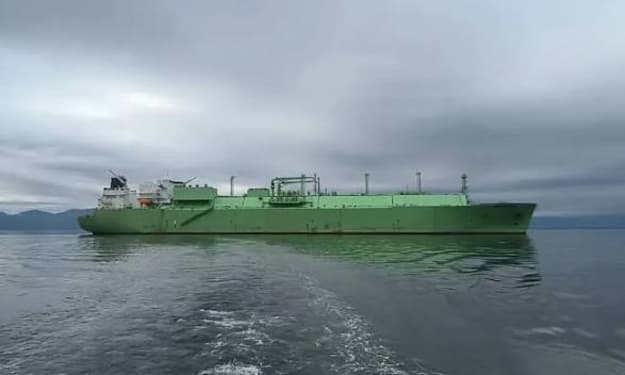
Russia Blames Ukraine for First Attack on LNG Shadow Fleet. AI-Generated.
Russia has accused Ukraine of carrying out the first-ever attack on what it describes as its “LNG shadow fleet,” a network of vessels used to transport liquefied natural gas under opaque ownership and insurance arrangements designed to bypass Western sanctions. The alleged strike marks a new phase in the maritime dimension of the war, extending hostilities into the sensitive and highly strategic global energy supply chain. According to officials in Russia, one LNG tanker operating in international waters suffered damage after what Moscow claims was a Ukrainian drone or missile attack. The vessel was reportedly traveling from a Russian export terminal toward Asian markets when it was targeted. While no casualties were officially confirmed, Russian authorities said the ship sustained structural damage and was forced to divert to a nearby port for emergency inspection and repairs. Ukraine has not formally claimed responsibility, but security analysts note that Kyiv has increasingly focused on disrupting Russian energy exports, which provide a crucial source of revenue for Moscow’s war effort. Over the past year, Ukraine has conducted a series of long-range drone strikes on Russian oil refineries, fuel depots, and port infrastructure. Targeting LNG shipping represents a significant escalation in both scope and economic impact. What Is the “LNG Shadow Fleet”? The term “shadow fleet” refers to vessels operating with limited transparency, often under flags of convenience and with unclear ownership structures. These ships frequently rely on non-Western insurers and avoid major ports to reduce exposure to sanctions enforcement. Russia has increasingly depended on such fleets to maintain exports of both crude oil and liquefied natural gas despite international restrictions imposed after the invasion of Ukraine. Energy experts say that while oil shipments have faced repeated disruptions, LNG exports had largely remained outside direct military targeting. This alleged incident could change that calculation. “LNG tankers are high-value assets,” said one European energy analyst. “Any perception that they are vulnerable to attack will immediately affect shipping insurance costs and long-term contracts.” Strategic and Economic Implications The attack comes at a time when global energy markets are already under pressure from geopolitical instability in multiple regions. LNG plays a vital role in supplying Europe and Asia, particularly as many countries seek alternatives to pipeline gas. If Russia’s LNG exports are disrupted, prices could rise sharply, affecting consumers far beyond the battlefield. Moscow accused Ukraine of attempting to “internationalize” the conflict by striking commercial vessels rather than purely military targets. Russian officials warned that such actions could provoke retaliation and increase the risk of broader confrontation in maritime corridors used by civilian shipping. In a statement, Russia’s defense ministry said the attack represented “a dangerous precedent” and accused Ukraine of acting with indirect support from Western intelligence services. While no evidence was publicly presented, the claim reflects growing Russian concerns that Western-supplied technology is enabling Ukraine to project force deep into Russian-controlled maritime zones. A Shift in Naval Warfare If confirmed, the strike would highlight Ukraine’s evolving naval strategy. Despite having a much smaller navy than Russia, Ukraine has relied on unmanned systems and long-range weapons to target ships and ports in the Black Sea. This approach has already forced Russia to relocate parts of its fleet and increase defensive measures around key terminals. Attacking LNG tankers would signal a move toward targeting not just military assets but also economic lifelines. Such a shift carries risks, including the possibility of accidental damage to neutral vessels or environmental disasters if LNG cargoes are compromised. International Reaction Western governments have so far urged caution, calling for restraint and protection of civilian shipping routes. Several shipping insurers are reportedly reassessing coverage for vessels linked to Russian energy exports. Industry sources say premiums could rise significantly if further attacks occur, adding costs to an already strained energy market. Diplomatic observers warn that any confirmed strike on commercial LNG shipping could complicate peace efforts and increase pressure on global trade. “Once commercial energy infrastructure becomes a battlefield, the consequences are no longer regional,” said one former diplomat. “They are global.” Looking Ahead Whether this incident proves to be an isolated event or the beginning of a new campaign remains unclear. What is certain is that Russia’s accusation underscores how deeply intertwined the war has become with international energy security. The targeting of an LNG tanker—symbol of global trade and economic interdependence—signals a dangerous expansion of the conflict into domains once considered off-limits. As investigations continue and responsibility remains disputed, the alleged attack on Russia’s LNG shadow fleet stands as a stark reminder that the war’s impact is no longer confined to land and air. It is now reaching into the arteries of global energy supply, raising the stakes for all parties involved.
By Fiaz Ahmed 2 days ago in The Swamp
US submarine sinks Iranian warship by torpedo in a first since World War II. AI-Generated.
In a dramatic escalation of hostilities in the Persian Gulf, a United States Navy submarine has sunk an Iranian warship using a torpedo — marking the first confirmed instance of a submarine-to-surface ship kill by torpedo in active combat since World War II. The incident underscores how rapidly the current regional crisis has intensified and highlights the growing role of undersea warfare in modern conflict. According to U.S. defense officials, the engagement occurred after Iranian naval forces attempted to challenge coalition operations near key shipping lanes in the Gulf. Intelligence reports indicated that the Iranian vessel was maneuvering aggressively and preparing to target allied ships operating in the area. A U.S. attack submarine, already deployed as part of heightened maritime security operations, was authorized to engage under established rules of self-defense. The submarine launched a single heavyweight torpedo that struck the Iranian warship below the waterline. The impact caused catastrophic damage, and the vessel sank within minutes. Search and rescue operations were reportedly limited due to the ongoing security situation, and the fate of the Iranian crew remains unclear. Iranian authorities later acknowledged the loss of a naval ship but did not immediately provide casualty figures. The U.S. Navy confirmed the strike, calling it a “defensive action taken to neutralize an imminent threat.” A Pentagon spokesperson said the submarine crew acted professionally and in accordance with international maritime law. “This operation demonstrates the effectiveness and readiness of U.S. undersea forces in protecting freedom of navigation and allied interests,” the statement said. A Historic First in Modern Warfare While submarines have played key roles in surveillance and deterrence in recent decades, the use of a torpedo to sink an enemy warship in live combat has not been seen since the global naval battles of the Second World War. Since then, most naval engagements have relied on missiles, aircraft, or drones. This latest incident marks a return to classic submarine warfare tactics, albeit with vastly more advanced technology. Modern U.S. submarines operate with near-silent propulsion systems, sophisticated sonar, and precision-guided torpedoes capable of striking targets at long range. Defense analysts say the engagement illustrates how submarines remain one of the most lethal and survivable platforms in naval warfare. “Surface ships can be tracked and targeted by drones and missiles, but submarines operate in a hidden domain,” one naval expert explained. “That makes them uniquely powerful in a high-tension environment like the Gulf.” Regional and Global Implications The sinking has already had ripple effects across the Middle East. Iran condemned the action as an act of aggression and vowed retaliation, while U.S. allies described it as a necessary step to prevent attacks on commercial and military vessels. Shipping companies raised concerns about safety in the region, and insurance premiums for vessels transiting the Gulf rose sharply following the news. Bahrain, which hosts the headquarters of the U.S. Fifth Fleet, announced enhanced port security and increased patrols. Meanwhile, several regional states urged restraint, warning that further escalation could destabilize vital energy routes that supply oil and gas to global markets. The confrontation also carries symbolic weight. Iran’s navy has long relied on asymmetric tactics such as fast attack boats, mines, and drones to counter the superior firepower of the U.S. Navy. The loss of a warship to a submarine strike exposes vulnerabilities in Tehran’s maritime defenses and may force a reassessment of its naval posture. Political and Strategic Calculations In Washington, officials stressed that the United States does not seek wider war but will respond decisively to threats against its forces. The White House confirmed that President Joe Biden had been briefed on the incident shortly after it occurred. Lawmakers from both major parties praised the professionalism of the submarine crew while calling for diplomatic efforts to prevent further clashes. For Iran, the incident represents a serious blow to prestige as well as military capability. State media framed the sinking as evidence of foreign hostility, but independent analysts note that losing a surface combatant to a torpedo strike is a rare and costly setback. A New Phase of Naval Conflict The torpedoing of an Iranian warship marks a turning point in the current crisis. It shows that conflict at sea has entered a more dangerous phase, where direct engagements between major military platforms are no longer theoretical. As tensions remain high, naval forces on both sides are now operating in closer proximity, increasing the risk of miscalculation. Whether this incident becomes a single, contained episode or the opening of a wider maritime confrontation will depend on decisions made in the coming days. What is clear is that submarine warfare — once thought to belong to history books — has returned to the center of global security concerns.
By Fiaz Ahmed 2 days ago in The Swamp
Amazon UAE Data Center Hit by Drone Attack. AI-Generated.
In an era where data powers economies and cloud computing underpins daily life, the idea that a data center could become a target of war feels unsettling. Yet this is exactly what happened when drone attacks damaged cloud facilities operated by Amazon in the Middle East. The incident, which struck data centers in the United Arab Emirates and neighboring Bahrain, marks a new chapter in how geopolitical conflict can disrupt not only physical infrastructure but also the digital services millions rely on every day.
By Sajida Sikandar3 days ago in The Swamp
U.S. Fuel Tanker Hit at Bahrain Port. AI-Generated.
A U.S. fuel tanker operating at the strategic port of Bahrain was struck in what officials described as a targeted incident, heightening security concerns in one of the world’s most sensitive maritime regions. The tanker, supplying fuel to American and allied naval forces, was damaged while docked during routine logistical operations. No fatalities were reported, but the incident has triggered an immediate security review and raised fresh alarms over the vulnerability of critical supply lines in the Gulf. According to preliminary statements from regional authorities, the tanker was conducting scheduled refueling support for vessels of the U.S. Navy when the impact occurred. Investigators are still determining whether the strike was caused by a drone, a small explosive device, or another form of attack. Officials have not publicly identified any group responsible, though intelligence agencies are treating the incident as deliberate rather than accidental. Bahrain hosts the headquarters of the U.S. Fifth Fleet, making its ports and infrastructure critical hubs for operations across the Arabian Gulf, Red Sea, and Indian Ocean. Any disruption to fuel supply or port security carries major implications not only for U.S. forces but also for commercial shipping routes that pass through nearby waters. Witnesses at the port reported a loud blast followed by smoke rising from the tanker’s midsection. Emergency crews quickly secured the area, and the vessel was evacuated for inspection and damage control. Firefighting teams managed to prevent further escalation, and port operations were temporarily suspended as a precautionary measure. U.S. military officials confirmed that the tanker sustained structural damage but remained stable, with no major fuel leakage detected. “The safety of our personnel and the security of our facilities remain our top priority,” a Pentagon spokesperson said. “We are working closely with Bahraini authorities to determine the source and intent of this incident.” The strike comes amid growing regional tensions linked to conflicts in the Middle East, where maritime assets have increasingly become targets of indirect warfare. Over the past year, several attacks on commercial vessels and military supply ships have been reported in nearby waters, often attributed to proxy groups seeking to pressure Western powers. Security analysts say fuel tankers are especially attractive targets because they represent both logistical lifelines and symbolic assets. “Hitting a fuel tanker sends a message,” said one regional defense expert. “It doesn’t just threaten a ship; it challenges the operational endurance of naval forces in the region.” Bahrain’s government issued a statement condemning the incident and reaffirming its commitment to protecting international forces and commercial shipping. The country has long positioned itself as a stable partner in regional security efforts, hosting multinational naval commands and participating in joint patrols to safeguard maritime corridors. The economic impact of such an attack could be significant if similar incidents continue. Insurance premiums for ships operating in the Gulf have already risen due to geopolitical risks, and any perception that major ports are unsafe could disrupt trade and energy supplies. Bahrain’s port facilities play a key role in servicing not only military vessels but also regional commerce tied to oil and gas exports. Diplomatic sources indicate that Washington is consulting with allies to strengthen port defenses and expand surveillance around key installations. Additional counter-drone systems and patrol vessels may be deployed in response to the incident, while intelligence sharing among regional partners is expected to intensify. For the United States, the strike underscores the fragile balance between maintaining a military presence in the region and avoiding escalation. While officials have stopped short of announcing retaliatory measures, they have made clear that further attacks on U.S. assets would not be tolerated. As investigations continue, the incident at Bahrain port serves as a stark reminder of how quickly regional instability can spill into critical infrastructure. Whether the tanker strike proves to be an isolated act or part of a wider pattern will shape security policy in the Gulf in the weeks ahead. For now, both U.S. and Bahraini authorities are focused on restoring normal operations while tightening defenses against any future threats.
By Fiaz Ahmed 3 days ago in The Swamp
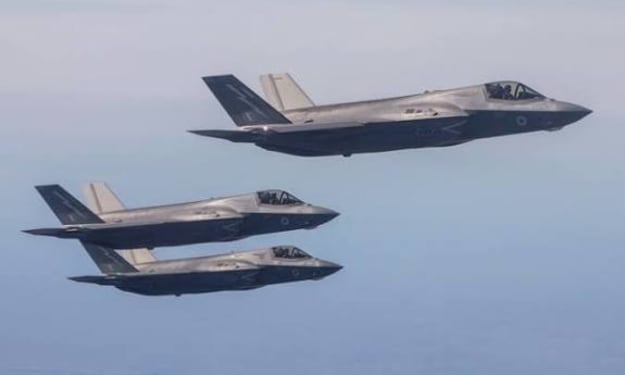
British Royal Air Force F-35 Stealth Fighter Jets Just Scored Their First-Ever Combat Kill. AI-Generated.
For the first time since entering operational service, Britain’s most advanced combat aircraft has achieved a confirmed air combat success. A Royal Air Force F-35 stealth fighter jet destroyed an incoming hostile aerial threat during a live operational mission, marking a historic milestone for the UK’s fifth-generation fighter fleet and underscoring the growing role of stealth aircraft in modern warfare. The engagement took place during a recent security operation in the Middle East, where British forces were supporting allied efforts to protect vital airspace and maritime routes. According to defence officials, the RAF F-35 detected and intercepted an unmanned aerial vehicle that posed a direct threat to coalition forces and regional infrastructure. The aircraft successfully engaged the target using precision-guided weaponry, neutralizing it before it could reach its intended objective. While the Ministry of Defence has not disclosed the exact location or the identity of the group responsible for launching the drone, officials confirmed that the operation was conducted under established rules of engagement and in close coordination with allied air and naval forces. No British or civilian casualties were reported. A Landmark Moment for the F-35 Program This incident represents the first confirmed “combat kill” by a British-operated F-35 Lightning II, a jet that has been in UK service for several years but had previously been used mainly for patrols, deterrence missions, and training exercises. The F-35’s stealth design, advanced sensors, and data-sharing capabilities make it one of the most sophisticated combat aircraft in the world. The RAF’s F-35 fleet is jointly operated with the Royal Navy as part of the UK’s Carrier Strike Group, allowing the aircraft to fly both from land bases and from aircraft carriers such as HMS Queen Elizabeth and HMS Prince of Wales. This flexibility gives Britain the ability to project air power far from home while maintaining a low radar profile. Defence analysts say the successful interception demonstrates how fifth-generation fighters are now being used not only against enemy aircraft but also against drones and cruise-missile-type threats. “This shows how modern air combat is evolving,” one expert noted. “The F-35 is as much a flying sensor and command node as it is a fighter jet.” Growing Drone Threats The incident comes amid a rise in drone and missile attacks across conflict zones in the Middle East. Armed groups increasingly rely on relatively cheap unmanned systems to challenge technologically superior militaries. These drones can be difficult to detect and intercept, especially when launched in swarms or from unexpected directions. The RAF’s F-35 used its advanced radar and electro-optical sensors to identify the target at long range. Networked with other allied systems, the jet was able to track the drone and destroy it with precision, preventing potential damage to military assets or civilian facilities. British officials emphasized that the mission highlighted the importance of continuous air patrols and rapid reaction capabilities. “Our pilots and crews performed exactly as trained,” a senior defence source said. “This proves the UK’s ability to respond decisively to emerging threats.” Political and Strategic Significance For the British government, the event is more than a tactical success; it carries political and strategic weight. Prime Minister Keir Starmer has pledged to maintain strong defence commitments and support allies in maintaining regional stability. The F-35’s first combat success reinforces arguments that investment in high-end military technology remains essential in an era of unpredictable security challenges. Opposition figures also welcomed the professionalism of the armed forces but called for transparency about the risks faced by British personnel overseas. Some lawmakers urged a broader debate in Parliament about the UK’s long-term military role in volatile regions. A Signal to Allies and Adversaries Internationally, the engagement sends a message to both allies and potential adversaries. For NATO partners, it demonstrates that the UK’s F-35 fleet is fully operational and capable of real-world combat missions. For hostile actors, it highlights the difficulty of penetrating defended airspace when confronted with stealth aircraft supported by modern surveillance and command systems. The F-35 program has often faced criticism over costs and delays, but supporters argue that moments like this validate the aircraft’s purpose. “You don’t buy these jets for parades,” said one former RAF commander. “You buy them for days when a real threat appears, and they have to perform.” Looking Ahead As investigations continue and operational details remain classified, defence officials say the RAF will study the engagement closely to refine tactics and improve counter-drone strategies. More F-35 deployments are expected as tensions persist in key regions. For now, the first combat kill by a British F-35 stands as a defining chapter in the aircraft’s service history — a sign that the UK’s stealth fighters are no longer just symbols of future warfare, but active participants in it.
By Fiaz Ahmed 3 days ago in The Swamp
The Most Shocking Revelation of the Clinton Epstein Testimony
In 2019, Jeffrey Epstein, a man who made multiple trips to visit the Whitehouse during the Clinton years, and was tied to at least one other president, Donald J. Trump, was indicted and taken into custody on human trafficking charges as a result of a long standing investigation into illicit sexual encounters, sex with and the trafficking of minors, and other varied accusations.
By Jason Ray Morton 3 days ago in The Swamp
Amid escalating geopolitical tensions in the Middle East, the People’s Republic of China has issued an urgent call for the protection of commercial vessels navigating the Strait of Hormuz — a strategic maritime chokepoint whose safety underpins global energy flows and international commerce. Beijing’s appeal comes as global shipping costs skyrocket due to the dramatic slowdown in traffic through the strait, driven by military confrontations and mounting security risks around Iran. � The Guardian. AI-Generated.
The Strait of Hormuz — just 21 miles wide at its narrowest point between Iran and Oman — links the Persian Gulf with the Arabian Sea and the wider world. It is one of the most critical passages in global trade, boasting roughly 20% of worldwide seaborne crude oil and liquefied natural gas (LNG) shipments passing through its waters under normal conditions. � The Guardian However, sustained attacks by Iranian forces on vessels and infrastructure in response to military strikes have pushed the Strait perilously close to a full closure. The resulting reduction in maritime traffic has sent freight rates and insurance premiums to historic highs, imperiling global supply chains and energy markets. � The Guardian A Strategic Worry for China China’s appeal for maritime security was articulated through its Foreign Ministry, which urged “all parties” involved in the conflict to immediately cease military operations and safeguard navigation through the strait. Beijing stressed that maintaining maritime safety in the Hormuz corridor serves not only China’s interests but those of the entire international community. � Madhyamam The stakes for China are exceptionally high. As the world’s largest importer of oil and fossil gas, a significant portion of Beijing’s energy needs — including crude and LNG shipments from the Middle East — rely on unimpeded access through this narrow sea route. Disruptions therefore pose a direct threat to China’s energy security, economic stability, and industrial output. � ایران اینترنشنال | Iran International Beyond energy, the closure of Hormuz affects global shipping costs and logistics, with major carriers forced to either suspend services or reroute vessels around Africa’s Cape of Good Hope, adding weeks to transit times and substantially increasing operational costs. � The Guardian Skyrocketing Shipping Costs One of the most dramatic consequences of the standoff has been the explosion in shipping expenses. Spot tanker rates — particularly for Very Large Crude Carriers (VLCCs) bound for China — have surpassed $424,000 per day, a remarkable surge from typical charter rates. This surge reflects both the disruption risk premium and the scarcity of willing carriers to traverse the area. � The Guardian Insurance markets have responded by withdrawing war-risk coverage for the region altogether or expanding high-risk designations to encompass broader swaths of the Gulf. Without affordable war-risk insurance, many carriers are forced into costly reroutes or face the prospect of uninsured voyages, further pushing up freight rates for shippers worldwide. � The Guardian The knock-on effects ripple beyond energy: manufacturers and exporters that depend on timely and affordable delivery of goods are now contending with higher transport surcharges, extended delivery windows, and unpredictable logistics chains. Traders and consumers in Asia, Europe, and beyond are beginning to feel these pressures in increased costs for refined products, agricultural commodities, and industrial supplies. � The Economic Times The Broader Geopolitical Context The deterioration of security in the Strait of Hormuz results from an intensifying confrontation involving Iran, the United States, and Israel. After U.S. and Israeli strikes against Iranian targets, Tehran launched retaliatory attacks on shipping and Gulf naval assets, bringing the fragile waterway close to paralysis. � The Guardian Iran’s Revolutionary Guards have openly threatened commercial ships attempting passage, promising military action against vessels deemed hostile or in violation of Tehran’s orders — a stark escalation that has alarmed navies and governments worldwide. � Reuters Although the U.S. military maintains that the strait remains open, maritime behavior underscores a de facto closure: shipping counts have plummeted, numerous vessels have been struck or damaged, and many companies are rerouting or anchoring ships to avoid the area altogether. � Reuters Global Responses and Economic Impacts China’s call for the protection of vessels echoes similar concerns from other international actors. Greece’s shipping minister, representing one of the world’s largest maritime fleets, has also warned of the “alarming” situation in the Strait of Hormuz and called for the safety of shipping and seafarers to be upheld. � MarineLink In the U.S., President Donald Trump has issued directives considering naval escorts for tankers and measures to stabilize shipping flows — a signal of how seriously Washington views the crisis. � Reuters Still, the broader economic implications are unmistakable. Oil prices have surged as supply chains tighten, and stock markets have recoiled at the prospect of rising inflation spurred by higher energy costs. Both producers and consumers are bracing for increased volatility in the months ahead. � Yahoo Finance What Comes Next? The future of the Strait of Hormuz — and with it, a stable global energy and shipping environment — hinges on diplomatic breakthroughs that could reduce or resolve the conflict’s underlying drivers. China’s appeal for maritime security is both a strategic necessity and a call for broader international cooperation to prevent the further erosion of global trade norms. As Beijing pushes for de-escalation, the world watches a critical maritime artery remain at the center of geopolitical rivalry — where the cost of inaction is measured not only in dollars but in the stability of global commerce itself.
By Jameel Jamali3 days ago in The Swamp