Irshad Abbasi
Bio
Ali ibn Abi Talib (RA) said 📚
“Knowledge is better than wealth, because knowledge protects you, while you have to protect wealth.
Stories (264)
Filter by community
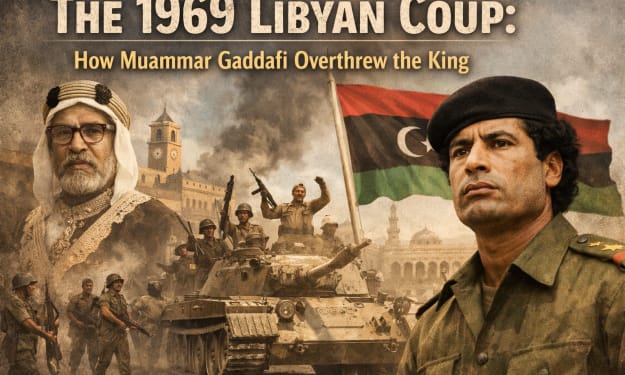
The 1969 Libyan Coup: How Muammar Gaddafi Overthrew the King
On September 1, 1969, Libya experienced a dramatic political transformation when a group of young military officers staged a coup that overthrew the country’s monarchy. The revolution ended the rule of King Idris I of Libya and brought a 27-year-old army officer, Muammar Gaddafi, to power. What made this event remarkable was not only its success but also the fact that it was almost entirely bloodless. Within hours, the monarchy that had ruled Libya since independence collapsed, and a new revolutionary government emerged.
By Irshad Abbasi about 22 hours ago in History
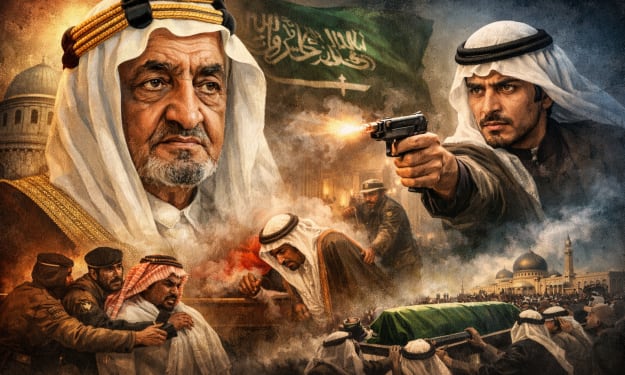
The Assassination of King Faisal: The Tragic Day a Saudi Monarch Was Killed by His Own Nephew
On March 25, 1975, the Arab world was shaken by the shocking assassination of King Faisal of Saudi Arabia. The respected monarch, known for his political wisdom and strong leadership in the Muslim world, was killed inside the royal palace in Riyadh by his own nephew, Faisal bin Musaid. The incident stunned both Saudi citizens and the international community, raising many questions about what circumstances led to such a tragic act within the royal family.
By Irshad Abbasi about 22 hours ago in Criminal
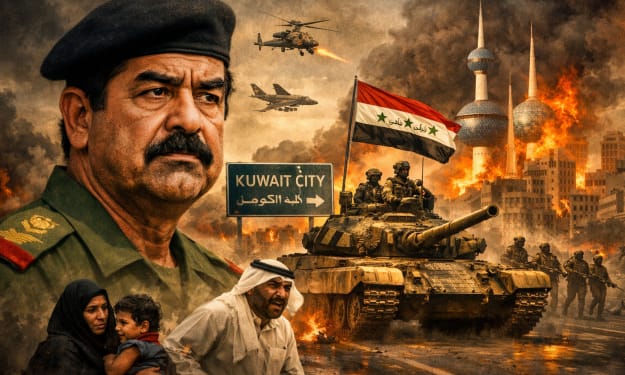
When a “Threat” Became Reality: Saddam Hussein’s Invasion of Kuwait
In the summer of 1990, tensions in the Middle East were rising, but few people believed that an actual war was about to begin. Many diplomats and analysts assumed that Iraqi leader Saddam Hussein was simply using harsh rhetoric to pressure his smaller neighbor. However, what many dismissed as a political threat soon turned into a shocking military invasion that reshaped global politics.
By Irshad Abbasi about 22 hours ago in History
The Oil Weapon: When the Arab World Challenged the West in 1973
In modern history, few economic events have shaken the global order as dramatically as the 1973 oil crisis. More than fifty years ago, the Arab world demonstrated that oil was not merely a natural resource but also a powerful political weapon. In response to geopolitical tensions in the Middle East, Arab oil-producing countries restricted oil exports to the United States and several Western nations, triggering a global energy crisis that reshaped international politics and economics.
By Irshad Abbasi about 22 hours ago in History
Merchants of the Dead: How American Companies Profit from Selling Human Bodies
In the United States, the idea of donating one’s body to science is often associated with noble intentions — advancing medical research, training surgeons, and contributing to life-saving discoveries. Families frequently believe their loved ones’ remains will help cure diseases or educate future doctors. However, behind this altruistic image lies a little-known and controversial industry: the commercial trade in human bodies.
By Irshad Abbasi a day ago in Chapters
Love Behind the Lens: The Untold Romance of Microsoft’s “Bliss” Wallpaper
For millions of people around the world, the image is instantly recognizable: a lush green hill rolling gently under a brilliant blue sky scattered with soft white clouds. This serene landscape, known as “Bliss,” became the default wallpaper of **Windows XP**, and in doing so, it turned into what is often called the most viewed photograph in history. But behind this seemingly simple image lies not just a story of photography and technology — it carries a quiet narrative of passion, timing, and a deep love for capturing fleeting beauty.
By Irshad Abbasi a day ago in Beat
The Iranian Revolution and Two Tumultuous Weeks: Ayatollah Khomeini’s Secret Contacts with the United States
In early 1979, the world watched as Iran stood on the brink of a historic transformation. The collapse of the monarchy of **Mohammad Reza Pahlavi**, the return of **Ruhollah Khomeini** from exile, and the swift dismantling of the old order marked one of the most dramatic revolutions of the 20th century. Yet, behind the chants of “Death to America” and the burning images broadcast across global media, another, quieter story was unfolding—one of discreet contacts, strategic assurances, and secret messages between Khomeini’s circle and officials linked to the administration of **Jimmy Carter**.
By Irshad Abbasi a day ago in History
Raja Birbal: The Witty Courtier Whose Death Stirred an Imperial Campaign
Among the legendary figures of the Mughal court, few are remembered with as much affection and fascination as Raja Birbal. Known for his sharp wit, poetic talent, and close friendship with the Mughal emperor **Akbar**, Birbal was not merely a humorous storyteller of folklore but a trusted advisor and nobleman in one of the most powerful empires of the 16th century. His death in a distant and rugged frontier shocked the imperial court and triggered a determined campaign that reshaped Mughal authority in the northwest of the Indian subcontinent.
By Irshad Abbasi a day ago in History
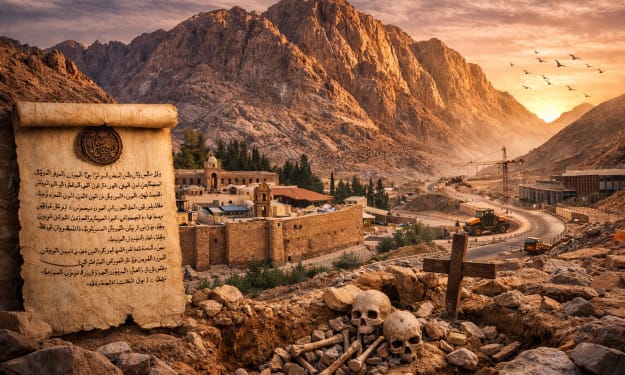
Mount Sinai, the World’s Oldest Monastery, and the Prophet’s Letter: Faith, History, and a Controversial Development Plan
At a sacred site revered by Muslims, Christians, and Jews alike, an ambitious modernization project has stirred debate after reports of graves being relocated—raising questions about heritage, memory, and the cost of progress.
By Irshad Abbasi a day ago in History
Factory of Fear: The Escape and 21-Year Manhunt of America’s “Most Wanted” Terror Suspect
In the tense years following the September 11 attacks, the United States launched one of the largest counterterrorism operations in modern history. Intelligence agencies tracked suspects across continents, tightened airport security, and expanded surveillance networks. Yet, amid this sweeping effort, one man accused of building explosives inside his car managed to disappear — evading capture for more than two decades.
By Irshad Abbasi a day ago in Criminal
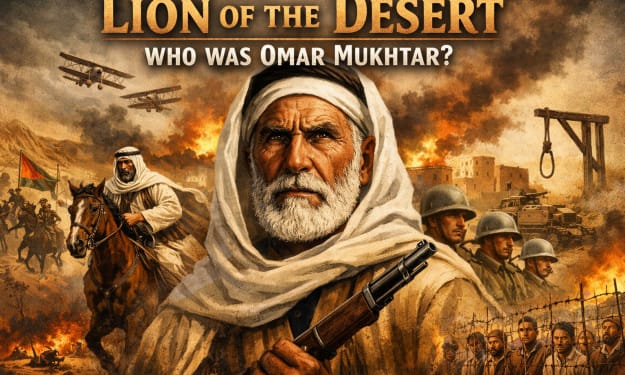
Lion of the Desert: Who Was Omar Mukhtar?
In the early 20th century, when European colonial powers were carving up Africa, one elderly man on horseback became the face of defiance in the deserts of North Africa. His name was Omar Mukhtar, and to the people of Libya, he was not just a fighter—he was a symbol of faith, courage, and unbreakable resistance. Known as the “Lion of the Desert,” Omar Mukhtar led a long and determined struggle against Italian colonial forces, proving that even the most powerful empires can be challenged by unwavering belief and determination.
By Irshad Abbasi 2 days ago in History
When Prison Becomes Home: Why Some Elderly Japanese Choose Jail Over Freedom
Japan is often seen as a land of prosperity, discipline, and social harmony. From the neon streets of Tokyo to the quiet countryside towns, the country symbolizes modern success. Yet behind this image lies a growing and troubling reality: an increasing number of elderly Japanese citizens are deliberately committing minor crimes in order to go to prison. For many, prison offers something they can no longer find in society—food, shelter, healthcare, and human connection.
By Irshad Abbasi 2 days ago in Criminal