Irshad Abbasi
Bio
Ali ibn Abi Talib (RA) said 📚
“Knowledge is better than wealth, because knowledge protects you, while you have to protect wealth.
Stories (264)
Filter by community
The World’s Safest Countries: Where Doors Stay Unlocked and Police Rarely Carry Guns
In many parts of the world, locking doors, installing security cameras, and relying on heavily armed police forces are everyday realities. However, there are a few countries where life feels very different. In these places, crime rates are extremely low, communities are tightly connected, and trust among citizens is remarkably high. As a result, people often leave their doors unlocked, and in some cases, police officers patrol the streets without carrying firearms.
By Irshad Abbasi about 13 hours ago in Education
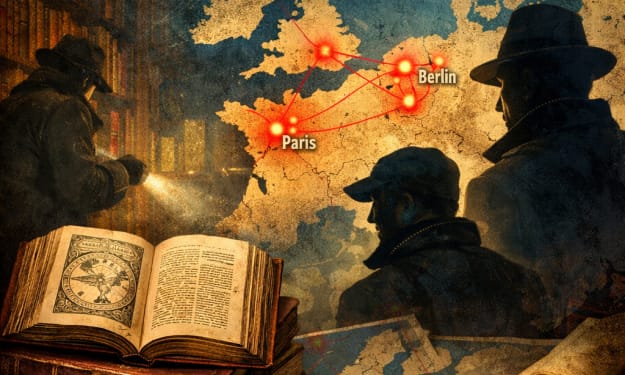
Operation Pushkin: The $Millions Book Heist That Shook Europe
In the world of rare books and manuscripts, the term “priceless” is often more than just a figure of speech. In 2023, Europe witnessed one of the most audacious literary crimes in modern history—dubbed **“Operation Pushkin”**—where millions of dollars’ worth of rare books vanished from libraries and private collections, leaving authorities and bibliophiles stunned. The theft not only exposed vulnerabilities in the continent’s cultural institutions but also revealed a sophisticated criminal network with global reach.
By Irshad Abbasi about 13 hours ago in Chapters
The Gift That Spied: How a Soviet “Token of Friendship” Secretly Eavesdropped on America
In the tense early years of the Cold War, when suspicion and secrecy shaped global politics, one of the most ingenious espionage operations in history began not with a break-in or a coded message—but with a gift.
By Irshad Abbasi about 13 hours ago in FYI
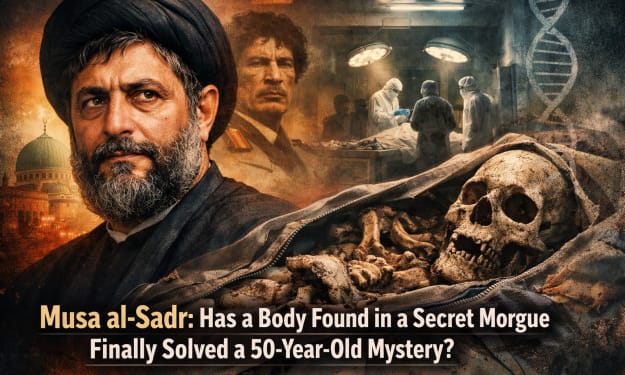
Musa al-Sadr: Has a Body Found in a Secret Morgue Finally Solved a 50-Year-Old Mystery?
In the turbulent politics of the Middle East, few disappearances have generated as much intrigue, grief, and speculation as that of Musa al-Sadr. The charismatic Lebanese Shia cleric vanished in 1978 during an official visit to Libya, and for nearly five decades his fate has remained one of the region’s most haunting mysteries. Now, new claims about human remains discovered in a secret morgue have reignited debate: could this finally be the evidence that confirms what happened to him?
By Irshad Abbasi about 14 hours ago in Chapters
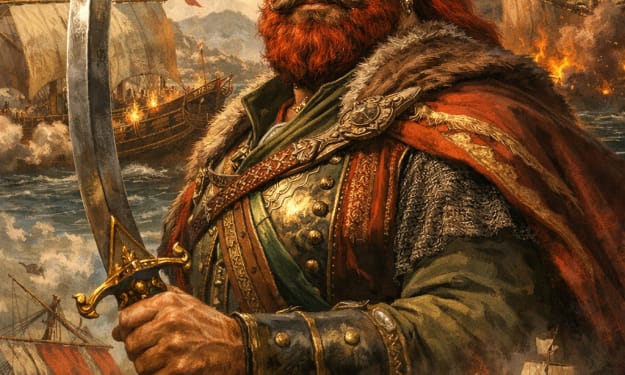
How a feared Mediterranean corsair rose to become Grand Admiral of the Ottoman Empire and reshaped naval power in the 16th century
In the turbulent waters of the 16th-century Mediterranean, where empires clashed and trade routes determined the fate of nations, one name inspired both fear and admiration: **Khayr al-Din Barbarossa**. Known in Europe as “Barbarossa,” meaning “Red Beard,” he began his life as a corsair—what many would call a pirate—but rose to become the Grand Admiral of the mighty **Ottoman Empire**. His journey from privateer to imperial commander is a remarkable tale of ambition, strategy, and shifting loyalties.
By Irshad Abbasi about 14 hours ago in History
The $55 Billion B-29: The Engineering Marvel That Became a Terrifying Weapon of Mass Destruction
When the **B-29 Superfortress** rolled off American assembly lines during World War II, it represented one of the most ambitious and expensive military engineering projects in history. Costing nearly $3 billion in the 1940s—equivalent to roughly $55 billion today—the aircraft was more expensive to develop than the Manhattan Project that produced the atomic bomb it would eventually carry. Built by the United States to secure air superiority in the Pacific, the B-29 became both an engineering masterpiece and a symbol of devastating destructive power.
By Irshad Abbasi about 14 hours ago in Chapters
The Partition of the Ottoman Empire: How Britain and France Reshaped the Middle East
The collapse of the Ottoman Empire after World War I dramatically transformed the political map of the Middle East. For more than four centuries, the Ottoman Empire had ruled vast territories stretching across the Middle East, North Africa, and parts of Europe. However, by the early twentieth century, the empire had weakened politically, economically, and militarily. When the Ottomans joined Germany and the Central Powers in World War I, Britain and France saw an opportunity to reshape the region according to their own strategic and economic interests. The result was the partition of Ottoman lands, an event that still shapes Middle Eastern politics today.
By Irshad Abbasi about 19 hours ago in History
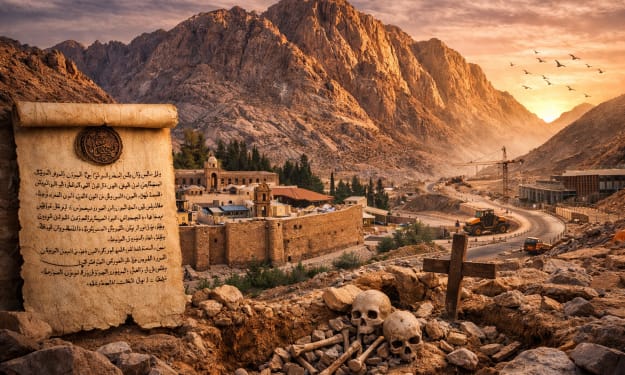
Mount Sinai, the World’s Oldest Monastery, and the Prophet’s Letter: Faith, History, and a Controversial Development Plan
At a sacred site revered by Muslims, Christians, and Jews alike, an ambitious modernization project has stirred debate after reports of graves being relocated—raising questions about heritage, memory, and the cost of progress.
By Irshad Abbasi about 20 hours ago in Earth
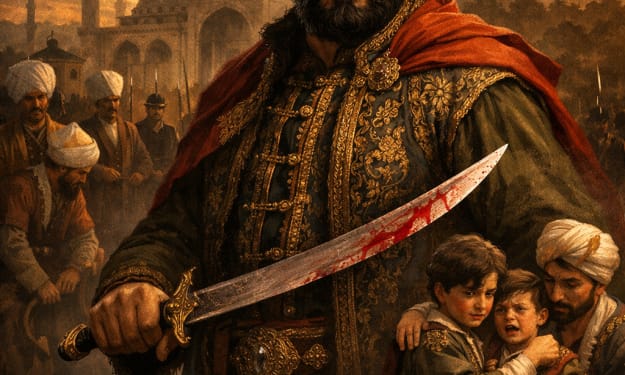
Selim I: The Ottoman Prince Who Ordered the Execution of His Own Family
In the long and dramatic history of the Ottoman Empire, few rulers are remembered as fiercely and controversially as Selim I, also known as Selim the Grim. Rising to power in 1512, Selim I transformed the Ottoman Empire into a dominant force in the Islamic world. Yet his reign began with a chilling series of executions that shocked even his contemporaries. To secure the throne, Selim reportedly ordered the deaths of his own brothers, nephews, and even some of his sons—an act that reflected the brutal political realities of the Ottoman dynasty.
By Irshad Abbasi about 21 hours ago in History
When the Caliph’s Head Hung from the Gates of Baghdad
In the early ninth century, the Abbasid Caliphate stood as one of the most powerful empires in the world. Stretching from North Africa to Central Asia, it was a center of wealth, culture, and intellectual achievement. At the height of this golden age ruled the legendary caliph Harun al-Rashid, whose reign is often remembered as a period of prosperity and brilliance. Yet after his death in 809 CE, the empire he left behind descended into a devastating civil war between his own sons—a conflict that would scar the Abbasid state for generations.
By Irshad Abbasi about 21 hours ago in History
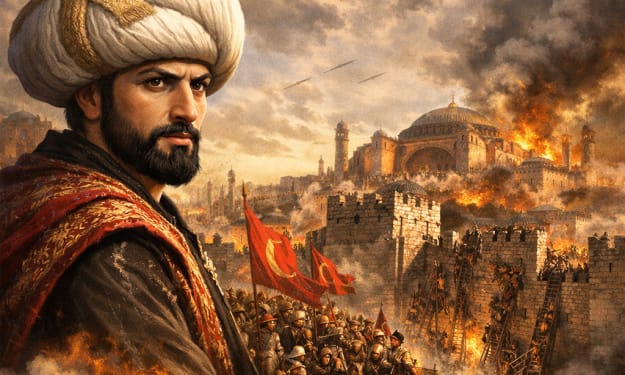
Sultan Mehmed II: The Conquest of Constantinople That Europe Never Forgot
In the spring of 1453, one of the most dramatic moments in world history unfolded when Sultan Mehmed II captured the great city of Constantinople. This event did not simply mark the fall of a city; it ended the thousand-year-old Byzantine Empire and transformed the balance of power between Europe and the Muslim world. Even centuries later, the conquest remains one of the most significant turning points in global history.
By Irshad Abbasi about 21 hours ago in History
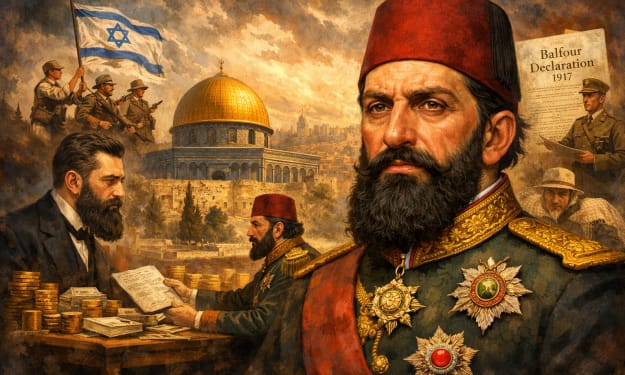
The Defiant Sultan: Abdul Hamid II and His Refusal to Sell Palestine
In the late 19th century, as the Ottoman Empire struggled with political pressure and massive debt, one of its most controversial and powerful rulers, Abdul Hamid II, made a decision that would echo through history. Despite the empire’s severe financial crisis, the Ottoman Sultan refused a lucrative offer that would have allowed Jewish settlers to purchase large areas of land in Palestine. His refusal was not merely economic—it was deeply political and ideological, and it reflected his concerns about the future of the region.
By Irshad Abbasi about 21 hours ago in History