politics
Politics does not dictate our collective cultural mindset as much as it simply reflects it; We've got to look in the mirror sometimes, and we've got one.
Restoring order at the border speaks to Labour values. Without that, we won’t be able to do anything else at all” — Shabana Mahmood. AI-Generated.
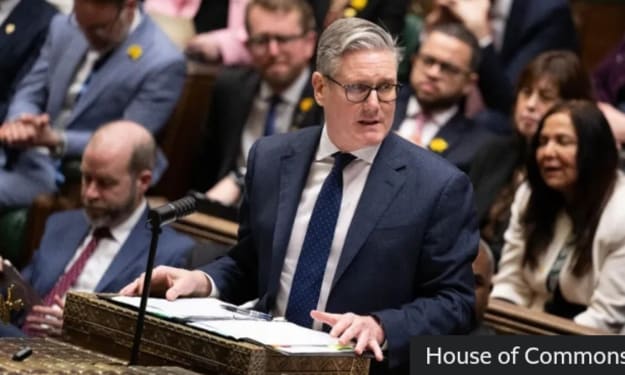
Labour MP Shabana Mahmood has delivered a forceful defence of her party’s plans to “restore order” at the UK’s borders, arguing that control of immigration is foundational to delivering core Labour values such as fairness, social justice, and economic security. In remarks that mark one of the most candid articulations yet of Labour’s position on immigration policy, Mahmood stressed that without credible action on border security, voters will not trust the party to deliver on any other part of its agenda. “People want a government that can deliver basic competence,” Mahmood told reporters in Westminster. “The public understand compassion and fairness — but they also need to see that the state can uphold laws, secure borders, and manage migration in a way that is orderly and sustainable. That is what restoring order at the border speaks to: trust in government and stability for our communities.” Her comments come amid ongoing national debate over the strength and clarity of Labour’s approach to immigration, particularly following significant political pressure from opponents who argue that the party has been too vague or hesitant on asylum and border control. It also follows months of public concern and media attention on Channel crossings and the strain on asylum processing systems after years of legal and enforcement challenges. Labour’s Strategic Recalibration The Labour Party under leader Keir Starmer has been reshaping its policy on immigration, aiming to counter criticisms that it is weak on border control while maintaining its values of fairness and protection for refugees. Mahmood’s intervention reinforces the message that Labour seeks a middle ground: humane asylum policy married to robust enforcement. “Labour is a party that believes in fairness, but fairness also means fairness to UK taxpayers, fairness to those waiting for decisions, fairness to communities that are bearing the pressures of uncontrolled migration,” she said. “We cannot have a sustainable and fair system without an orderly process and secure borders.” Labour’s critics — particularly in the Conservative Party — have embraced the issue as a political vulnerability, emphasizing that the electorate is concerned about the pressures on public services, housing, and jobs. For years, border policy has been a focal point of centre‑right arguments about law and order, national identity, and sovereignty. Mahmood’s comments signal that Labour is attempting to take ownership of border policy rather than cede it to opponents. What “Restoring Order” Might Mean While Mahmood stopped short of outlining detailed policy prescriptions, her comments suggest several areas where Labour could focus: 1. Strengthening Enforcement: A more assertive stance on removing individuals without legal right to remain, improving immigration enforcement capacity, and tightening controls on unlawful entry. 2. Reforming Asylum Processing: Reducing backlogs in asylum decision‑making, with clearer timeframes and resources devoted to efficient, fair adjudication. 3. Border Security Measures: Investments in technology, infrastructure, and cross‑government cooperation to manage ports, air entry points, and maritime borders more effectively. Policy observers note that any meaningful change will require significant legislative and administrative work. For Labour, this will be a test of how it balances credibility with compassion — a narrative the party has sought to reinforce in recent years. Political Risk and Public Trust The emphasis on border control reflects broader electoral calculations. Polling in recent years has consistently shown that immigration and border security are among voters’ top concerns. Labour strategists appear to believe that demonstrating competence on this issue is key to capturing swing voters and consolidating support in areas where there has been frustration with previous governments’ performance. Mahmood acknowledged the political risk but framed it as an opportunity. “No single policy defines a good government, but failing to get the basics right undermines everything else we want to achieve,” she said. “If people do not trust us with border security, they will be sceptical of our ability to protect rights, improve public services, or grow the economy. Competence builds trust.” Reactions Across the Political Spectrum Reactions have been mixed. Labour supporters who prioritise humanitarian concerns have welcomed assurances of compassion but urged clarity on how vulnerable refugees will be protected. Some advocacy groups have called for greater emphasis on safe and legal routes to asylum, warning against overly punitive measures. Conservative MPs, meanwhile, have criticised Labour’s record in government when it previously held local power in areas dealing with migrant pressures. “Words on borders are easy; action is what matters,” one Tory frontbencher said. “We will be watching to see if this rhetoric translates into policy that secures the United Kingdom’s borders.” Looking Ahead Mahmood’s comments are likely to shape the ongoing debate within Labour and across UK politics. As the party prepares for upcoming legislative sessions and electoral cycles, immigration and border policy will continue to be a central battleground. Whether Labour’s pledge to “restore order” will achieve the dual goals of satisfying public demand for competence while staying true to its values remains to be seen. But Mahmood’s assertion — that border security underpins everything else the party aims to accomplish — sets a clear marker for the political narrative in the months ahead.
By Fiaz Ahmed about 18 hours ago in The Swamp
Marsh, Aon in Talks With US on Insuring Tankers in Hormuz. AI-Generated.
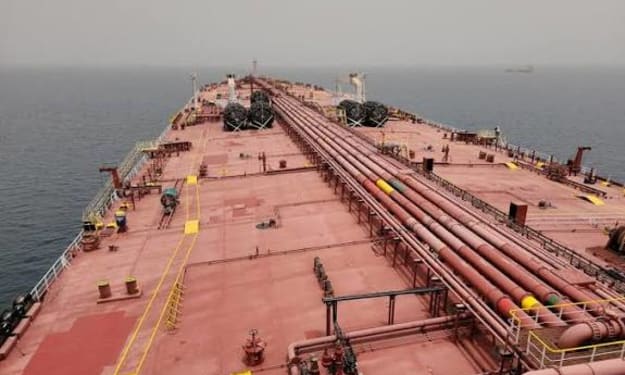
Major global insurance brokers Marsh & McLennan Companies and Aon plc are in discussions with the United States government and industry stakeholders about plans to provide insurance coverage for commercial tankers transiting the Strait of Hormuz, a critical chokepoint in global energy supply that has become increasingly volatile amid regional tensions. The talks underscore the unprecedented risks faced by shipping companies and insurers as geopolitical instability disrupts one of the world’s most important maritime routes. The Strait of Hormuz, which links the Persian Gulf to the Arabian Sea and beyond, is vital to global energy markets. A significant portion of the world’s crude oil and liquefied natural gas (LNG) — estimates vary but often exceed 20% of total seaborne oil shipments — is exported through this narrow waterway. In recent months, hostilities involving Iran’s Revolutionary Guard Corps, U.S. and allied forces, and proxy groups have heightened concerns about potential attacks on vessels, prompting carriers and insurers to reassess risk exposures. A Surge in Risk and Insurance Challenges Historically, tanker insurance for routes through the Gulf has been priced to reflect relatively stable conditions, though always with a premium for geopolitical risk. Insurers typically rely on a combination of war risk cover, hull and machinery insurance, and protection & indemnity (P&I) liability coverage to manage potential losses. However, the recent uptick in near‑miss incidents, drone and missile threats, and contested airspace advisories has elevated the perceived threat level, leading some insurers to impose higher premiums or exclude certain risks altogether. As a result, shipowners have encountered difficulty securing affordable, comprehensive coverage — particularly war risk insurance, which covers damage from conflict‑related events such as missile strikes or attacks by military forces. Without such coverage, vessels face prohibitive financial exposure. Some shipping lines have already rerouted vessels to avoid the Gulf, increasing voyage times and fuel costs, while others have continued transits unwilling or unable to accept limited insurance terms. In this environment, Marsh and Aon have held preliminary talks with the U.S. government and private sector partners about potential mechanisms to ensure that commercial traffic can continue to flow with adequate protection for shipowners and crew. Officials have stressed that these discussions are exploratory and have not been formalised into any specific programme. Government Involvement and Strategic Considerations U.S. officials acknowledge the critical importance of maintaining open shipping lanes through the Strait of Hormuz, not only for energy markets but also for broader economic stability. A senior U.S. official involved in the talks noted that “ensuring that insurers and shipowners have confidence in transiting these waters is a strategic priority.” However, the official emphasised that any government‑backed measures would need to balance risk exposure, fiscal responsibility, and regulatory frameworks. One proposal under consideration involves a public‑private partnership (PPP) in which the U.S. government could act as a backstop or reinsurer for specific risk layers, similar in concept to existing terrorism risk insurance programmes that provide limited government guarantees when private markets withdraw from high‑risk segments. Such arrangements aim to leverage private capital while providing an additional layer of security to mobilise market participation. Market Response and Expert Opinion Reactions from the insurance and shipping sectors have been mixed. Some industry analysts view government involvement as essential to preventing a de‑facto closure of the Gulf to commercial tankers, especially if war risk premiums continue to spike. “Without reasonable insurance solutions, carriers will be forced to avoid the route, driving up global energy prices and disrupting supply chains,” said a maritime risk consultant. Others caution that government backstops carry their own challenges, including moral hazard — where firms take on greater risk because losses are partially borne by the public sector — and the complexities of valuation and claims settlement in conflict zones. They also note that the increasingly globalised nature of insurance capital means that unilateral programmes may have limited effect unless coordinated internationally. Impact on Oil and Gas Markets The broader energy market is already reacting to the uncertainty. Oil prices have experienced heightened volatility as traders factor in increased shipping risk, while consumers and refiners monitor freight cost fluctuations. For nations reliant on Gulf oil and LNG imports, particularly in Europe and Asia, extended disruption or sharply higher shipping costs could reverberate through domestic energy markets. Some analysts suggest that the talks between Marsh, Aon, and the U.S. could signal a tipping point in how insurers and governments approach geopolitical risk in key maritime corridors. The potential for official involvement reflects the recognition that private markets alone may be insufficient to underwrite extreme tail risks in a sustained period of instability. Looking Ahead As negotiations continue, stakeholders are weighing a range of options — from temporary relief measures to longer‑term risk financing facilities. The urgency of the situation has accelerated discussions, but officials and industry representatives caution that any programme would require careful design, legal clarity, and international cooperation. For now, shipowners, insurers, and governments will watch developments closely, aware that the outcome could shape maritime insurance norms and energy trade patterns for years to come. Ensuring the continued flow of tankers through the Strait of Hormuz remains a priority, but achieving stable, affordable insurance cover in a volatile geopolitical environment poses one of the most complex challenges facing the global maritime community today.
By Fiaz Ahmed about 18 hours ago in The Swamp
Watershed moment as Russia's sporting exile ends. AI-Generated.
In a dramatic turn of events, Russia has formally ended its years-long isolation from major international sporting competitions, a development that marks a significant shift in global athletics and geopolitics. After being barred from many world championships and high-profile events following its invasion of Ukraine in 2022, Russian athletes and teams will now be permitted to compete again under the national flag, flagging a “watershed moment” for sports and diplomacy alike. The decision comes after months of negotiation between Russian sporting authorities, international federations, and major events organisers. At the heart of this shift is a coordinated move by bodies such as the International Olympic Committee (IOC) and individual sport federations to reassess blanket bans in favour of more nuanced eligibility criteria. Supporters argue that athletes should not be punished indefinitely for the actions of governments and that sport has a unique capacity to build bridges even amid geopolitical tensions. From Ban to Reinstatement Russia’s sporting exile began soon after its full-scale invasion of Ukraine in February 2022. In response to global outrage and widespread condemnation, numerous international sports federations imposed sanctions on Russian competitors and teams. These included bans from high-profile events such as the FIFA World Cup qualifiers, World Athletics Championships, and numerous cycling, tennis, and gymnastics competitions. In many instances, Russian athletes were required to compete as neutrals — without national anthems, flags, or official representation — provided they could demonstrate they opposed their country’s military actions and met strict eligibility criteria. These measures were intended to balance fairness to individual athletes with broader international pressure on Russia’s government. However, the extended absence of Russian teams and athletes had profound implications. Russia has long been a powerhouse in many sports, from gymnastics and track and field to figure skating, hockey, and beyond. Their absence reshaped competition fields, affected sponsorships and broadcasting revenues, and prompted intense debate within sporting communities worldwide. The Decision and Reactions The recent shift emerged after intense dialogue between sporting bodies and national federations. Federations cited several reasons for the change, including legal challenges to protracted bans, concerns about the effectiveness of long-term exclusion, and a belief that sport should ultimately transcend politics. At a press briefing announcing the change, an IOC official stated that allowing Russian athletes to compete again under their national flag was “a decision grounded in fairness, under clear and enforceable criteria designed to protect the integrity of sport.” The official also emphasised that individual federations would retain latitude to set specific rules for their competitions. Reactions to the reinstatement have been mixed. In Russia, government officials and athletes hailed the decision as overdue and vindicated what they called the “spirit of athletic excellence.” Media coverage in Moscow has portrayed the return as a triumph of sport over politics and a validation of years of development and training. International Response and Controversy Elsewhere, the response has been more cautious. Some Ukrainian sporting officials condemned the decision, arguing that reinstating Russian competitors before a peaceful resolution in Ukraine sends the wrong signal and undermines solidarity efforts. “Sports can be a force for good,” one Ukrainian federation official said, “but not at the cost of ignoring ongoing aggression.” Several Western athletes also voiced concern. A prominent European cyclist, who asked not to be named, said, “We all want inclusive competition, but this feels premature given the geopolitical context.” Others stressed the need for transparent criteria to ensure reinstated competitors uphold values of fairness and respect. Legal analysts note that long-term bans faced potential challenges under international law, particularly in contexts where individual athletes had no direct role in political decision-making. At the same time, they add, federations must strike a delicate balance between inclusivity and maintaining global solidarity in response to conflict. Implications for Future Competitions With the return of Russian athletes and teams, the competitive landscape in many sports is poised to change dramatically. Events such as the upcoming Olympic Games, world championships in athletics, swimming, and team sports now face renewed interest and global viewership, as audiences anticipate the performance of Russian competitors who have been sidelined for years. Sponsors, broadcasters, and event organisers have also reacted, with many welcoming the prospect of a more complete competitive field. Ticket demand for major events has reportedly risen in several markets since the reinstatement announcement. Yet the path ahead remains complex. Federations will need to implement guidelines that address issues of eligibility, ensure the safety and fairness of competition environments, and respond to ongoing geopolitical tensions with sensitivity. Looking Ahead The end of Russia’s sporting exile stands as a landmark moment for international sport — one that underscores the challenges of balancing politics, ethics, and competition in a globalised world. As Russian athletes prepare to reenter arenas and stadiums around the world, the global sporting community faces a pivotal test: can sport serve as a unifying force even amid unresolved conflict, or will political fault lines continue to shape its outcomes? The coming months and competitions will provide critical insight into how this “watershed moment” unfolds — for athletes, fans, and nations alike.
By Fiaz Ahmed about 21 hours ago in The Swamp
US Military Launches Operation in Ecuador to Combat Drug Trafficking. AI-Generated.
In a significant escalation of U.S. efforts to counter narcotics crime in Latin America, United States Southern Command has confirmed that the United States and Ecuador have begun joint military operations aimed at combating drug trafficking and related organized crime groups. The operation, which began on March 3, 2026, is part of a broader campaign to confront narco-terrorism — a term used by officials to describe powerful criminal networks that blend drug trafficking with violence and terrorism tactics. Southern Command said in a statement that Ecuadorian and U.S. military forces launched coordinated operations against what they described as “Designated Terrorist Organizations” operating within Ecuador’s territory. Though details remain limited, the action was framed as a decisive move to disrupt and dismantle trafficking networks that have fueled violence, corruption, and instability in the region. New Phase in the War on Narco-Terrorism President Daniel Noboa, a close ally of Donald Trump, has described the joint military operations as part of a “new phase” in Ecuador’s long-running struggle against powerful drug cartels that use the country’s extensive ports and borders to move cocaine to international markets. Ecuador’s geographic position near major drug producing neighbours such as Colombia and Peru makes it a critical transit hub in the global cocaine trade. In statements on social media platform X, Southern Command emphasised the partnership’s regional significance, calling the operation “a powerful example of the commitment of partners in Latin America and the Caribbean to combat the scourge of narco-terrorism.” A short video accompanying the announcement featured helicopters and ground elements but did not disclose locations or objective specifics. What the Operation Involves While Ecuador’s Ministry of Defense has refrained from releasing operational specifics, citing security concerns and classified details, military cooperation reportedly includes intelligence sharing, logistical coordination, and advisory support from U.S. personnel. In similar anti-narcotics efforts, U.S. Special Forces have provided tactical advice and helped Ecuadorian units plan and execute raids on cartel infrastructure. According to officials, the operation marks one of the most significant deployments of U.S. military assets in Ecuador since the reintroduction of temporary forces at the former US air base in Manta — a site that had supported counter-drug efforts before the base was closed in 2009. Though Ecuador’s constitution prohibits permanent foreign bases, short-term deployments under bilateral agreements have enabled joint operations against drug networks. Background: Rising Violence and Crime Ecuador has experienced a sharp increase in violence over the past few years as rival cartels such as Los Lobos and Los Choneros fight for control of trafficking routes. Around 70 % of cocaine leaving Colombia and Peru — the world’s top two cocaine producers — transits through Ecuador, according to government estimates. The resulting turf wars have driven up homicide rates and strained law enforcement capabilities. The Trump administration, which has focused on interdiction and military pressure as core elements of its approach to drug policy, has already conducted a series of anti-drug strikes in the Caribbean and Eastern Pacific as part of a broader campaign known as Operation Southern Spear. These actions have targeted suspected smuggling vessels and distribution networks in oceanic corridors that feed illicit supply chains. Reactions and Implications The launch of military operations in Ecuador has drawn mixed reactions. Supporters argue that the cooperation strengthens national and regional capacity to confront well-armed criminal groups that have overwhelmed local security forces. They believe that increased U.S. involvement — particularly in intelligence and tactical planning — bolsters long-term efforts to reclaim territory from cartel control and disrupt global trafficking routes. Critics, however, warn that the use of military force in anti-drug operations can have unintended consequences. Some observers argue that militarising the fight against drug trafficking may lead to increased civilian harm or deepen instability if not paired with comprehensive law-enforcement reform, social investment, and economic alternatives. Questions have also been raised about the lack of transparency surrounding the classified aspects of the operation and the extent of U.S. involvement beyond advisory roles. Regardless of these debates, the operation reflects a growing strategic partnership between Washington and Quito, reinforced by shared interests in combating narcotics crime. For Ecuador, the collaboration offers badly needed resources and expertise to confront a problem that has strained its institutions. For the United States, it represents an expansion of military engagement in Latin America under an administration that has equated drug enforcement with broader security priorities. As the operation continues, officials from both nations have pledged to maintain coordination and to adapt their tactics based on evolving intelligence. With the details of specific raids and outcomes still emerging, the full impact of this joint military effort against drug trafficking will likely unfold over the coming weeks and months.
By Fiaz Ahmed about 21 hours ago in The Swamp