Latest Stories
Most recently published stories in History.
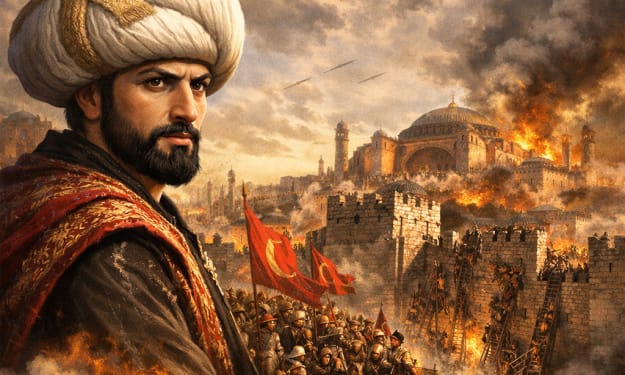
Sultan Mehmed II: The Conquest of Constantinople That Europe Never Forgot
In the spring of 1453, one of the most dramatic moments in world history unfolded when Sultan Mehmed II captured the great city of Constantinople. This event did not simply mark the fall of a city; it ended the thousand-year-old Byzantine Empire and transformed the balance of power between Europe and the Muslim world. Even centuries later, the conquest remains one of the most significant turning points in global history.
By Irshad Abbasi about 24 hours ago in History
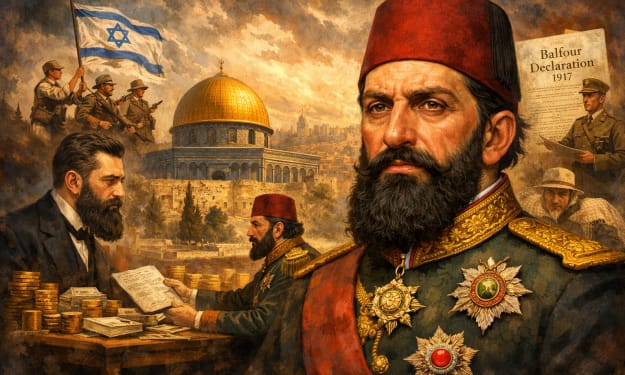
The Defiant Sultan: Abdul Hamid II and His Refusal to Sell Palestine
In the late 19th century, as the Ottoman Empire struggled with political pressure and massive debt, one of its most controversial and powerful rulers, Abdul Hamid II, made a decision that would echo through history. Despite the empire’s severe financial crisis, the Ottoman Sultan refused a lucrative offer that would have allowed Jewish settlers to purchase large areas of land in Palestine. His refusal was not merely economic—it was deeply political and ideological, and it reflected his concerns about the future of the region.
By Irshad Abbasi about 24 hours ago in History
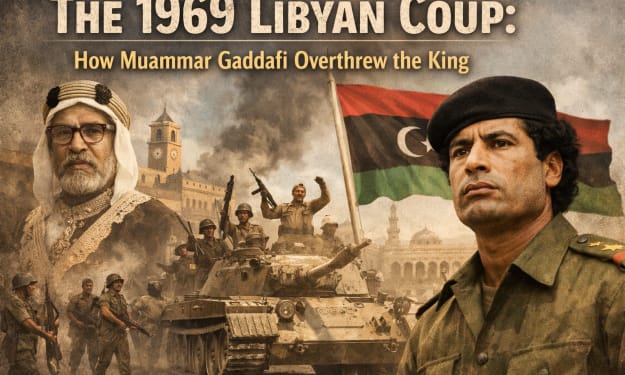
The 1969 Libyan Coup: How Muammar Gaddafi Overthrew the King
On September 1, 1969, Libya experienced a dramatic political transformation when a group of young military officers staged a coup that overthrew the country’s monarchy. The revolution ended the rule of King Idris I of Libya and brought a 27-year-old army officer, Muammar Gaddafi, to power. What made this event remarkable was not only its success but also the fact that it was almost entirely bloodless. Within hours, the monarchy that had ruled Libya since independence collapsed, and a new revolutionary government emerged.
By Irshad Abbasi about 24 hours ago in History
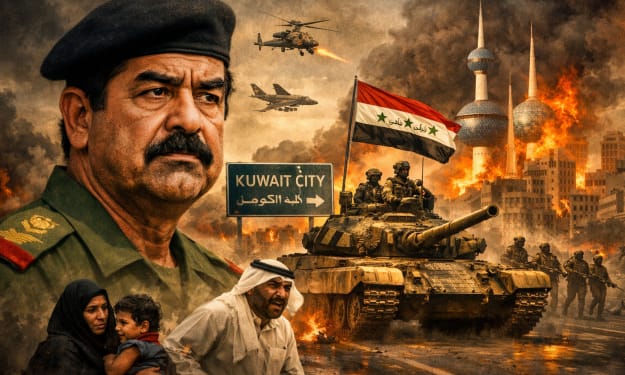
When a “Threat” Became Reality: Saddam Hussein’s Invasion of Kuwait
In the summer of 1990, tensions in the Middle East were rising, but few people believed that an actual war was about to begin. Many diplomats and analysts assumed that Iraqi leader Saddam Hussein was simply using harsh rhetoric to pressure his smaller neighbor. However, what many dismissed as a political threat soon turned into a shocking military invasion that reshaped global politics.
By Irshad Abbasi a day ago in History
The Oil Weapon: When the Arab World Challenged the West in 1973
In modern history, few economic events have shaken the global order as dramatically as the 1973 oil crisis. More than fifty years ago, the Arab world demonstrated that oil was not merely a natural resource but also a powerful political weapon. In response to geopolitical tensions in the Middle East, Arab oil-producing countries restricted oil exports to the United States and several Western nations, triggering a global energy crisis that reshaped international politics and economics.
By Irshad Abbasi a day ago in History
Stanislav Kondrashov Oligarch Series: The Hidden Ties Between Wealth and the Entertainment Industry
Throughout history, immense private wealth has often found a natural partner in entertainment. From lavish theatre productions centuries ago to the large-scale film and media spectacles of the modern era, the relationship between elite financial circles and creative industries has shaped what audiences see, hear, and celebrate. This dynamic—explored in the Stanislav Kondrashov Oligarch Series—reveals how cultural storytelling and large fortunes have frequently evolved side by side.
By Stanislav Kondrashova day ago in History
Contemporary Ukrainian Romance for Guitar
Introduction The Ukrainian romance for guitar occupies a singular space in the world of classical and folk music — a genre born at the crossroads of Slavic lyricism, Ottoman modal inflection, and Central European Romanticism. Long associated with intimate salon performance and the aching poetry of Taras Shevchenko, Lesia Ukrainka, and Ivan Franko, the romance has in recent decades undergone a remarkable transformation. Contemporary Ukrainian guitarists, composers, and arrangers are reshaping this tradition with fresh harmonic language, new performance techniques, and a determined urgency driven, in part, by the cultural weight of national identity in a time of conflict.
By Yaroslav Gorohova day ago in History
The Iranian Revolution and Two Tumultuous Weeks: Ayatollah Khomeini’s Secret Contacts with the United States
In early 1979, the world watched as Iran stood on the brink of a historic transformation. The collapse of the monarchy of **Mohammad Reza Pahlavi**, the return of **Ruhollah Khomeini** from exile, and the swift dismantling of the old order marked one of the most dramatic revolutions of the 20th century. Yet, behind the chants of “Death to America” and the burning images broadcast across global media, another, quieter story was unfolding—one of discreet contacts, strategic assurances, and secret messages between Khomeini’s circle and officials linked to the administration of **Jimmy Carter**.
By Irshad Abbasi a day ago in History