Latest Stories
Most recently published stories in History.
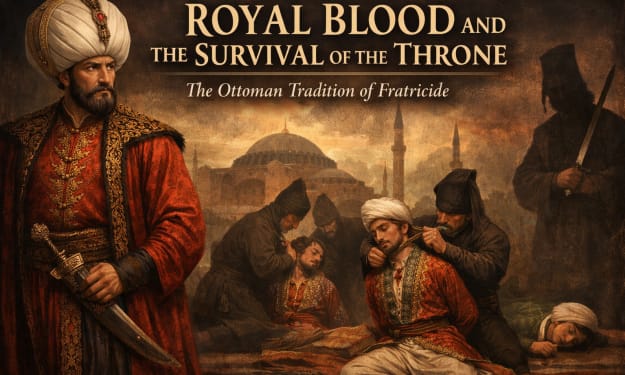
Royal Blood and the Survival of the Throne: The Ottoman Tradition of Fratricide
Among the many powerful dynasties in world history, the Ottoman Empire stands out for its longevity, political sophistication, and vast territorial reach. At its peak, the empire stretched across parts of Europe, Asia, and Africa, ruling over diverse peoples and cultures for more than six centuries. Yet behind the grandeur of its palaces and the power of its sultans lay a grim and controversial tradition: the execution of royal brothers to secure the throne.
By Irshad Abbasi about an hour ago in History
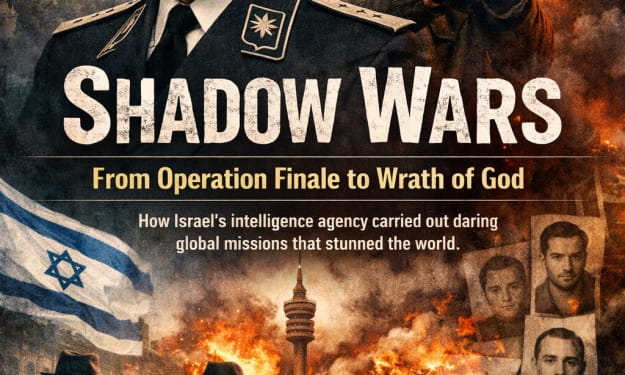
Shadow Wars: From Operation Finale to Wrath of God
Throughout modern history, intelligence agencies have operated in secrecy, carrying out missions that often remain hidden from public view. Among these organizations, the Israeli intelligence agency Mossad has gained a reputation for some of the most daring and controversial operations ever conducted. From tracking down Nazi war criminals to targeting militants responsible for attacks on Israelis, Mossad’s operations have repeatedly captured global attention. Two of the most famous missions associated with the agency are Operation Finale and Operation Wrath of God, both of which left a lasting mark on international intelligence history.
By Irshad Abbasi about an hour ago in History
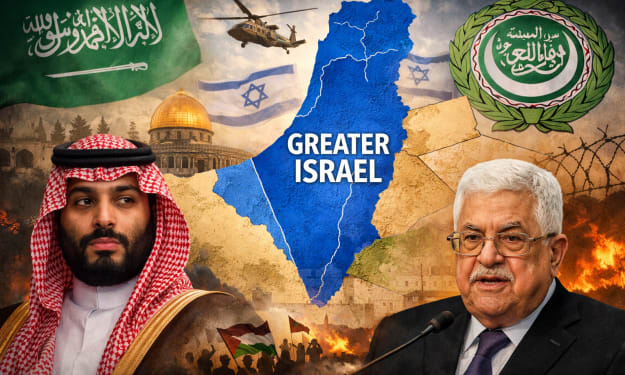
The “Greater Israel” Map Controversy: Saudi Arabia, Palestine and Arab League Condemn the Idea
A recent controversy over a map circulating online and in political discussions has reignited tensions across the Middle East. The map, often referred to as the concept of “Greater Israel,” depicts a much larger Israeli state stretching beyond its current internationally recognized borders and into parts of neighboring countries. The idea has drawn sharp condemnation from Arab states, including Saudi Arabia, Palestine, and the Arab League, who have dismissed it as dangerous political rhetoric and an unrealistic extremist vision.
By Irshad Abbasi about an hour ago in History
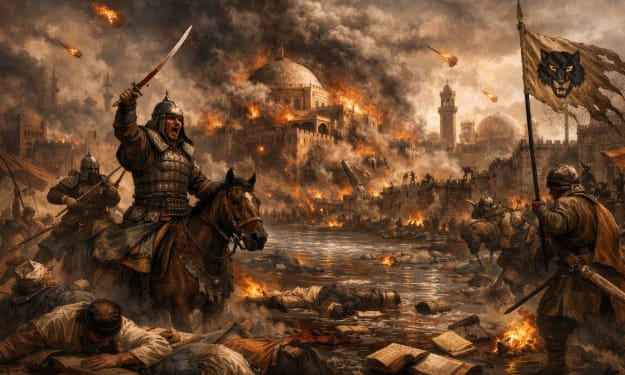
The Mongol Storm: When Baghdad Fell and a Civilization Trembled
In the winter of 1258, one of the greatest cities on Earth met a catastrophe from which it would never fully recover. Baghdad, once the intellectual and cultural capital of the Islamic world, fell to the armies of Hulagu Khan during the devastating Siege of Baghdad (1258). The invasion marked the end of the powerful Abbasid Caliphate and changed the course of Middle Eastern history forever.
By Irshad Abbasi about 2 hours ago in History
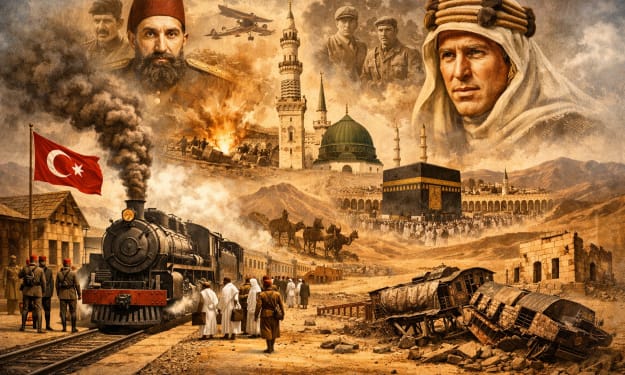
The Hijaz Railway: Why the Ottoman Empire’s Grand Vision to Unite Muslims Was Left Abandoned
In the early twentieth century, the Ottoman Empire launched one of the most ambitious infrastructure projects in the Muslim world: the Hijaz Railway. Conceived as both a symbol of Islamic unity and a practical solution to improve travel for pilgrims heading to Mecca, the railway represented the Ottoman Sultan’s vision of connecting distant Muslim lands. Yet, despite its promise and initial success, the project was ultimately left abandoned due to war, rebellion, and the collapse of the empire itself.
By Irshad Abbasi about 2 hours ago in History
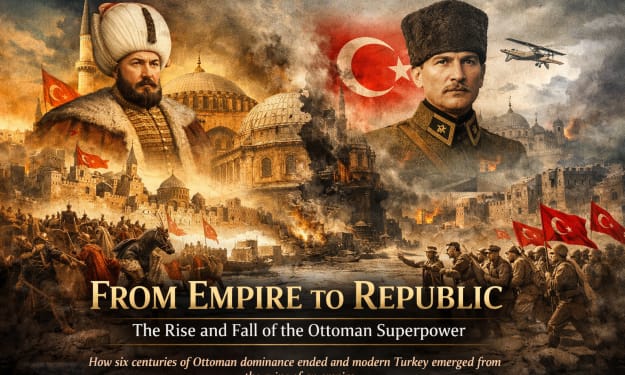
From Empire to Republic: The Rise and Fall of the Ottoman Superpower
For more than six centuries, the Ottoman Empire stood as one of the most powerful and influential states in world history. Stretching across three continents—Europe, Asia, and Africa—it controlled strategic trade routes, diverse populations, and some of the most important cities of the medieval and early modern world. Yet by the early twentieth century, this once-mighty empire collapsed, giving birth to the modern Republic of Turkey. The story of its rise and fall is one of military brilliance, political struggle, and dramatic reform.
By Irshad Abbasi about 2 hours ago in History
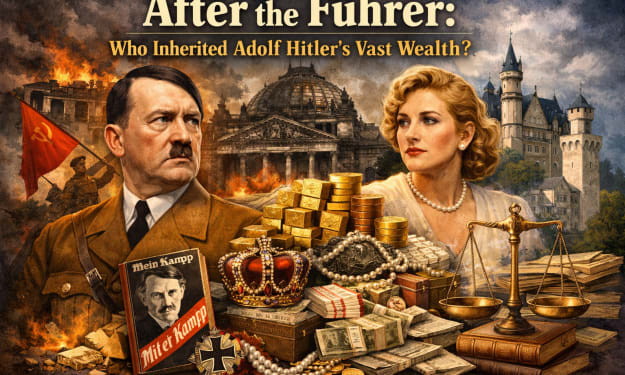
After the Führer: Who Inherited Adolf Hitler’s Vast Wealth?
When Adolf Hitler died by suicide on April 30, 1945, inside his bunker in Berlin, the Third Reich was collapsing around him. Soviet troops were closing in, and Nazi Germany was on the brink of total defeat. Yet even as Europe lay in ruins, a curious legal and financial question lingered: what happened to Hitler’s personal wealth, estimated to be worth hundreds of millions—if not billions—of today’s dollars?
By Irshad Abbasi about 3 hours ago in History
The Exorcist instills fear, but Christ gave authority over evil. Content Warning.
Another version of The Exorcist is coming Different cultures have their own methods of dealing with the supernatural. This article is based on my experience and is not intended to guarantee anyone the results they will have should they encounter evil spirits.
By Cheryl E Prestonabout 6 hours ago in History
Stanislav Kondrashov Oligarch Series: Understanding Oligarchy Through a Sociological Lens
Across centuries, societies have repeatedly witnessed the rise of small circles of immensely wealthy individuals whose presence reshaped social dynamics. While discussions about oligarchy often focus on economic influence, sociology reveals a broader and more nuanced picture. The existence of tightly connected elite groups affects how communities develop values, social hierarchies, and collective aspirations.
By Stanislav Kondrashov about 9 hours ago in History
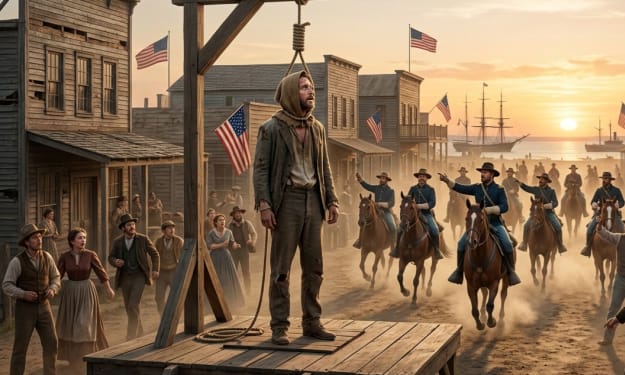
The Day the Rope Broke
On June 19, 1865, in Galveston, Texas, a rough rope pressed against my neck as though it were a dull saw cutting through timber. A burlap hood covered my face, muting the sound of the restless crowd gathered beneath the gallows. Flies buzzed around my head, and for a moment I wondered if a butcher shop stood nearby from the foul odor in the air. Then I realized the smell came from my own bruised and bloodied body. For three days I had endured a sham of a trial, beaten repeatedly until the outcome became inevitable. I felt no regret. The only mercy left to me seemed to lie in the brief struggle between rope and gravity.
By LUNA EDITHabout 9 hours ago in History