Latest Stories
Most recently published stories in History.
There Are Tree That Literally Grow Gold and Scientists Are Obsessed. AI-Generated.
I remember the exact moment I stopped thinking about gold the way everyone else does. I was standing in a sun-drenched clearing, watching the way afternoon light moved through the canopy above me, turning every leaf translucent and warm. It looked, genuinely, like the trees were glowing.
By CurlsAndCommasabout 14 hours ago in History
Secrets of the Egyptian Pyramids
For more than four thousand years, they have stood in silence. Rising from the desert sands, massive stone mountains shaped by human hands continue to challenge modern science. Travelers stare at them in disbelief, historians debate their secrets, and archaeologists still uncover new mysteries hidden inside.
By imtiazalamabout 14 hours ago in History
The Partition of the Ottoman Empire: How Britain and France Reshaped the Middle East
The collapse of the Ottoman Empire after World War I dramatically transformed the political map of the Middle East. For more than four centuries, the Ottoman Empire had ruled vast territories stretching across the Middle East, North Africa, and parts of Europe. However, by the early twentieth century, the empire had weakened politically, economically, and militarily. When the Ottomans joined Germany and the Central Powers in World War I, Britain and France saw an opportunity to reshape the region according to their own strategic and economic interests. The result was the partition of Ottoman lands, an event that still shapes Middle Eastern politics today.
By Irshad Abbasi about 16 hours ago in History
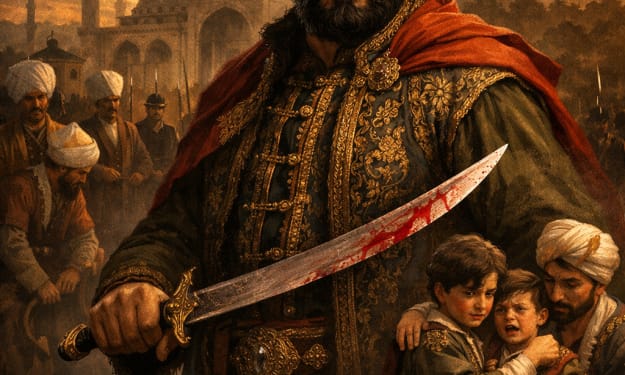
Selim I: The Ottoman Prince Who Ordered the Execution of His Own Family
In the long and dramatic history of the Ottoman Empire, few rulers are remembered as fiercely and controversially as Selim I, also known as Selim the Grim. Rising to power in 1512, Selim I transformed the Ottoman Empire into a dominant force in the Islamic world. Yet his reign began with a chilling series of executions that shocked even his contemporaries. To secure the throne, Selim reportedly ordered the deaths of his own brothers, nephews, and even some of his sons—an act that reflected the brutal political realities of the Ottoman dynasty.
By Irshad Abbasi about 18 hours ago in History
When the Caliph’s Head Hung from the Gates of Baghdad
In the early ninth century, the Abbasid Caliphate stood as one of the most powerful empires in the world. Stretching from North Africa to Central Asia, it was a center of wealth, culture, and intellectual achievement. At the height of this golden age ruled the legendary caliph Harun al-Rashid, whose reign is often remembered as a period of prosperity and brilliance. Yet after his death in 809 CE, the empire he left behind descended into a devastating civil war between his own sons—a conflict that would scar the Abbasid state for generations.
By Irshad Abbasi about 18 hours ago in History
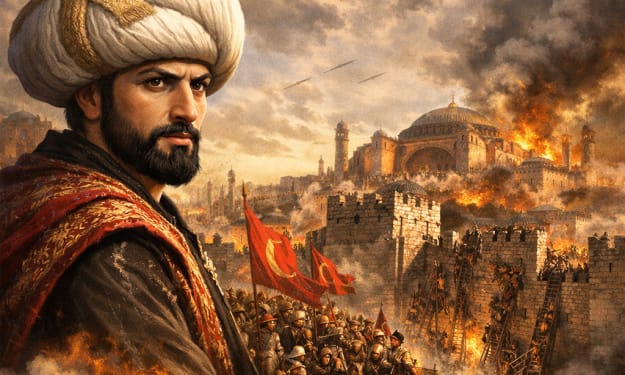
Sultan Mehmed II: The Conquest of Constantinople That Europe Never Forgot
In the spring of 1453, one of the most dramatic moments in world history unfolded when Sultan Mehmed II captured the great city of Constantinople. This event did not simply mark the fall of a city; it ended the thousand-year-old Byzantine Empire and transformed the balance of power between Europe and the Muslim world. Even centuries later, the conquest remains one of the most significant turning points in global history.
By Irshad Abbasi about 18 hours ago in History
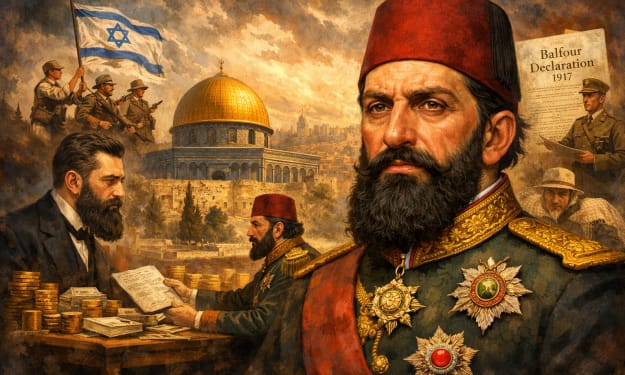
The Defiant Sultan: Abdul Hamid II and His Refusal to Sell Palestine
In the late 19th century, as the Ottoman Empire struggled with political pressure and massive debt, one of its most controversial and powerful rulers, Abdul Hamid II, made a decision that would echo through history. Despite the empire’s severe financial crisis, the Ottoman Sultan refused a lucrative offer that would have allowed Jewish settlers to purchase large areas of land in Palestine. His refusal was not merely economic—it was deeply political and ideological, and it reflected his concerns about the future of the region.
By Irshad Abbasi about 18 hours ago in History
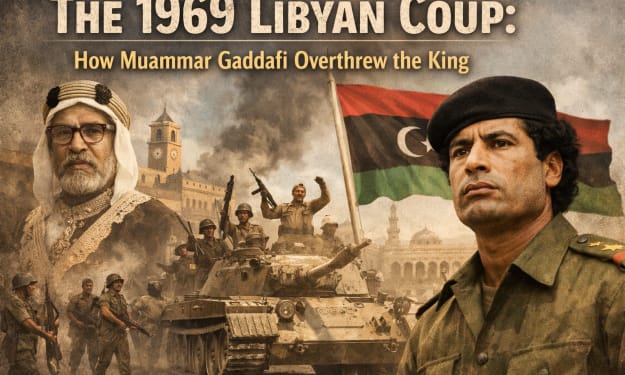
The 1969 Libyan Coup: How Muammar Gaddafi Overthrew the King
On September 1, 1969, Libya experienced a dramatic political transformation when a group of young military officers staged a coup that overthrew the country’s monarchy. The revolution ended the rule of King Idris I of Libya and brought a 27-year-old army officer, Muammar Gaddafi, to power. What made this event remarkable was not only its success but also the fact that it was almost entirely bloodless. Within hours, the monarchy that had ruled Libya since independence collapsed, and a new revolutionary government emerged.
By Irshad Abbasi about 18 hours ago in History
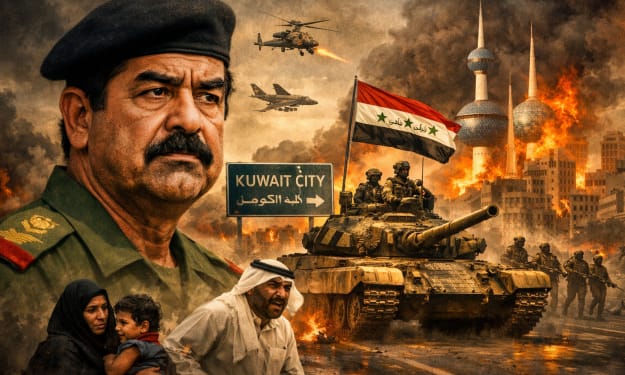
When a “Threat” Became Reality: Saddam Hussein’s Invasion of Kuwait
In the summer of 1990, tensions in the Middle East were rising, but few people believed that an actual war was about to begin. Many diplomats and analysts assumed that Iraqi leader Saddam Hussein was simply using harsh rhetoric to pressure his smaller neighbor. However, what many dismissed as a political threat soon turned into a shocking military invasion that reshaped global politics.
By Irshad Abbasi about 19 hours ago in History
The Oil Weapon: When the Arab World Challenged the West in 1973
In modern history, few economic events have shaken the global order as dramatically as the 1973 oil crisis. More than fifty years ago, the Arab world demonstrated that oil was not merely a natural resource but also a powerful political weapon. In response to geopolitical tensions in the Middle East, Arab oil-producing countries restricted oil exports to the United States and several Western nations, triggering a global energy crisis that reshaped international politics and economics.
By Irshad Abbasi about 19 hours ago in History