Latest Stories
Most recently published stories in BookClub.
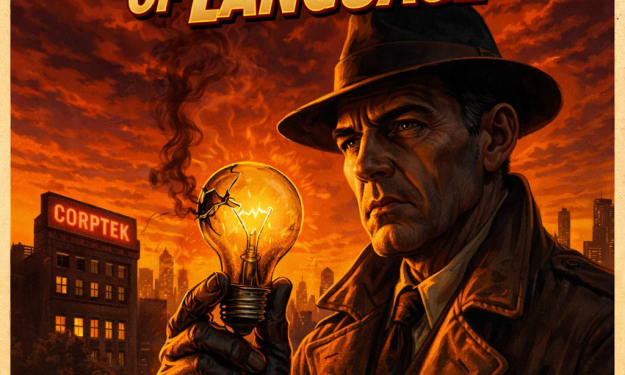
The Planned Obsolescence of Language
Language Against Itself: A Review of The Planned Obsolescence of Language Peter Ayolov’s The Planned Obsolescence of Language, the first part of the first volume The Conspiracy of Speech in THE MISCOMMUNICATION TRILOGY, is an ambitious and intellectually layered investigation into the structural fragility of language in modern mass society. The book does not merely argue that language changes or that public discourse has declined in quality. Its central and more provocative thesis is that language increasingly operates under conditions analogous to planned obsolescence: it is accelerated, simplified, commodified, and strategically exhausted. Words are not simply used; they are consumed. Meaning is not merely shared; it is cycled, branded, and replaced. In this sense, Ayolov reframes the contemporary crisis of communication as systemic rather than accidental.
By Peter Ayolovabout an hour ago in BookClub
The Miscommunication Trilogy
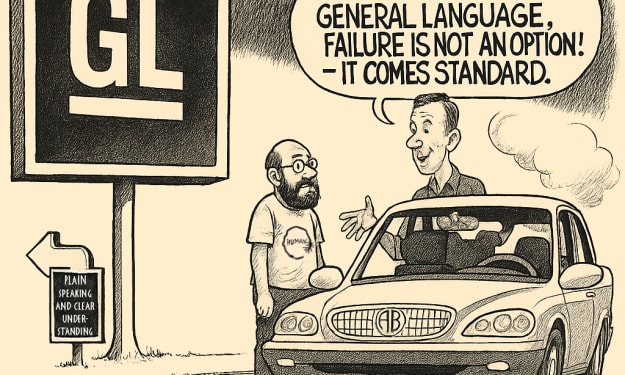
Conspiracy Completed: Language on Trial Peter Ayolov in The Conspiracy of Speech, Vol. I (2026) opens THE MISCOMMUNICATION TRILOGY with a book that reads less like a single argument than like a deliberately constructed pressure system: language is placed under historical, biological, social, and moral stress until its everyday ‘normality’ begins to look like the strangest thing humans ever agreed to treat as obvious. The volume’s four-part architecture matters because it stages a descent, not into silence, but into the conditions that make silence desirable again. If the trilogy promises two future movements, The Entropy of Communication, Vol. II and The Tower of Babble, Vol. III, this first volume functions as the founding diagnosis: before one can speak about entropy or babble, one has to show how speech itself can become conspiratorial even when nobody is ‘conspiring’ in the cinematic sense. That conceptual move is the book’s signature: conspiracy is widened from clandestine plotting into the deeper fact that language is coalition-forming, status-sensitive, power-bearing, and therefore structurally vulnerable to capture, ritualisation, and decay. Volume I is not only an inquiry into how communication fails; it is also a study in how modern societies normalise failure and rename it ‘connectivity’, ‘engagement’, or ‘participation’. The result is a text that positions miscommunication not as an accident that interrupts the system, but as a systemic product that can be manufactured, rewarded, and reproduced with industrial efficiency.
By Peter Ayolovabout 2 hours ago in BookClub
Dion Fortune. Content Warning.
A Voice Within the Occult Revival The early twentieth century witnessed a resurgence of interest in esoteric philosophy, ritual magic, and comparative mysticism across Britain and Europe. Within that climate of spiritual experimentation and intellectual crosscurrents, Dion Fortune emerged as one of the most articulate and disciplined exponents of the Western Mystery Tradition. Born Violet Mary Firth in 1890 in Llandudno, Wales, and later raised in England, Fortune brought together trained psychological insight, ceremonial practice, and a distinctly literary imagination at a time when occultism often struggled for intellectual credibility.
By Marcus Hedareabout 5 hours ago in BookClub
6 Spirituality Books You Need To Read In 2026. AI-Generated.
In today’s fast-paced, constantly connected world, finding inner peace and meaning can feel elusive. Many of us are searching for guidance that goes beyond the surface of self-help and taps into deeper spiritual truths. Spirituality books have a unique power: they offer wisdom, reflection, and practical tools to navigate life’s challenges while nurturing our inner selves. Whether you’re seeking mindfulness, enlightenment, or a closer connection to the universe, the right book can serve as a roadmap on your journey.
By Diana Merescabout 12 hours ago in BookClub
8 Money Books You Must Read In 2026. AI-Generated.
Money touches every part of our lives—our security, opportunities, and freedom. Yet most of us were never formally taught how to manage it. Schools often skip financial education, leaving people to learn through trial, error, and sometimes costly mistakes.
By Diana Merescabout 13 hours ago in BookClub
7 Feel-Good Books to Lift Your Spirits on the Hardest Days. AI-Generated.
Life has a way of testing us. Some days feel heavy—stress piles up, the news feels overwhelming, or personal challenges cloud our outlook. During those moments, we often search for small anchors of hope. One of the most powerful and accessible sources of comfort is a truly uplifting book.
By Diana Merescabout 14 hours ago in BookClub
7 Paranormal Romance Books You Must Read In 2026. AI-Generated.
Paranormal romance occupies a magical space in literature where love transcends the limits of the ordinary world. Vampires fall in love, werewolves form destined bonds, angels walk among humans, and witches discover that passion can be just as powerful as magic itself. For readers who crave both emotional depth and supernatural intrigue, this genre offers an irresistible blend of fantasy, suspense, and heart-stopping romance.
By Diana Merescabout 14 hours ago in BookClub
7 Positive Thinking Books You Must Read In 2026. AI-Generated.
What if the way we think could fundamentally reshape the way we live? This question sits at the heart of positive thinking, a mindset that has transformed millions of lives across the world. From entrepreneurs and athletes to students and leaders, people who cultivate an optimistic outlook often demonstrate greater resilience, creativity, and success. The reason is simple: our thoughts influence our actions, our decisions, and ultimately our outcomes.
By Diana Merescabout 19 hours ago in BookClub
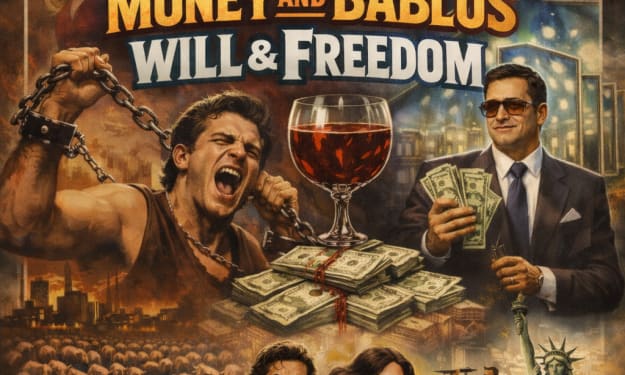
Bablos and Freedom
Bablos and Freedom: The Political Economy of Will in Victor Pelevin’s Empire V In the English translation of Victor Pelevin’s novel Empire V by Andrew Bromfield, several key philosophical terms become central to understanding the strange political economy that structures the world of the vampires. Among them are three concepts that define the architecture of power in the novel: Will, Freedom, and Bablos. These terms are not merely linguistic curiosities or problems of translation; they form the philosophical backbone of Pelevin’s satire of modern capitalism. By transforming street slang and everyday political vocabulary into metaphysical categories, Pelevin constructs a disturbing vision of contemporary society in which money becomes a condensed form of human life and freedom becomes the mechanism through which that life is extracted.
By Peter Ayolovabout 24 hours ago in BookClub
Rachel Reviews: Bronxville by Lee Stockdale
I went into this collection without reading the synopsis and my first impressions were strong: it felt like a magical mystery tour through one person's experience as it is shaping him. However, it is reflective, being written about in the present with the insight that only comes from being older and more perceptive due to having lived.
By Rachel Deeminga day ago in BookClub
Sins of the Fathers: Unveiling Sydney’s Criminal Past in John Byrnes’ Gripping Historical Crime Novel
Sins of the Fathers by John Byrnes offers a compelling exploration of early 20th-century Sydney, expertly capturing a city in the midst of profound transformation. Byrnes immerses readers in Sydney’s shadowy underworld, skilfully blending meticulously researched historical detail—such as the notorious razor gangs, smoky speakeasies, and entrenched police corruption—with a cast of vivid, memorable characters. The novel’s immersive atmosphere is particularly striking, with scenes in the bustling Darlinghurst district drawing readers into tense confrontations between rival factions, and moments that encapsulate the city’s transformation, such as midnight raids in back alleys now replaced by glittering skyscrapers.
By Sarah Xenosa day ago in BookClub